RU
RU  EN
EN  DE
DE  PT
PT  JA
JA  ES
ES  IT
IT Промышленные защитные ограждения
Industrial Safety Fence for Space-Starved Metal Recycling Centers
Industrial Safety Fence helps dense scrap sorting centers keep the legal 120mm isolation distance without stealing valuable floor space from storage, sorting, and material flow.
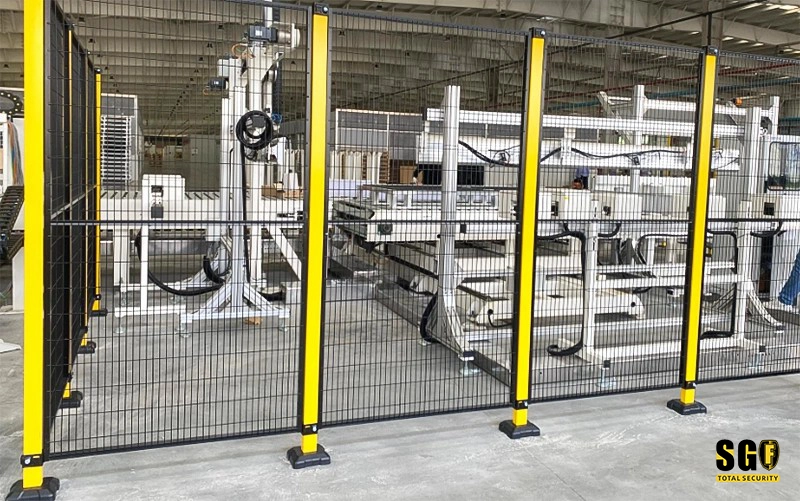
Why dense scrap sorting centers need a different fence strategy
In indoor recycling and sorting hubs, every meter matters. Traditional guarding often forces oversized setbacks just to satisfy compliance, which wastes storage lanes and slows equipment placement. Industrial Safety Fence is built for that exact pressure point: compact protection, clear separation, and a smaller legal footprint.
| Operational issue | Ответ Mdfence |
|---|---|
| Space is expensive and aisles are already dense | 20x100mm precision mesh supports a compact layout while preserving compliance. |
| Old fences waste valuable working and storage area | Legal safety isolation can be reduced to an extreme 120mm, helping recover floor space. |
| Scrap handling needs clear, repeatable separation | Modular posts, welded panels, and fixed base plates create a stable perimeter around the process zone. |
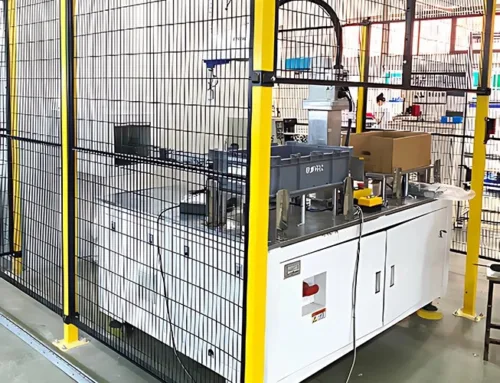
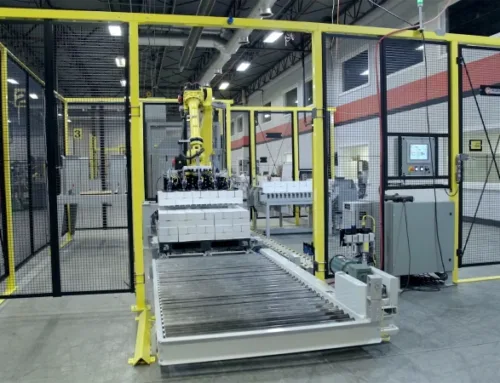
| Indoor sorting centers need evidence, not claims | Product photos show welds, coating, clamps, and anchor hardware as install proof. |
What makes Industrial Safety Fence fit this job
Compact compliance without bloating the footprint
The key advantage is not just protection; it is protection with discipline. The 20x100mm precision mesh allows the fence to stay tight to the process line while still supporting the required isolation distance. In a crowded scrap sorting hall, that difference turns into usable aisle width, better pallet movement, and less dead space.
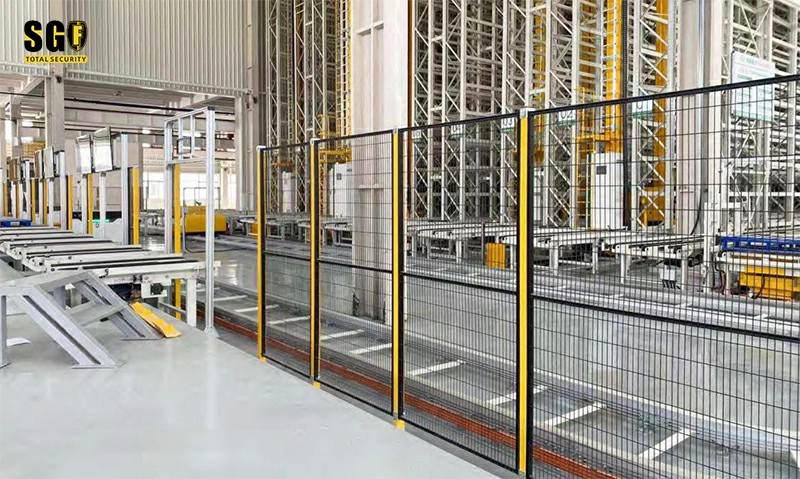
Structure that holds up in real industrial installs
The technical front view shows the post, mesh panel, and fixing clamp relationship clearly. That matters because dense recycling sites do not tolerate loose, improvised guarding. The layout is built to stay aligned, stay readable, and stay serviceable when the line changes or expands.
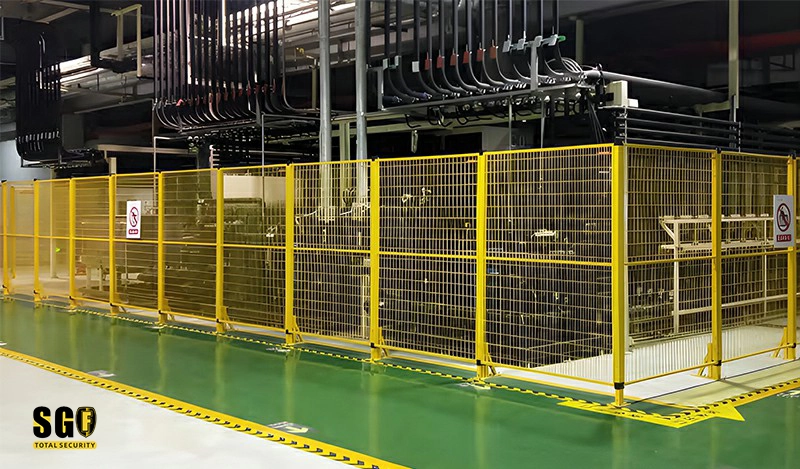
Installation evidence that supports fast deployment
The installation diagram is the practical proof point. Base plate drilling, expansion bolts, and retaining rings show that the fence is designed for controlled installation rather than patchwork fixes. For a site with many points of protection, that reduces downtime and makes the guarding plan easier to replicate across the facility.
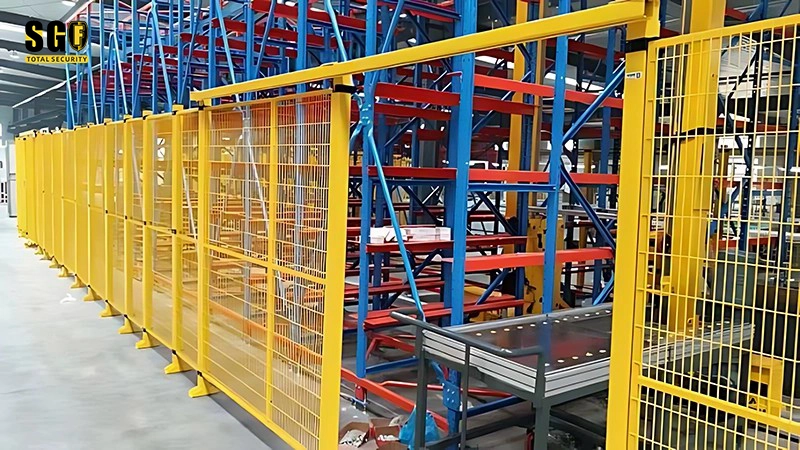
Where the result shows up on the floor
- Indoor scrap sorting centers that need clear separation without giving up storage lanes.
- Metal recycling plants with dense equipment placement and tight material flow paths.
- Factory zones where compliance must be achieved in the smallest possible envelope.
- Multi-site operators who need a repeatable guarding standard across many locations.
For operators managing large networks, the benefit compounds quickly: every saved millimeter at one line becomes measurable floor space across many sites. That is why Industrial Safety Fence is not only a safety item, but also a layout efficiency tool.
Evidence you can show to operations and EHS
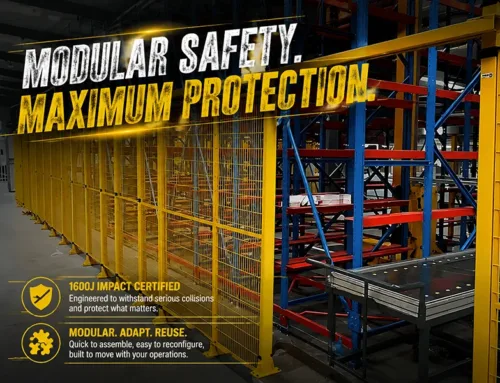
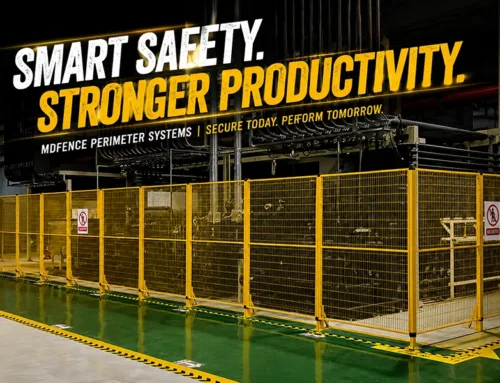
The photos in this article are not decoration. They document the mesh density, weld quality, clamp structure, and anchoring method that make the solution credible in a high-density recycling environment. If your site is fighting for space, the design goal is simple: keep the barrier compact, keep the route clear, and keep the line compliant.
Industrial Safety Fence for tighter, safer, more efficient layouts
If your sorting center is losing valuable area to oversized safety setbacks, Mdfence can help you rework the layout around a compact 120mm isolation logic instead of a bulky legacy fence footprint.