RU
RU  EN
EN  DE
DE  PT
PT  JA
JA  ES
ES  IT
IT AGV / AMR path guarding for mixed-traffic plants
Machine guard fencing for AGV and AMR restricted zones: controlled access for mixed-traffic plants
When AGVs or AMRs share a plant with operators and high-speed palletizing robots, Machine guard fencing creates a full-height physical boundary around the restricted zone and gives forklifts, vehicles, pallets, and people a defined, interlocked access point.
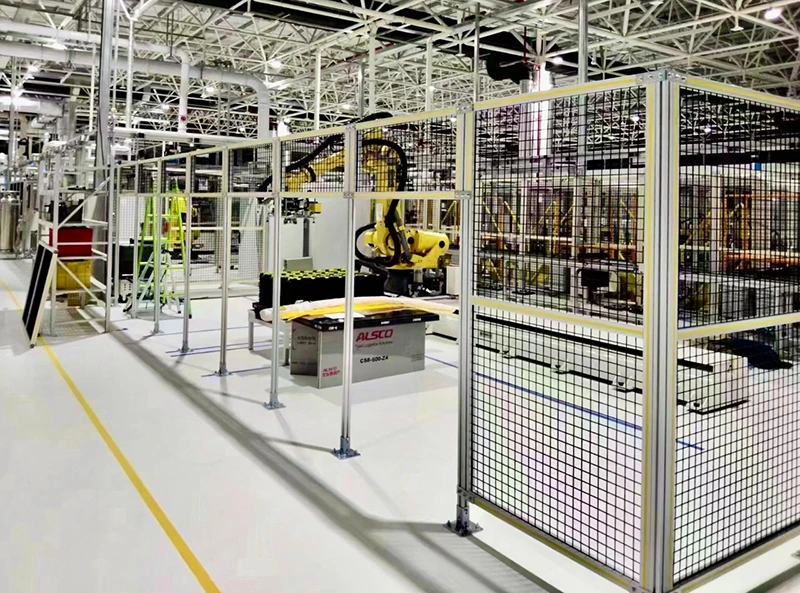
What an AGV restricted zone needs from machine guard fencing
In a human-machine mixed-traffic area, floor markings, chain-link remnants, or improvised barriers do not provide the same physical separation as a designed perimeter guarding system. The layout needs a sufficiently high barrier, controlled doors at vehicle and material crossings, and a safety circuit that responds when access is opened.
| Требование проекта | Alfence configuration evidence |
|---|---|
| Full-height separation | Steel wire mesh panels are available at 1000, 1800, and 2000 mm; multiple sections can be stacked for a higher boundary where the risk assessment requires it. |
| Defined vehicle and material openings | Hinged, folding, telescopic, standard sliding, and linear / pulley doors cover personnel, forklift, AGV, and pallet access. Single hinged doors reach 1500 mm; double sliding doors reach 4300 mm; double linear / pulley doors can reach 6000 mm. |
| Controlled restart behavior | Safety interlock locks, magnetic handles or mechanical key locks, safety switches, and safety light curtains can be coordinated with the plant safety system so a door-open condition can stop the protected operation. |
| Fast retrofit and future change | The modular frame uses T-slot aluminum posts and a post-and-panel layout. Bolt-free panel replacement and reconfigurable sections reduce on-site welding and support line changes. |
| Floor installation and proximity | Floor-mounted posts use foot connectors and expansion bolts. A 20 × 100 mm welded mesh grid can support a closer-to-hazard layout while the final distance remains subject to the applicable risk assessment and EN ISO 13857 requirements. |
Why Alfence fits AGV path guarding and controlled crossings
1. A physical perimeter instead of a visual warning
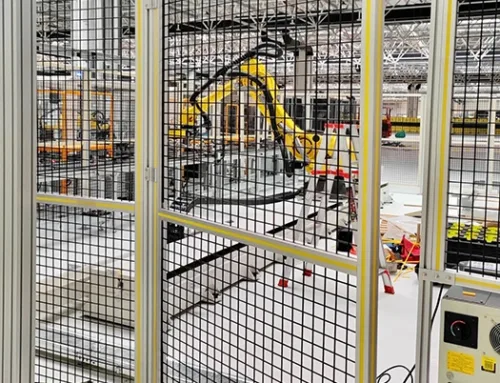
Alfence combines a modular frame, T-slot aluminum posts, steel wire mesh panels, and anchored foot connectors to separate an AGV path or palletizing cell from operator circulation. The anchored enclosure shown here makes the protected boundary and the access side visible without relying on a painted line or a temporary plastic barrier.
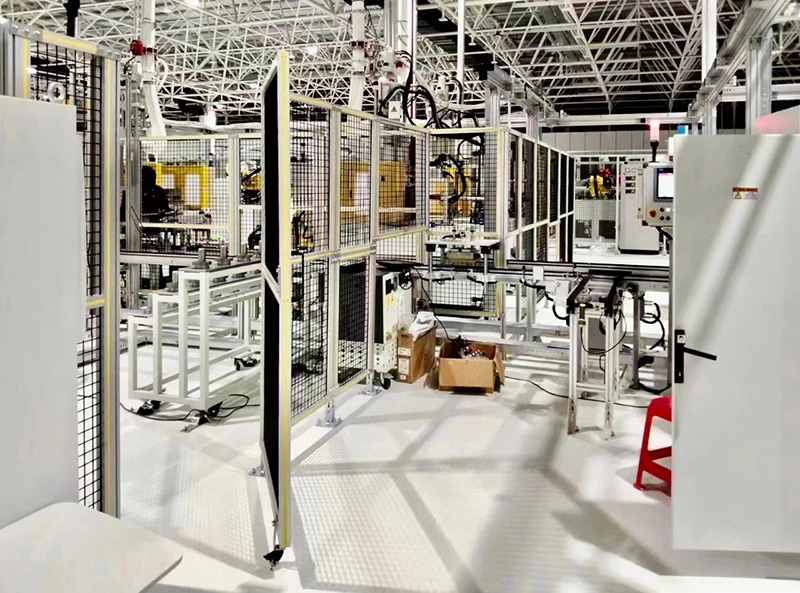
2. Door types match the movement pattern
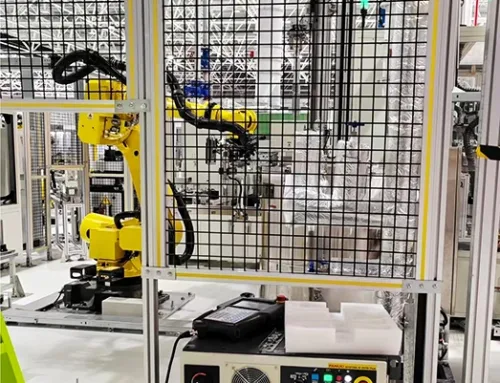
A personnel door should not be forced to serve a pallet or AGV route. Alfence offers hinged, folding, telescopic, sliding, and linear / pulley safety doors so the opening can be selected around the actual traffic envelope. The hinged-gate installation below also shows why the door structure, control panel, and machine cell need to be considered as one guarding layout.
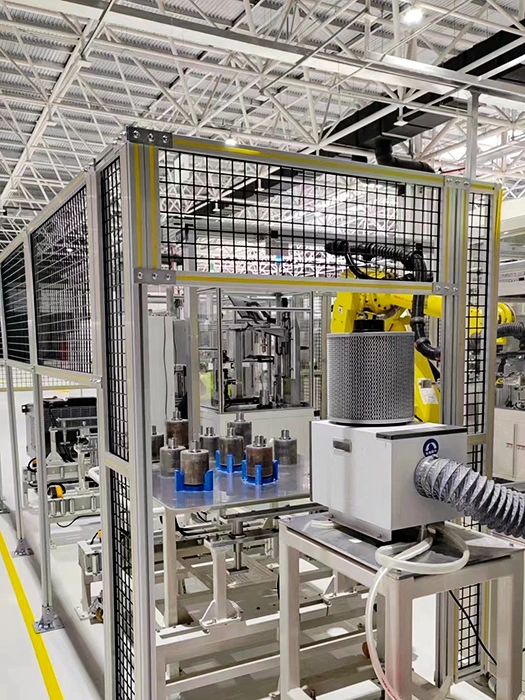
3. Interlocked access supports a controlled stop
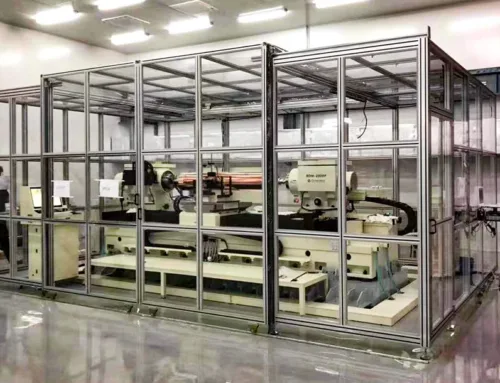
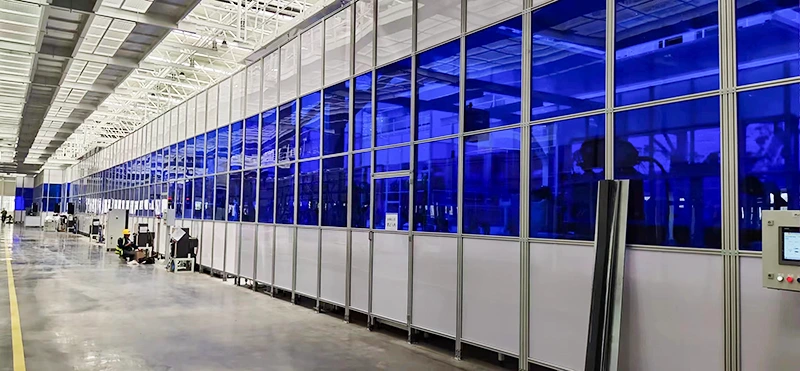
The gate is only one part of the safety function. A safety interlock lock, magnetic handle or mechanical key lock can be paired with a safety switch and light curtain, then connected to the site safety system. The transparent-panel enclosure below illustrates how operators can retain visual access while the door remains a managed entry point; the control logic and required performance level must be confirmed during the project risk assessment.
Where this machine guard fencing layout is useful
- AGV path guarding: separate automated vehicle travel from operator walkways and define the points where vehicles may enter or leave.
- AMR and conveyor interfaces: protect transfer points and material-handling robot areas while preserving a planned service route.
- Palletizing zone guarding: place high-speed palletizing robots inside a full-height perimeter and use a larger sliding or linear / pulley door for pallet movement.
- Automated warehouse guarding: apply post-and-panel sections around ASRS, shuttle-car, or storage-zone equipment with controlled maintenance access.
- Retrofit guarding: replace welded steel fence or makeshift barriers with reusable modules when the production line changes.
For each application, the final panel height, safety distance, door opening, vehicle detection, interlock logic, and emergency-stop behavior should be checked against the machine risk assessment. Alfence supports the physical guarding architecture; it does not replace the site-specific safety validation.
Installation evidence for an industrial safety fence retrofit
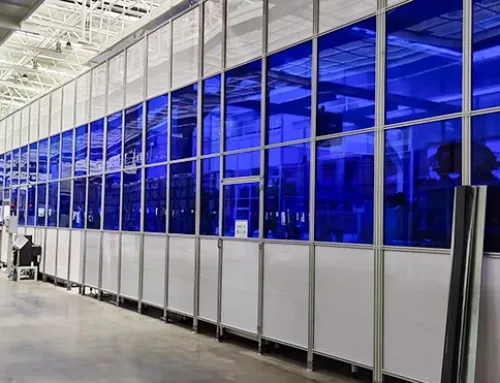
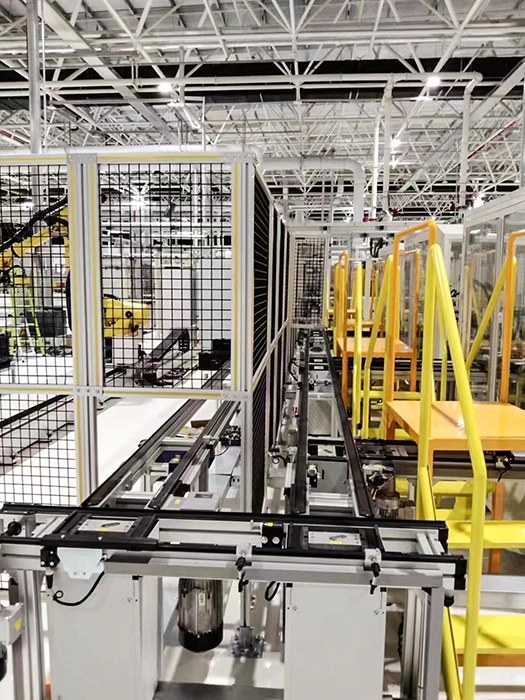
Alfence is intended for indoor plant installation and retrofit guarding. Aluminum extrusion, shot blasting, and powder coating support a corrosion-resistant, lightweight frame; expansion-bolt floor mounting and removable panels help installers avoid on-site welding. The conveyor-side installation below shows how machine guard fencing can be coordinated with an access platform and a material-handling line.
Turn an AGV hazard boundary into a controlled route
Share the AGV or AMR path, pallet dimensions, pedestrian crossings, required clearances, and door-control points. SGF can review the Alfence panel heights, door type, interlock accessories, and modular layout for your machine guarding project.