RU
RU  EN
EN  DE
DE  PT
PT  JA
JA  ES
ES  IT
IT Construction fencing for hygiene zoning
Construction fencing for food plant hygiene zoning
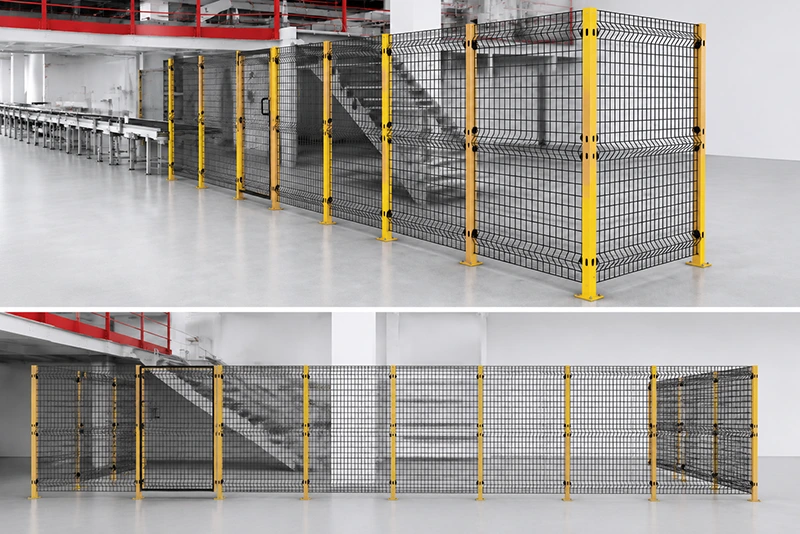
Construction fencing turns SOP zoning into visible physical separation for allergen rooms, QA hold areas, nonconforming goods, and chemical storage. It gives food plants a lockable barrier that auditors can see and supervisors can verify at a glance.
In food plants, the problem is not whether the SOP says “no mixing”. The problem is whether people, pallets, and trolleys can still take a shortcut. A line on the floor can be crossed in one step. A sign can be ignored. If the boundary is not physical, it is not auditable.
Why tape, signs, and painted lanes fail the audit test
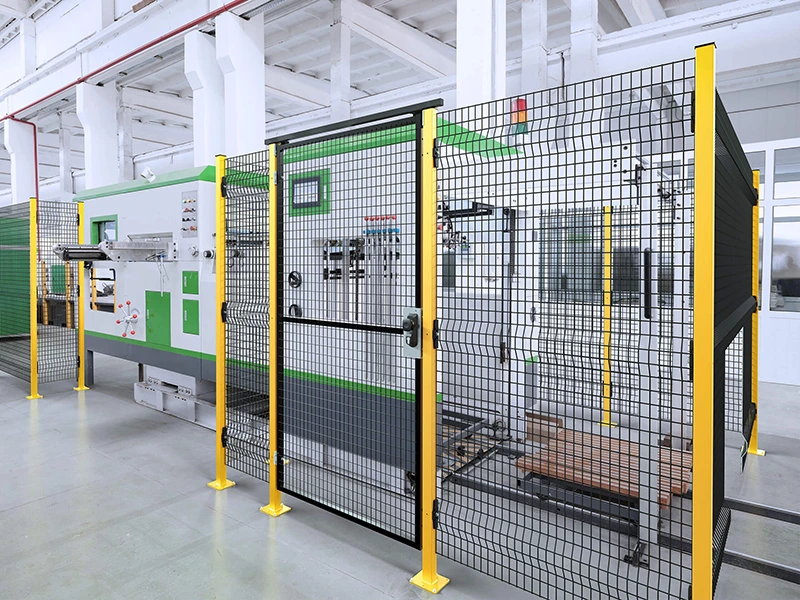
Most hygiene zoning failures start the same way. The line is drawn on the floor, the SOP is updated, and everyone assumes the boundary exists. Then a pallet sits in the wrong lane, an operator cuts through the corner, or a temporary tray is left in a clean zone. The rule still exists, but the physical separation does not.
That is why auditors keep asking for proof of area demarcation, storage area separation, and material segregation. They do not want a promise. They want hardware that makes unauthorized access difficult and makes the boundary obvious from across the room.
Why Mefence fits hygiene zoning better than a solid wall
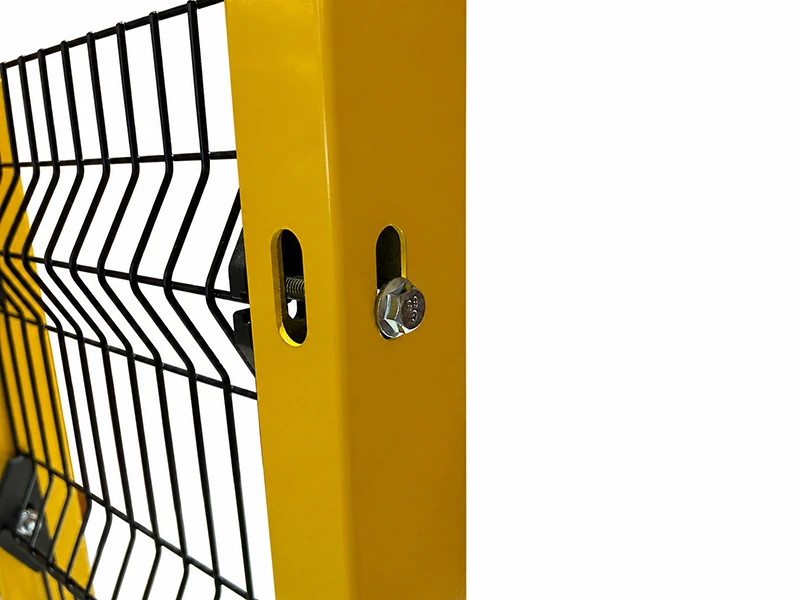
Mefence is an промышленное защитное ограждение built for zoning, not for hiding. The mesh keeps visibility open, so supervisors and auditors can see what is inside the zone without opening the barrier. That matters for allergen raw material rooms, hold-and-release areas, quarantine cages, and chemical or cleaning-supply storage.
Compared with a full wall, a frameless safety fence style layout is cheaper to reconfigure, faster to install, and easier to supervise. Compared with tape or cones, it is a real защита машин style barrier: people can see it, touch it, and be stopped by it.
Честная граница: Mefence is galvanized plus powder-coated steel construction fencing. It is suitable for warehouse, logistics, and perimeter zoning. It is not a food-contact-grade surface and should not be used as a direct process surface.
Visibility without surrendering control
The mesh structure gives you the advantage of a visible boundary. That is important when the site needs daily oversight, cross-checks, and quick verification during sanitation or pre-shift audits.
Modular reconfiguration without welding
The system uses post-and-panel construction with clip fixing, base plate posts, and bolt anchoring. In practice, that means no welding required, one-person installation in many layouts, and a modular reconfigurable system when the process changes.
Built for practical floor planning
When the lane width changes or a new hold area is added, the barrier can be extended, shortened, or relocated. That is why teams looking for a quick install safety fence often move away from masonry partitions and toward industrial safety fencing.
Structure and parameters that make the boundary auditable
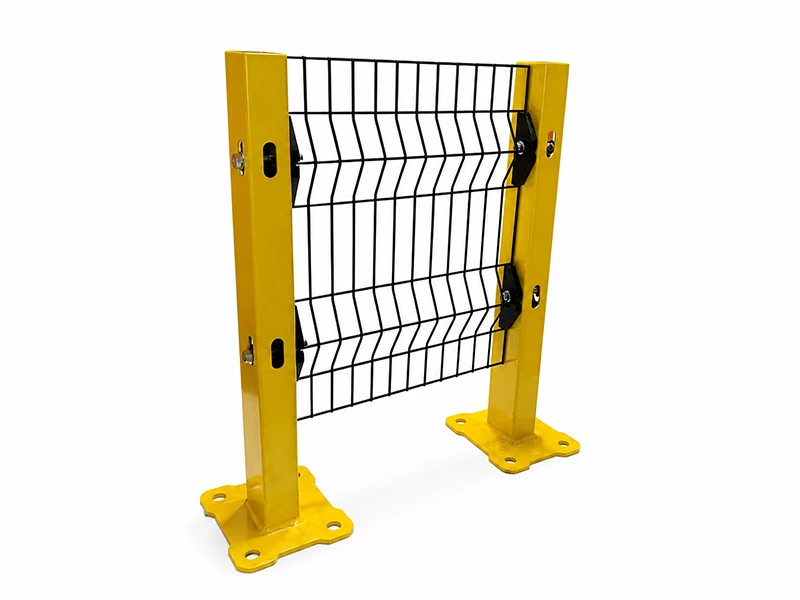
The reason the system works is simple: it is built like hardware, not like decoration. The mesh panel, post, and anchor details matter because physical separation must survive daily traffic, cleaning routines, and layout changes.
| Parameter | Typical option | Why it matters in hygiene zoning |
|---|---|---|
| Диаметр проволоки | 3 mm / 4 mm | Sets stiffness for a visible, durable barrier. |
| Размер ячейки сетки | 50×50 or 20×100 | Balances visibility, access control, and supervision. |
| Panel width | 200-1400 mm | Fits narrow aisles, wide zones, and custom layouts. |
| Panel height | 200-3000 mm | Supports low segregation or full enclosure. |
| Размер поста | 40×60 or 60×60 | Provides the rigid frame needed for repeated use. |
| Способ крепления | Base plate, expansion bolt, clip fixing | Makes installation fast and relocation practical. |
In site language, that means you can keep the boundary slim, visible, and easy to clean around. You are not trying to create a sealed room. You are trying to stop mixed traffic, stop casual entry, and make the wrong move physically inconvenient.
Where to use construction fencing inside the plant

The best use cases are the places where the line between “allowed” and “not allowed” must stay visible all day:
- Allergen raw material zone: keep allergen ingredients physically separated from general ingredients and packaging flow.
- QA hold / release area: keep nonconforming goods from being mixed back into approved stock.
- Chemical and cleaner storage: isolate chemicals from picking lanes and receiving traffic.
- Зонирование склада: divide clean storage, quarantine, and dispatch paths without building a permanent wall.
- Барьер для пути вилочного погрузчика: reduce shortcut traffic and keep pedestrian vehicle separation visible.
If the site later changes its process flow, the same modular reconfiguration can move the boundary instead of tearing out a wall. That is why many plants prefer this kind of industrial safety fencing for long-term operational change, not only for one project phase.
Как выглядит конечный результат
When the boundary is physical, the audit conversation changes. Instead of explaining why people should stay out, the site can show that non-authorized entry is blocked by hardware, the zone is visible from the aisle, and the layout can be checked without opening every door.
The result is a cleaner zoning story: fewer shortcuts, clearer supervision, faster layout changes, and a barrier that supports workplace safety barrier goals without overwhelming the floor plan. For plants that need a construction fencing-style solution for hygiene zoning, that is the difference between a paper rule and a real boundary.
Need a zoning layout? Share the aisle width, gate positions, and the areas you want to isolate. We can map a modular Mefence layout for allergen rooms, QA hold zones, and chemical storage.