RU
RU  EN
EN  DE
DE  PT
PT  JA
JA  ES
ES  IT
IT 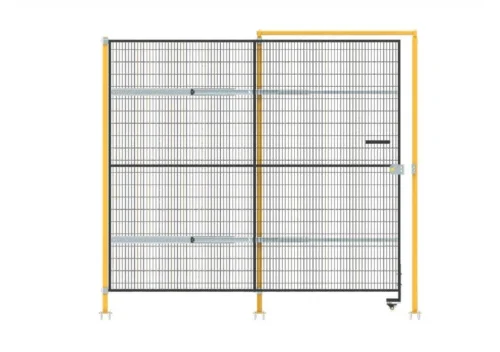

Understanding the precise relationship between a safety fence’s mesh opening size and its required distance from a hazard is fundamental to compliant machine guarding. This critical calculation directly impacts both worker safety and the efficient use of your facility’s floor space. Getting it right is not just a best practice—it’s a necessity for meeting global safety standards.
Understanding the Core Principle of Safety Distances
In any industrial environment with automated machinery, the primary goal of a physical barrier like an промышленные защитные ограждения system is to prevent personnel from reaching hazardous areas. International standards, most notably ISO 13857 (“Safety of machinery — Safety distances to prevent hazard zones being reached by upper and lower limbs”), provide the definitive guidelines for this. The core principle is straightforward: the larger the opening in a guard, the farther away that guard must be placed from the hazard. This is because a larger opening allows a person’s body part—from a fingertip to a full arm—to penetrate deeper towards the danger zone before the guard physically stops them.
How Mesh Size Directly Influences Reach Distance Calculations
The specific dimensions of the mesh openings in a wire mesh panel are the primary variable in determining this minimum safe installation distance. A smaller, more restrictive opening allows the entire fencing system to be installed closer to the machinery, directly impacting facility layout and operational efficiency.
The “Reaching Through” Risk Assessment
Standards provide clear data that correlates opening size to the part of the body that can pass through it, and thus dictates the required distance. The smaller vertical or horizontal dimension of a rectangular mesh opening is the controlling factor. For example, in a common 20 x 100mm mesh, the 20mm dimension is the critical measurement for safety calculations.
This relationship can be illustrated as follows:
| Mesh Opening Size (e) | Typical Body Part Penetration | Required Minimum Safety Distance (Sr) |
|---|---|---|
| 4mm < e ≤ 8mm | Fingertip | ≥ 100 mm |
| 8mm < e ≤ 20mm | Finger up to knuckle | ≥ 120 mm |
| 20mm < e ≤ 40mm | Hand up to wrist (excluding thumb) | ≥ 200 mm |
| 40mm < e ≤ 120mm | Arm up to elbow | ≥ 850 mm |
The Role of Structural Integrity in Maintaining Safety
The calculation assumes the mesh openings remain constant. This is why the structural integrity of the panel is as important as the mesh size itself. A system built with robust materials like Q235 carbon steel and a design that features обрамлённые панели provides superior rigidity. The frame prevents the mesh from deforming or buckling under accidental impact, which could otherwise enlarge the openings and compromise the calculated safety distance. Furthermore, using a substantial wire diameter (e.g., 3mm or 4mm) ensures the individual wires resist being bent or broken, maintaining the guard’s effectiveness over its entire lifecycle.
Practical Benefits for System Integrators and Facility Planners
Applying this knowledge correctly yields significant operational advantages, especially for system integrators designing complex automated cells or facility managers trying to maximize production within a limited footprint.
Optimizing Valuable Floor Space
The most direct benefit of using a smaller mesh size, such as 20 x 100mm, is the ability to place the защитные ограждения для роботов significantly closer to the machinery. In a high-density manufacturing environment where every square foot is valuable, this can be the difference between a feasible layout and an impossible one. It allows for wider, safer walkways and more efficient material flow around the work cell without compromising on safety compliance.

Ensuring Unquestionable Compliance and Reducing Risk
For a system integrator, delivering a turnkey solution that is fully compliant with standards like ISO 14120 and OSHA regulations is non-negotiable. By selecting a fencing system with certified and clearly specified mesh sizes, you transfer the compliance risk. It removes guesswork and the potential for costly rework during the final safety audit. A properly specified and installed guarding system is a clear demonstration of due diligence, protecting both personnel and the company from liability.

An Engineered Approach to Safety and Flexibility
A professional safety fencing system is engineered with these principles at its core. By offering standardized mesh options like 50 x 50mm for general-purpose guarding and 20 x 100mm for high-risk or space-constrained applications, a modular system provides the flexibility to create the most effective solution for any scenario. This approach ensures that you are not just buying panels and posts, but a comprehensive safety solution that has been designed and tested to meet the stringent demands of modern industrial automation, allowing you to build safer, more efficient, and fully compliant work environments.
Часто задаваемые вопросы
1. What is the most common mesh size for industrial safety fencing?
Standard mesh sizes like 50 x 50mm and 20 x 100mm are very common. The 50 x 50mm option often provides a good balance of visibility and general protection, while the 20 x 100mm is chosen for applications requiring closer placement to hazards or containment of smaller projectiles.
2. Does the required safety distance change if the fence is higher?
Yes. The calculations discussed here primarily address “reaching through” an opening. ISO 13857 also provides guidelines for “reaching over” a guard. A higher fence can reduce the horizontal distance required to prevent reaching over a hazard, which is a separate but equally important calculation.
3. Can I use a larger mesh size if I simply place the fence further away?
Absolutely. This is the fundamental principle of safety distances. If you have ample floor space, using a panel with larger openings placed at the correct, greater distance is a perfectly compliant solution. The choice often comes down to balancing cost, space efficiency, and the specific risks of the application.
4. Why is a framed panel better than a frameless one for maintaining safety distances?
A framed panel provides significantly more structural rigidity. This prevents the mesh from sagging, bending, or deforming under impact. Such deformation could potentially increase the opening size beyond compliant limits. The frame ensures the specified mesh size remains consistent and reliable throughout the life of the installation.
5. What specific standards dictate the relationship between mesh size and reach distance?
The primary international standard is ISO 13857. In the United States, similar requirements are found in standards from ANSI (American National Standards Institute) and the RIA (Robotic Industries Association), such as ANSI/RIA R15.06, which often harmonize with the ISO standards.