RU
RU  EN
EN  DE
DE  PT
PT  JA
JA  ES
ES  IT
IT 
If you’re a facility or operations manager, your reality is often defined by the urgent. You are the chief problem-solver, the expert firefighter, the one who keeps the entire operation running. Your to-do list is long, and the day is short. But the deepest frustration often comes not from the big, one-off projects, but from the small, repetitive problems—the “maintenance black holes” that quietly drain your budget, consume your team’s time, and never seem to truly go away.
You fix them, and they break again. It’s a cycle that can feel impossible to escape.
But what if the goal wasn’t just to get better at making repairs? What if you could eliminate some of these recurring problems from your to-do list permanently? Let’s take an honest look at five of the most common budget leaks and explore a new way of thinking about how to solve them.
1. The Endless Cycle of Guardrail and Bollard Repair
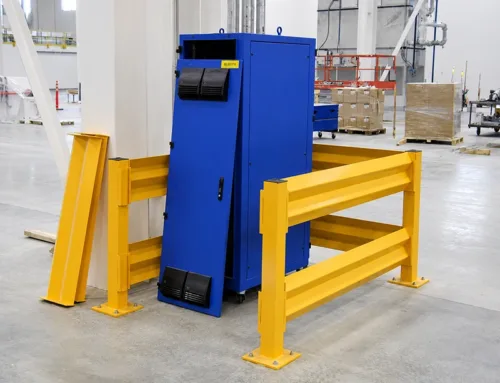
This is the classic. A forklift driver, whether a rookie or a veteran from a company like “American Logistics Co.”, misjudges a turn. The result is a loud bang and another twisted, paint-chipped steel guardrail or a leaning bollard. It’s ugly, it’s a potential safety hazard, and it kicks off the same old, tired process: get a quote for a welder for $500, schedule hot work, disrupt the area, and pay an invoice, all while knowing, deep down, that it’s only a matter of time before you have to do it all over again.
The Invisible Cost: The welder’s invoice is just the beginning. The real cost lies in the operational downtime of the cordoned-off area, your own time spent managing the repair, and the cumulative structural damage being transferred to your concrete floor with every single impact.
2. The Spiderweb of Cracks in Your Concrete Floor
Cracked, spalling concrete isn’t just an aesthetic issue; it’s a major operational and safety hazard. It creates jarring, unsafe surfaces for forklifts, leading to spilled loads and potential equipment damage. The dust it generates can be a product contamination issue. And repairing it properly is a nightmare—it’s disruptive, expensive, and requires significant downtime for curing. You patch one area, and another seems to appear a month later.
The Invisible Cost: Beyond the high cost of industrial floor repair, the true expense is in the accelerated wear-and-tear on your forklift tires and suspension, the risk of product damage from unstable transport, and the constant, losing battle against dust and debris. Often, these cracks are symptoms of deeper issues, like the repeated impacts from rigid steel guardrails mentioned above.
3. The Damaged, Energy-Wasting Dock Door
The loading dock is a zone of chaotic but controlled energy. Inevitably, a truck trailer backs in too hard, or a forklift bumps a door track. Now you have a door that won’t seal properly. In a climate-controlled facility, that gap is a firehose of wasted energy, sending your heating or cooling costs soaring. It’s also an open invitation for pests and a breach in your facility’s security.
The Invisible Cost: The immediate repair bill for the door is often dwarfed by the months of inflated energy bills you pay before the repair is completed. Add to that the potential for contaminated products and compromised security, and the cost escalates quickly.
4. The Damaged Pallet Rack Upright
This is one of the most nerve-wracking issues. A small dent or scrape from a forklift fork on a rack upright might look minor, but it can compromise the load-bearing capacity of the entire racking system. The official procedure is clear: unload the affected bays immediately, have the structure inspected by a qualified engineer, and replace the damaged component.
The Invisible Cost: The cost isn’t just the replacement part. It’s the massive labor cost of safely unloading and reloading potentially hundreds of pallets, the lost storage capacity during the process, and the significant risk of a catastrophic collapse if the damage goes unnoticed or is ignored.
5. The Never-Ending Battle to Repaint Safety Lines
Painted floor lines are critical for compliance and safety, but they have a short lifespan in a high-traffic warehouse. Forklift traffic, pallet scraping, and floor cleaning all conspire to wear them away. This means you’re constantly engaged in a cycle of prepping, masking, painting, and curing—a labor-intensive process that disrupts operations.
The Invisible Cost: The paint itself is cheap. The real cost is the recurring labor hours your team spends on this low-value task. It’s time they could be spending on preventative maintenance for critical machinery, but instead, they are on their hands and knees repainting the same yellow lines for the tenth time.
A Shift in Mindset: From Reactive Repair to Proactive Elimination
Looking at this list, a pattern emerges. These aren’t isolated incidents; they are symptoms of using outdated solutions for modern operational challenges. The traditional approach is to get better and faster at the repair cycle. A more powerful, strategic approach is to ask: “How can we engineer this problem out of existence?”
Let’s take our first and most persistent headache—the endless cycle of guardrail repair. The root cause of the problem is not just that forklifts hit things. It’s that we have historically used a rigid material (steel) that is guaranteed to permanently deform or transfer damaging forces upon impact. We are using a solution that makes perpetual repair an inevitability.
This is where modern material science offers a permanent fix. Advanced гибкие барьеры безопасности, engineered from energy-absorbing polymers, are designed to break this cycle. When impacted, they are built to flex, absorb the energy, and return to their original shape.
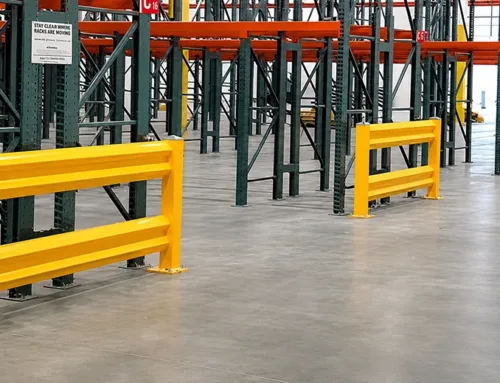
By absorbing the impact, the barrier itself is not destroyed, eliminating the need for constant repair or replacement (Problem #1). By preventing the transfer of energy to the floor, it preserves your concrete and prevents the cracks from ever forming (Problem #2). When strategically placed, these innovative гибкие барьеры безопасности can act as the first line of defense for your pallet racking, preventing the impact in the first place (Problem #4).
By making one strategic investment in a system designed for impact absorption, you don’t just solve one problem. You eliminate the root cause of several of your most persistent maintenance headaches.
The ultimate goal for any successful facility manager is to spend less time firefighting and more time optimizing. Take a hard look at your own recurring repair list. Each item is not just a task; it’s an opportunity. An opportunity to stop patching the symptoms and, instead, invest in a cure.