RU
RU  EN
EN  DE
DE  PT
PT  JA
JA  ES
ES  IT
IT 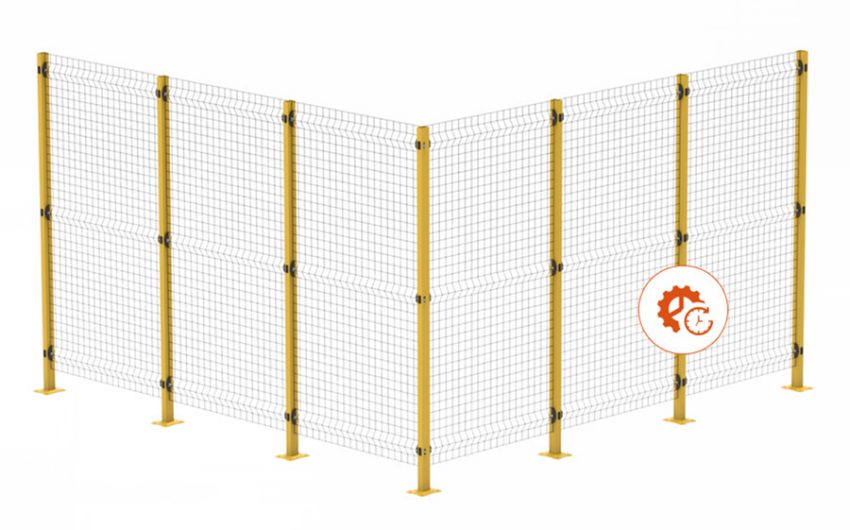
In manufacturing and logistics, we strive for agile production and lean processes. Yet, our factory floors often tell a different story—a landscape of rigid, immovable permanence. Steel partitions are welded into place, creating a static environment that conflicts with our dynamic operational goals. The Промышленное ограждение безопасности we install today to solve a specific problem often becomes the very obstacle that prevents us from seizing tomorrow’s opportunities.
The Hidden Tax of a Rigid Layout
A static physical layout imposes a hidden, long-term tax on your operations. This tax rarely appears on a balance sheet but profoundly impacts productivity and growth.
| Type of Tax | Impact on Your Operations |
|---|---|
| The Reconfiguration Tax | When a layout needs to change, a welded partition must be demolished. This involves costly labor, disposal fees, and the full expense of a new installation. The initial investment is completely lost. |
| The “Good Enough” Tax | Because reconfiguration is so painful, teams learn to live with suboptimal layouts, creating inefficient workflows and accepting compromised safety to avoid the disruption of a major renovation. This tax is paid daily in wasted movement and lower throughput. |
| The Innovation Tax | Promising automation projects or new lean manufacturing cells are often shelved because the physical barriers to implementation are too high. The factory’s rigid skeleton actively prevents the business from evolving. |
The Principles of an Evolvable Physical Space
Breaking free from this cycle requires a new set of principles for designing interior spaces, centered on an “evolvable” factory.
- Modularity Over Monoliths: The environment should be defined by standardized, interchangeable components, not large, custom structures.
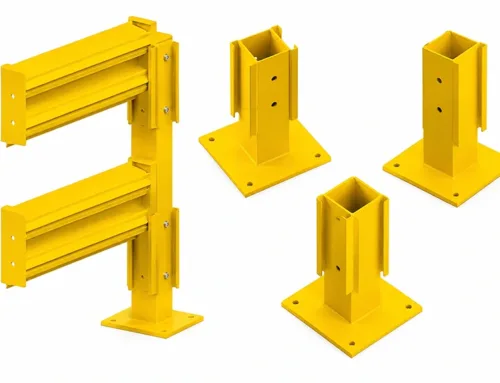
- Non-Destructive Assembly: Connections must be reversible, using mechanical fasteners like bolts and clips, not permanent welds.
- Total Component Reusability: Every component—posts, panels, and fasteners—should be 100% reusable in a new configuration.
Case Study: The Three-Year Journey of a Single Panel
Imagine the life cycle of one modular panel from a Промышленное ограждение безопасности system:
Year 1: It’s installed as part of a 20-meter wall for a new quality inspection zone.
Year 2: The zone needs to expand. The team unbolts the end section, adds new panels, and reinstalls the original panel at the new endpoint. The initial investment is fully preserved.
Year 3: An automation project requires a small robotic cell. The team takes that same panel, cuts it to a new size, and uses it to form one side of the new cell. The off-cut is used to close a gap elsewhere. Over three years, a single component serves three different purposes without waste.
Build for Tomorrow, Today
The smartest investment in your facility’s infrastructure is not in the partitions for today’s layout, but in a system that can seamlessly become whatever you need for tomorrow’s challenges. By embracing an evolvable layout strategy, you are building a more agile, competitive, and future-proof operation.