RU
RU  EN
EN  DE
DE  PT
PT  JA
JA  ES
ES  IT
IT Machine Fencing for scrap lines and dismantling zones
Machine Fencing for Heavy Impact Containment in Scrap and Auto Dismantling Lines
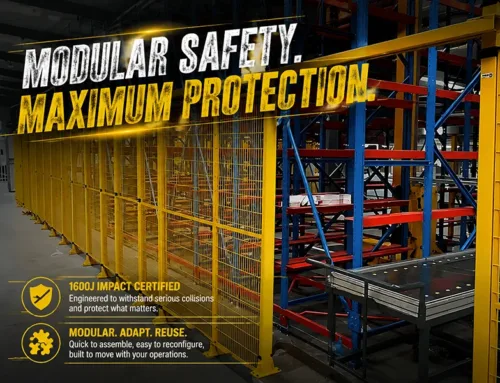
When heavy metal fragments fly and forklifts keep working beside the line, standard light fences deform fast. Machine Fencing built on Q235 carbon steel, 60×60 mm uprights, and a 1600 J impact rating helps keep the hazard inside the perimeter.
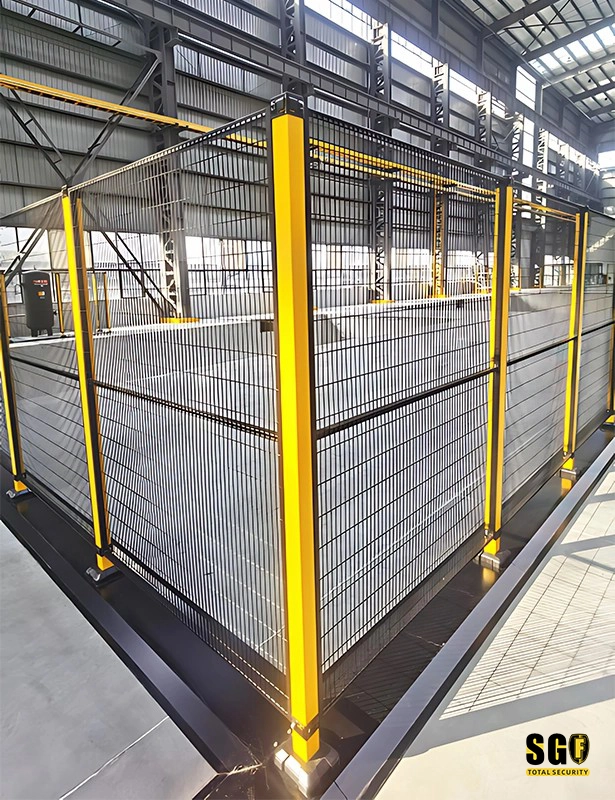
Why this Machine Fencing specification fits high-impact recycling zones
In scrap breaking, vehicle dismantling, and metal transfer areas, the problem is not just access control. The real risk is a fence that bends, opens a gap, or lets a fragment pass through when a heavy part or a vehicle hits the perimeter. This Machine Fencing concept is built around a rigid structure and a fine mesh so the barrier can absorb impact and still block flying debris.
| Key machine fencing fact | What it solves on site |
|---|---|
| Углеродистая конструкционная сталь Q235 | Gives the fence a hard working frame for industrial use, not a light decorative barrier. |
| 60×60 mm uprights | Improves stiffness at the post line where forklift brushes and accidental hits usually start. |
| TÜV certified, up to 1600 J impact resistance | Supports high-impact zones where heavy scrap pieces or equipment contact are expected. |
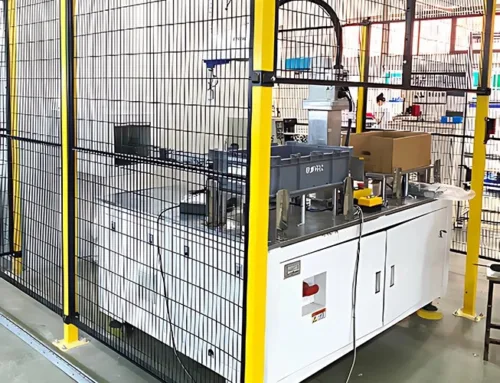
| 20×100 mm anti-intrusion micro mesh | Helps stop metal fragments and reduces the chance of hand access or flying debris escape. |
Three reasons Machine Fencing performs better than a light-duty fence
1. The frame is designed to take the hit first
A scrap yard or dismantling line needs perimeter protection that can tolerate repeated knocks. The 60×60 mm upright format and Q235 carbon steel structure turn the fence into a real load-bearing boundary, not a thin divider. That is why the corner and post detail matter: once the frame stays square, the whole enclosure keeps its protective shape.
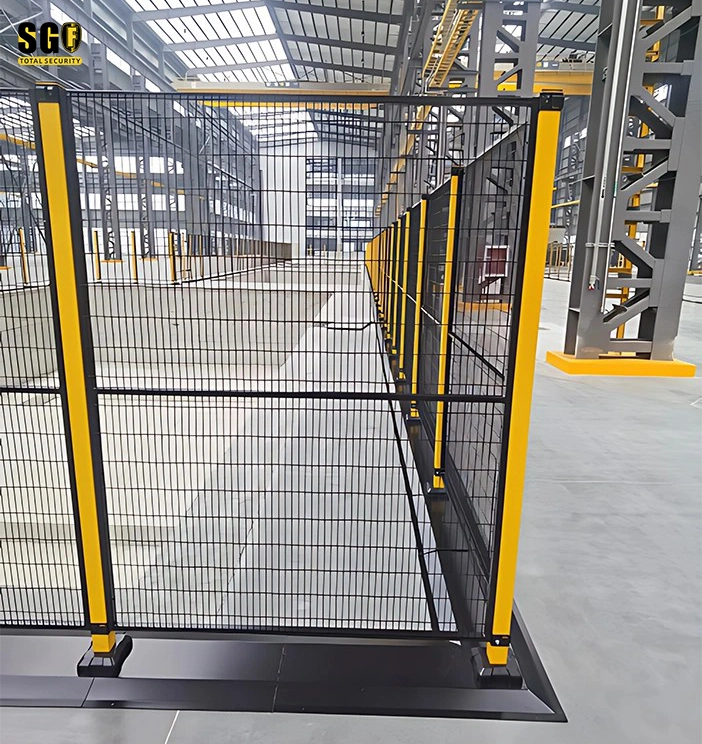
2. Impact rating is what separates a barrier from a warning sign
Many sites install a fence only to discover that one collision opens the line. A 1600 J impact rating gives Machine Fencing a meaningful safety margin for real industrial contact events, including forklift scrapes and accidental strikes from handling equipment. The visible perimeter still looks clean, but its job is to absorb energy and keep the hazardous side isolated.
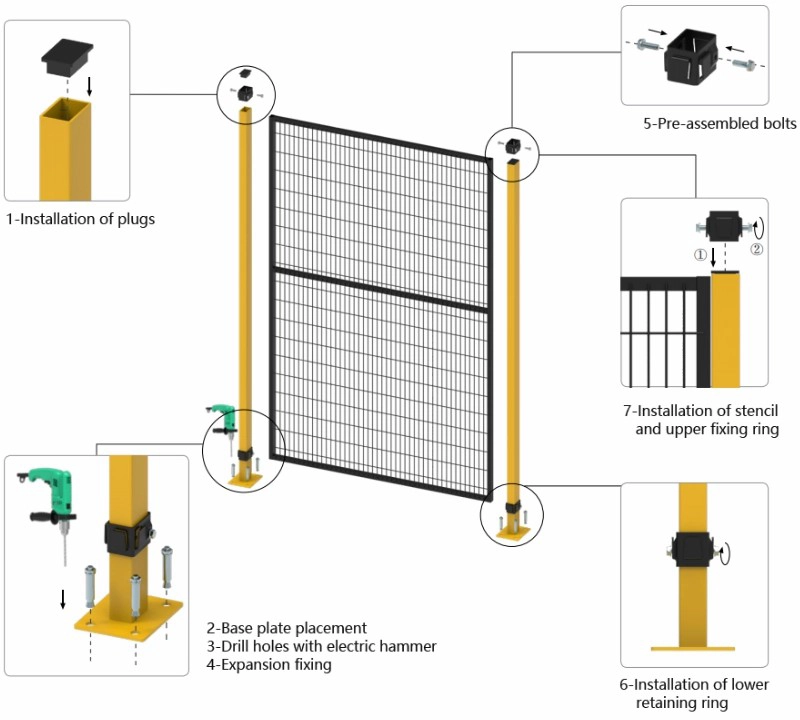
3. Micro mesh keeps fragments and hands on the safe side
The 20×100 mm anti-intrusion mesh is the part that matters when the line throws sharp scrap, broken pieces, or fast-moving debris. It narrows the opening, blocks smaller fragments more effectively, and helps prevent accidental hand reach-in. For recycling and dismantling operations, that is the difference between a perimeter that merely defines space and a barrier that actively contains the hazard.
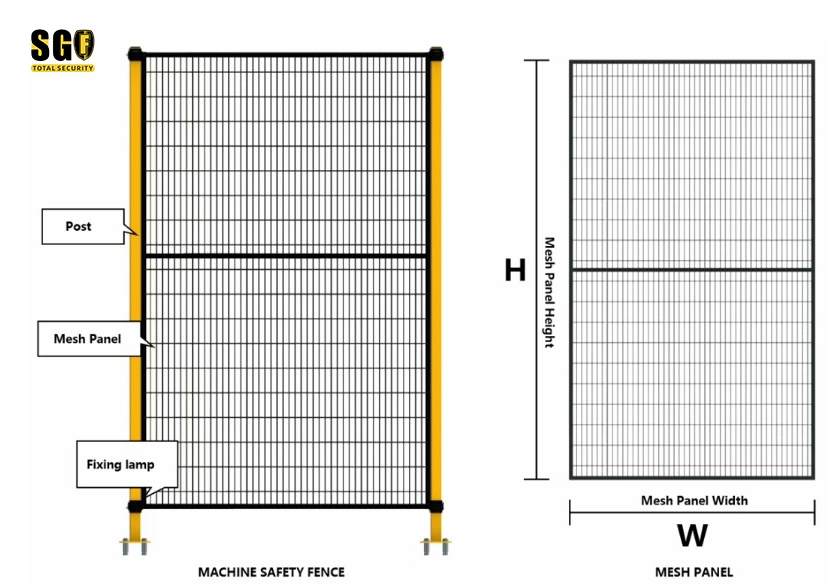
Where Machine Fencing makes the most sense
- Scrap breaking lines where heavy fragments can rebound toward walking routes.
- Auto dismantling zones where forklifts, pallets, and recovered parts share the same perimeter.
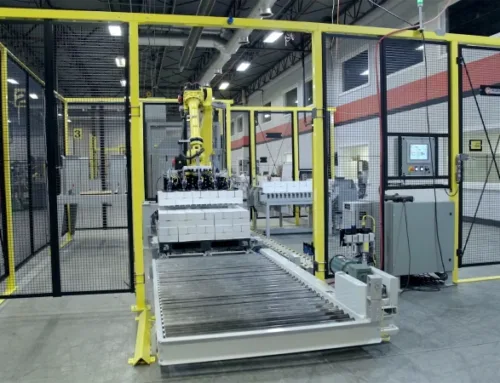
- Transfer corridors beside conveyors, loaders, and sorting equipment with repeated side contact risk.
- High-risk production edges where operators need a rigid barrier, not just a visual boundary.
In every one of these cases, the same logic applies: keep the impact inside the fence, keep the debris from escaping, and keep the working aisle open for controlled movement. That is the practical result Machine Fencing is built to deliver.
What to specify before ordering Machine Fencing
For a scrap or dismantling site, specify the impact zone, expected collision risk, required enclosure length, mesh opening, post size, and access point positions. The product fit is strongest when the barrier specification matches the actual debris and vehicle exposure. With the right layout, Machine Fencing becomes a permanent containment line instead of a temporary patch.
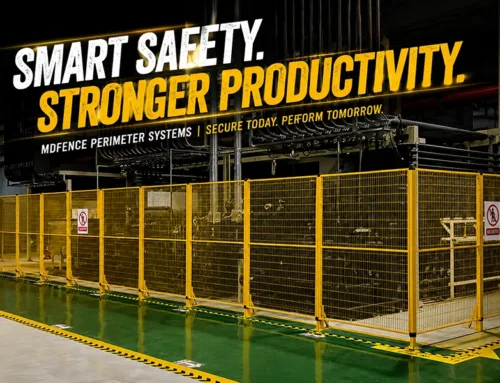
Build the perimeter the hazard cannot break through
Machine Fencing is the right choice when your line faces flying metal, forklift contact, and repeated industrial abuse. Use a rigid Q235 structure, 60×60 mm uprights, TÜV-rated impact resistance, and 20×100 mm micro mesh to keep the risk where it belongs.