RU
RU  EN
EN  DE
DE  PT
PT  JA
JA  ES
ES  IT
IT 
A New Mindset for Risk Management That Lets You Say Goodbye to On-site Firefighting.
Let’s be honest for a moment. Picture your last project. When you think back to the moments of peak stress, what comes to mind? Was it the initial budget negotiation? The meticulous sourcing of materials?
Probably not.
The real stress—the kind that keeps you up at night—comes from the unexpected. It’s the frantic phone call from the site foreman telling you the pre-fabricated components don’t align with the foundation. It’s the sight of an entire crew standing idle, waiting for a single replacement part to arrive. It’s the ripple effect of a small, unforeseen issue that threatens to derail a multi-week schedule.
This is the daily reality for most project managers. We are masters of the spreadsheet, a black belt in cost control. We can account for every bolt, every labor hour, every rental fee. But our days are not spent peacefully watching a perfect plan unfold. Our days are spent firefighting.
We lurch from one small crisis to the next, managing by reaction. And while we may be experts at putting out these fires, we rarely stop to ask a more fundamental question: Are we really managing the project, or is the project managing us?
The True Cost of a Fire: Calculating the “Invisible” Budget
The biggest problem with firefighting is that it’s incredibly expensive. The costs don’t appear as a neat line item on your initial bid, so they’re often ignored until it’s too late. But they are real, and they are devouring your profit margin.
Let’s do the math—the kind of detailed accounting that happens in the post-mortem, after the damage is done.
The Cost of Downtime: Your installation crew of eight specialists is on-site. A pre-welded steel panel arrives, and it’s two inches too long for the footing. Your crew can’t proceed. Let’s say their blended cost is $60/hour per person. That’s $480 per hour. If it takes half a day to figure out a (bad) solution, you have just burned nearly $2,000 in pure, unproductive labor cost.
The Cost of Rework: The “solution” is to crudely cut the panel on-site. Now you need a grinder, a specialist to do it, and a can of cold-galvanizing spray to patch up the cut, which will inevitably fail and rust. You’ve just paid twice for the same installation step and ended up with a compromised, inferior result.
The Cost of Management Overhead: How many hours will you spend on the phone coordinating this fix? Three hours? Four? What is the dollar value of your time? Time you should have spent planning the next phase is now spent cleaning up a mess from the last one. This is a massive, unquantifiable drain on your most valuable resource.
When you add it all up, our obsession with controlling the known costs on the spreadsheet has made us blind to the astronomical process costs generated by on-site friction and inflexibility.
The Strategic Shift: Embrace Elasticity, Not Rigidity
To escape the firefighting cycle, a shift in mindset is required. We must move from a strategy of rigid cost control to one of elastic risk mitigation.
A Rigid Plan optimizes for a perfect world that never exists. It demands perfect information, perfect measurements, and perfect execution. It is brittle. On contact with the chaotic reality of a construction site, it shatters, and you are left to pick up the pieces.
An Elastic Plan, however, assumes imperfection from the start. It acknowledges that there will be discrepancies. It’s a strategy built on a simple, powerful question: “How can I build a system that bends instead of breaks?”
This means when you evaluate a material, a tool, or a partner, the primary question is no longer “What’s the lowest unit price?” It becomes, “How much flexibility does this choice give my team on the ground?”
An Example from the Field: The Paradox of the “Cheaper” Fence
Let’s revisit our scenario: installing ограждения против лазания on a site with complex, uneven terrain.
Сайт Rigid Approach dictates choosing traditional welded ограждения против лазания with the lowest per-foot material cost. It requires a 6-week lead time for custom fabrication based on “final” survey data. When that panel arrives and doesn’t fit, the fire starts. The “cheaper” fence rapidly becomes a nightmare of rework, delays, and compromised quality.
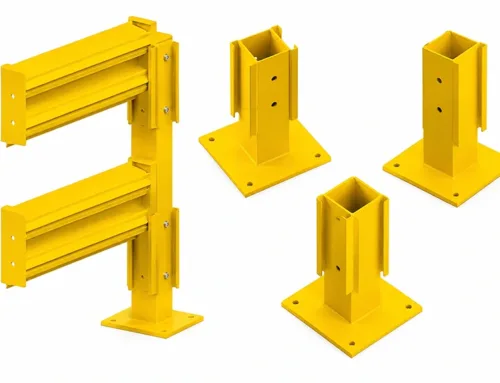
Сайт Elastic Approach changes the entire equation. The project manager, thinking about risk first, chooses a modern, modular fencing system. The initial material cost might be 10% higher. But the system is designed for imperfection. It doesn’t rely on a perfect survey from six weeks ago.
When the modular panels arrive and the team finds the same two-inch discrepancy, it’s not a crisis. It’s a 15-minute event. The foreman takes a standard cutting tool, trims the panel to a perfect fit on-site, and locks it into place with factory-engineered, non-corrosive connectors.
There was no fire. There was no downtime. There was no frantic call to the PM. The team simply adapted and moved on. The “more expensive” system just saved the project thousands of dollars in firefighting costs and kept the schedule intact.
From Firefighter to Fire-Proofing Architect
The true measure of a great project manager isn’t their ability to heroically solve crises. It’s their ability to design a project ecosystem where those crises are far less likely to occur.
It’s about having the foresight to trade a small, predictable premium in material cost for a massive reduction in unpredictable, catastrophic risk.
On your next project, as you review the bill of materials, I challenge you to try this. For each critical component, don’t just ask, “What does it cost?” Ask, “What is the cost of its inflexibility?”
By asking that simple question, you begin the shift from being a reactive firefighter to becoming a proactive architect of a smoother, more profitable, and truly well-managed project.