RU
RU  EN
EN  DE
DE  PT
PT  JA
JA  ES
ES  IT
IT 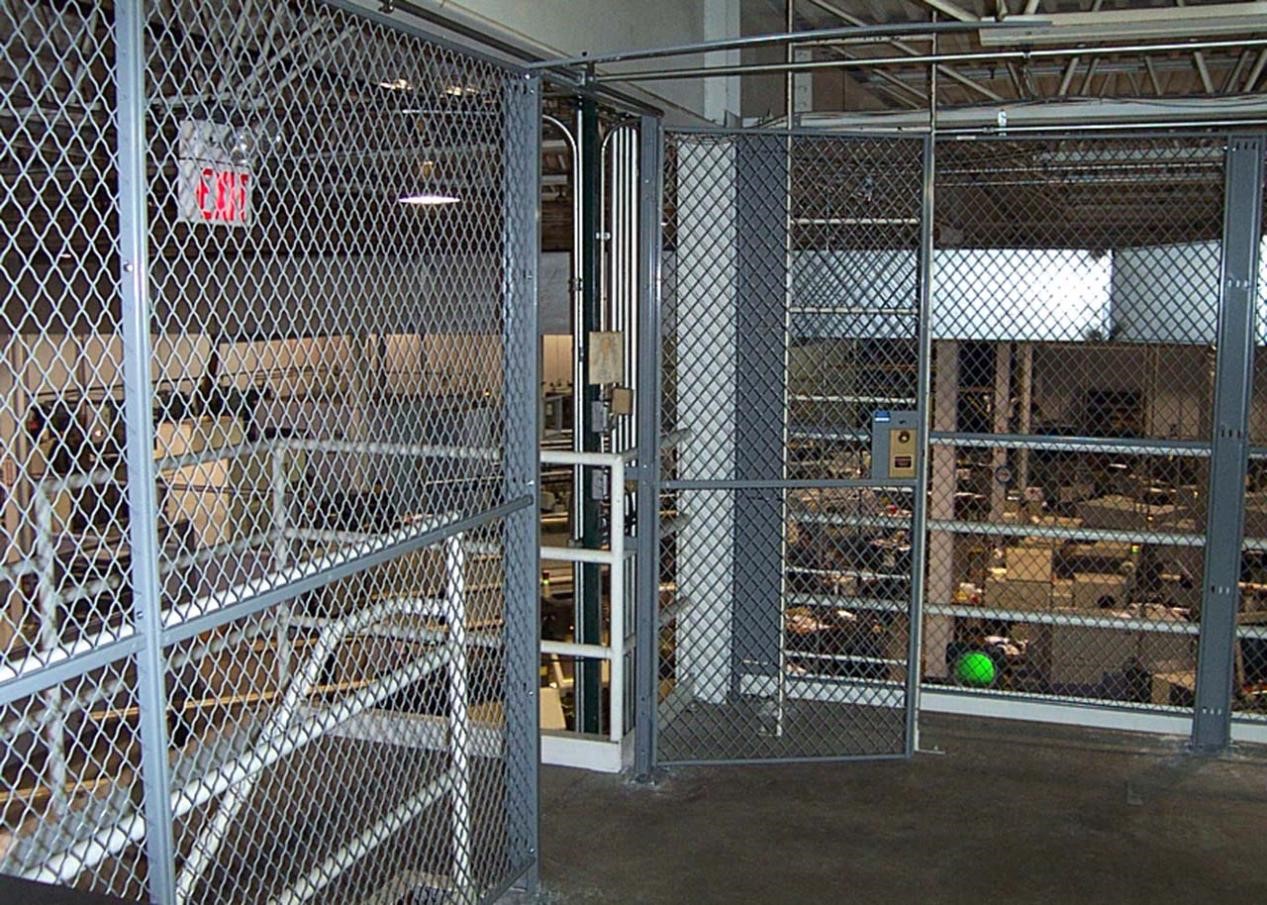
Proposals for operational safety often land on a CFO’s desk framed as a necessary, but unexciting, cost center. This is a fundamental misreading of the financial landscape. A modern approach to warehouse access control isn’t an expense; it’s one of the highest-ROI investments a logistics-based business can make.
In the world of finance, every dollar of capital must be justified. It must either drive revenue, reduce cost, or mitigate significant risk. Traditionally, warehouse safety measures have been awkwardly shoehorned into the third category, viewed as a grudge purchase to appease regulators and insurance companies.
But what if we analyzed the chaos at the loading dock not as a safety issue, but as a critical financial leak? What if the solution wasn’t a cost, but a capital investment that actively improves the balance sheet?
If you are the one responsible for the financial health of your organization, it’s time to look at the numbers behind the daily operational grind.
The True Financial Drain of the Status Quo
The “inefficiencies” your warehouse manager complains about are not just operational headaches; they are tangible, recurring costs bleeding directly from your bottom line.
Let’s quantify this. In our previous analysis, a typical warehouse identified over two hours of lost productivity per day due to inefficient driver management. Let’s translate that into financial terms:
- The Inefficiency Tax: 2 hours/day x 250 workdays/year = 500 hours/year. At a conservative burdened labor rate of $30/hour, that is $15,000 per year, per facility, lost to process friction. This is an invisible tax on your profitability.
- The OPEX Black Hole (The Human Guard): A common response is to hire a security guard. Let’s look at the fully-loaded cost:
- Annual Salary: $40,000
- Benefits, Taxes, Insurance (~30%): $12,000
- Total Annual OPEX: $52,000 This is a recurring, non-value-adding operational expense that will inflate year after year.
Combined, the status quo can easily represent a $67,000+ annual drain on the business, all while failing to fully eliminate the immense contingent liability of a potential accident. From a purely financial standpoint, this is an unacceptable leak.
The Capital Expenditure Trap: Building a Wall
The next logical step for many is to propose a permanent solution: building a concrete-block reception office. This appears to solve the problem, but it introduces a new, more insidious financial trap for the agile business.
Building a permanent structure is a significant Capital Expenditure (CapEx) with numerous hidden downsides:
- High Upfront Cost & Disruption: The project requires architects, permits, contractors, and weeks of construction, leading to significant operational downtime at your most critical point—the loading dock.
- The Sunk Cost Dilemma: This is the most critical flaw. A brick-and-mortar room is an immovable, fixed asset. In today’s dynamic business environment, what happens in three to five years when your company needs to:
- Move to a larger, more modern facility?
- Reconfigure the warehouse layout to accommodate a new product line or automation?
- Downsize or sublet a portion of your space?
The entire investment in that permanent room becomes a sunk cost. It is abandoned. It cannot be moved, adapted, or resold. Its value plummets to zero the moment your business strategy changes. You have spent significant capital to reduce your company’s future flexibility.
The Modern Approach: Investing in a Flexible, High-ROI Asset
A strategic financial leader must look beyond the immediate problem and invest in solutions that support long-term business agility. This is where a modular сетчатая перегородка system (such as a steel driver cage) becomes a superior financial instrument.
Let’s analyze this as a strategic CFO would:
- Converting OPEX to CapEx: The primary financial move is to make a one-time capital investment to permanently eliminate a recurring operational expense.
Sample Payback Period Calculation:
- One-time CapEx for a modular system: $30,000
- Annual OPEX of a security guard eliminated: $52,000
- Payback Period: $30,000 / $52,000 = 0.58 years, or approximately 7 months.
From the 8th month onward, the system generates over $4,300 per month in pure cost savings for the life of the asset. The ROI is immediate and massive.
- Preserving Business Agility: Unlike a permanent wall, a modular сетчатая перегородка is an asset designed for change. It can be easily disassembled, moved, and reconfigured. If you move to a new facility, this asset moves with you. If you need to change the layout, the system adapts. Its value is not tied to the real estate; it is tied to its function, which is portable. It is an investment in future flexibility, not a constraint upon it.
- Transforming Liability into a Tangible Asset: On your balance sheet, an uncontrolled entry point represents a significant, unquantified contingent liability. A robust, physical system actively mitigates this risk. This not only protects against catastrophic loss but can also be leveraged in negotiations for lower insurance premiums. It is a tangible action that demonstrates proactive risk management, turning a nebulous risk into a hard, depreciable asset that enhances the company’s value.
The Strategic Choice
As a financial leader, the decision is clear. You have three paths:
- Accept the Status Quo: Tolerate an annual six-figure drain from combined inefficiency and OPEX, while carrying the immense risk of a major liability event.
- Invest in a Fixed Structure: Commit significant capital to a solution that solves today’s problem but becomes a sunk cost that hinders tomorrow’s growth and agility.
- Invest in a Flexible Asset: Make a calculated, one-time investment that delivers a rapid ROI by eliminating OPEX, protects the business from liability, and functions as a strategic asset that adapts to the future needs of the company.
The modern warehouse is a dynamic environment. Its safety and efficiency should not be managed with outdated thinking or inflexible infrastructure. The right investment isn’t just about preventing accidents; it’s about building a more resilient, agile, and profitable business.