RU
RU  EN
EN  DE
DE  PT
PT  JA
JA  ES
ES  IT
IT FCBARRIER / HIGH-DENSITY FULFILLMENT CENTERS
A flexible safety barrier for the aisle where one impact becomes a shutdown
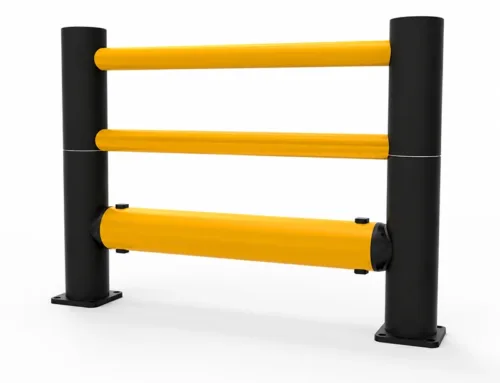
High-density fulfillment centers leave little room for a bent guardrail. FCBarrier CTR column protectors and rack-end systems use ARMORFLEX™ polymer to absorb up to 80% of impact energy and rebound; the highest DR190, TR190+ and CTR190+ ratings are 28,950 J under the stated 8 t forklift at 9.6 km/h condition. AGV routes still require site-specific vehicle, speed and anchor checks.
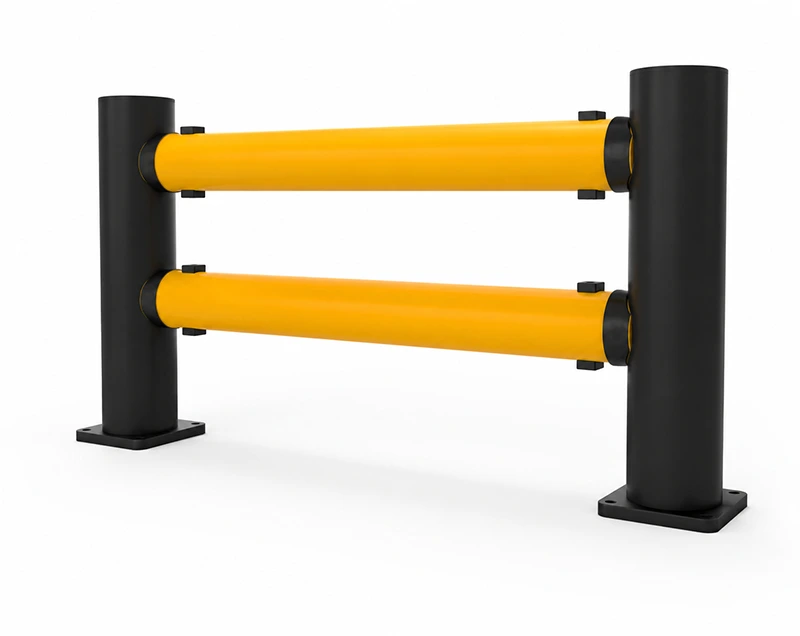
In a narrow aisle, a forklift or mobile robot contact is more than a damaged rail. It can transfer load into a rack end, building upright or floor anchor, turn a minor impact into a local collapse, and stop picking while cargo, inspections and repairs are arranged. The layout reference shows the practical point: put protection where the vehicle path meets the asset, not only around the general perimeter.
Choose the impact-energy level before the layout is frozen
For a racking protection system, vehicle mass and speed should determine the series and rating. The published FCBarrier ladder gives buyers a common basis for comparing a warehouse safety barrier, forklift safety barrier and AGV route instead of selecting a decorative bollard or a generic steel guardrail.
| Series and point-protection job | Published impact level and stated vehicle condition |
|---|---|
| CTR100 – building column and rack-end protection | 8,200 J; 3 t forklift at 8.4 km/h |
| CTR148+ – higher-load column and asset points | 19,000 J; 6 t forklift at 9 km/h |
| CTR190+ – highest stated column-protection duty | 28,950 J; 8 t forklift at 9.6 km/h |
| DR148 / TR148+ – double-rail and pedestrian-edge options | 19,000 J; 6 t forklift at 9 km/h |
| DR190 / TR190+ – high-energy double-rail or traffic-rail duty | 28,950 J; 8 t forklift at 9.6 km/h |
The 28,950 J figure is a published product condition, not a blanket AGV certificate. Confirm actual vehicle mass, approach speed, stopping behavior, contact frequency, floor condition and the required risk assessment before approving a module.
Why CTR, DR and modular polymer details matter in a narrow aisle
ARMORFLEX energy absorption changes the repair cycle
ARMORFLEX™ is the material reason FCBarrier behaves differently from a rigid Steel Barrier. Published product information says it can absorb up to 80% of collision energy and self-rebound; the product video shows a barrier deflecting and returning after a vehicle test. In a high-density aisle, that recovery behavior can reduce permanent rail damage, repeated replacement and anchor or floor-repair exposure. It is not a promise that every collision can be ignored: inspect the barrier, anchors and surrounding assets after any impact. The product profile also positions the polymer as low-maintenance, corrosion-free and UV-resistant, while temperature, chemical and fire limits remain project-specific.
CTR and DR match the point, not a generic perimeter
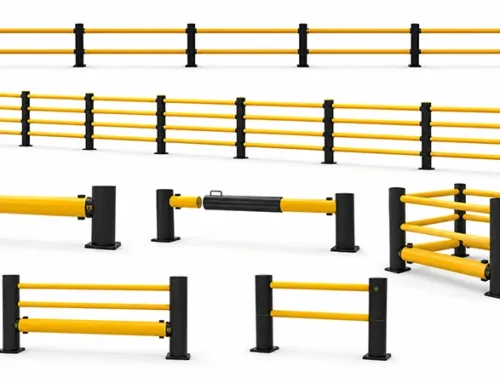
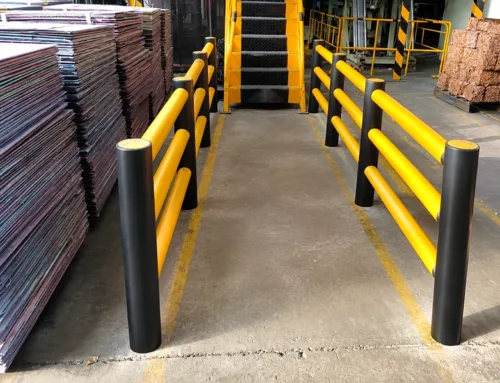
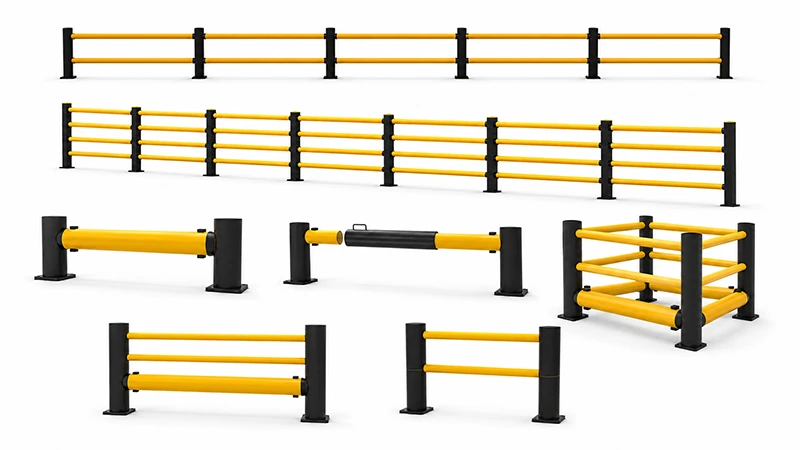
CTR is intended for building columns, rack uprights and other point-protection duties. DR uses a double-rail configuration for vehicle-side boundaries, while TR addresses traffic and pedestrian-edge separation. That distinction matters in a fulfillment center: a long open aisle needs a continuous boundary, but a high-bay rack end or structural column needs a correctly placed module close to the asset. Use the impact table to shortlist the series, then have the project team confirm geometry and vehicle conditions.
Modular repair keeps the route moving
The basic assembly is a three-rail and two-post unit using mortise-and-tenon quick connection, an internal long pin and a rubber mallet. The modular barrier and removable-rail arrangement allows a damaged rail or post to be addressed as a component rather than by dismantling a complete welded run. Installation uses drilled floor points, expansion screws, a torque wrench and protective installation equipment. Concrete strength, thickness, anchor specification, post spacing and the complete CAD package are not published, so trained site teams must verify the substrate and anchor design.
Где система действительно оправдывает себя.
- High-bay rack-end protection and warehouse safety barrier runs in logistics centres and distribution centers.
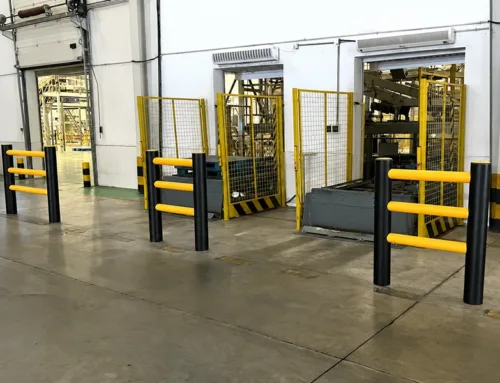
- CTR column protectors for loading bays, building uprights, equipment and other fixed assets in mixed forklift and AGV traffic.
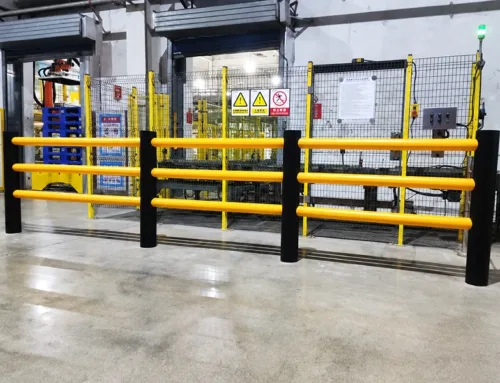
- DR and TR modules for manufacturing-plant safety, pedestrian safety and clearly defined vehicle routes.
- Retrofit barrier installations where a dense layout needs modular protection without rewriting the whole floor plan.
The result is not a promise of zero incidents. It is a more controlled impact-and-recovery loop: protect the rack end and column, absorb energy in the Flexible Safety Barrier, then inspect and replace only what the site procedure requires. That is the practical path from collision damage control to reduced accident downtime and repair exposure.
What to send for a project check
Provide a rack elevation or marked-up aisle, vehicle mass and maximum speed, the AGV route map, concrete and anchor condition, access openings and the applicable inspection regime. FCBarrier can then map CTR, DR or TR modules against the published 3,850-28,950 J range. Final suitability, anchor design and environmental limits require engineering review; public materials do not state PAS 13, TUV or Transpolis third-party certification, a polymer grade, temperature or fire rating, or a complete anchor specification.
Protect the next high-risk aisle
Share the fulfillment-center layout and the vehicles that share it. A focused FCBarrier layout can protect people, racking and building structure while keeping the repair plan modular and easier to inspect.