EN
EN  DE
DE  RU
RU  PT
PT  JA
JA  ES
ES  IT
IT 3PL / contract logistics cost control
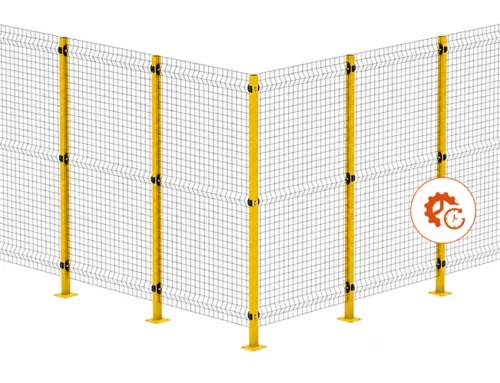
In contract logistics, safety fencing industrial is rarely a revenue line. It is a mandatory cost line that must protect people, separate traffic, and stay flexible when warehouse layouts change. Mefence is built for that reality: factory-direct pricing, modular mesh panels, bolt-down posts, and a frameless structure that keeps more of the budget inside the operation instead of inside the fence.
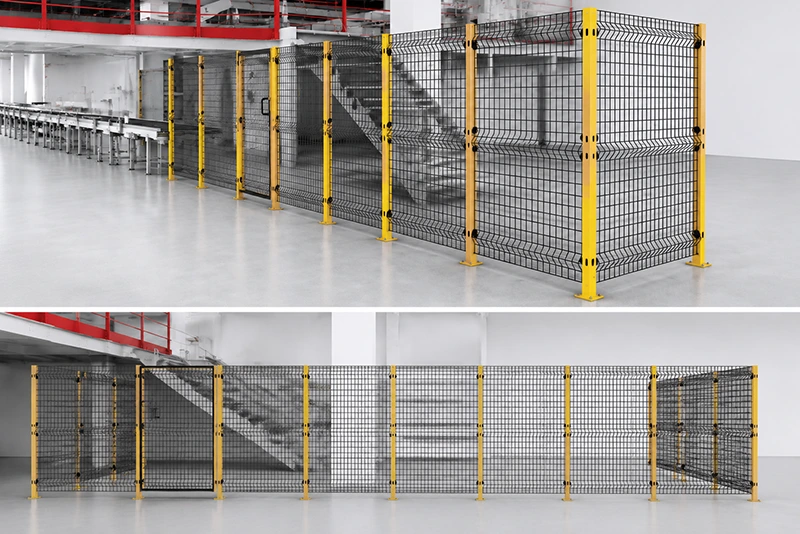
For a 3PL operator, every square foot has to pull its weight. If a fence consumes too much budget, too much floor space, or too much install time, it hurts the same margin stack that the customer contract is supposed to protect. That is why buyers keep searching for industrial safety fence, machine guarding, frameless safety fence, and safety fencing industrial with one question behind it all: can this system protect the site without turning into a capital drag?
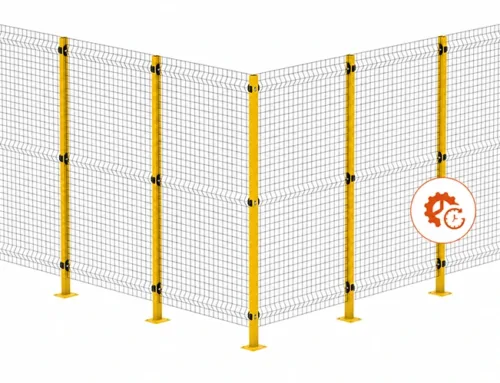
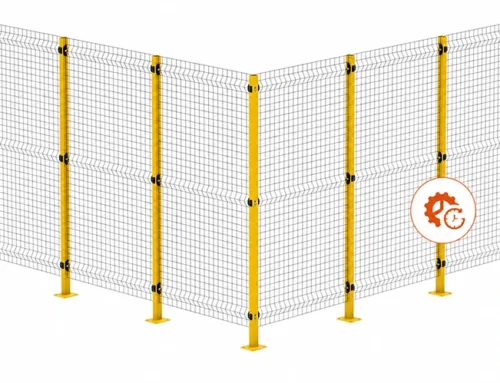
Mefence answers that question with a practical structure. The panels are made from welded wire mesh, the posts are powder-coated steel, and the system uses slotted mounting holes, clamp fixing, and bolt-down base plates. The result is a modular safety fence that can be installed, moved, and reconfigured without welding.
Why the old fence stack is expensive in logistics sites
Many warehouses still start with welded square tube fence, traditional framed fence, chain link fence, barrier tape, or rope barrier. Those options look simple on paper, but they are a poor match for contract logistics. Barrier tape does not protect equipment. Heavy framed systems lock the layout too early. Rework becomes a new project. That is a bad fit when the operator is paying for construction, racking, labor flow, and customer fit-out at the same time.
Mefence is positioned for the opposite problem: a fixed or semi-fixed safety boundary that must be precise, lean, and reusable. The profile includes wire diameter options of 3 mm and 4 mm, mesh opening options of 50×50 and 20×100, panel widths from 200 to 1400 mm, panel heights from 200 to 3000 mm, and post sizes of 40×60 or 60×60. Those ranges matter because a 3PL site rarely has a single clean layout. It has aisles, docks, conveyors, and mixed-use zones that change as the customer base changes.
| Spec | Why it matters for 3PL |
|---|---|
| Wire diameter 3–4 mm | Keeps the mesh practical for guarding and zoning without overbuilding the budget. |
| Mesh opening 50×50 / 20×100 | Supports visibility and separation around conveyors, work cells, and walkways. |
| Panel width 200–1400 mm | Helps fit uneven warehouse bays and retrofit projects. |
| Panel height 200–3000 mm | Lets the site match different hazard levels and aisle constraints. |
| Post 40×60 / 60×60 | Matches the load and footprint needed for modular installation. |
| Powder-coated steel | Improves durability in high-traffic industrial environments. |
Why Mefence fits the cost logic of contract logistics
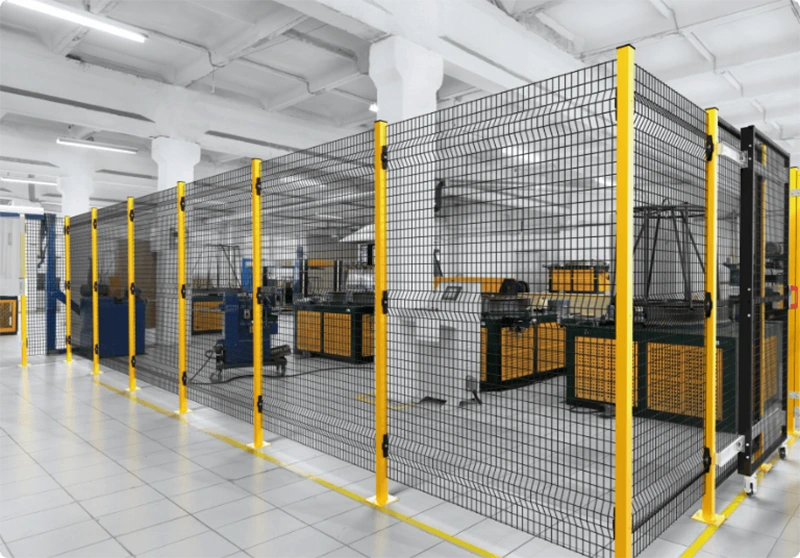
The first advantage is budget. Mefence factory-direct pricing is roughly $10–32 per meter, while many European brand alternatives sit around $105–213 per meter. For the same isolation budget, the site can fence roughly three to five times more area. In a thin-margin 3PL model, that difference can move directly into the facilities ROI line.
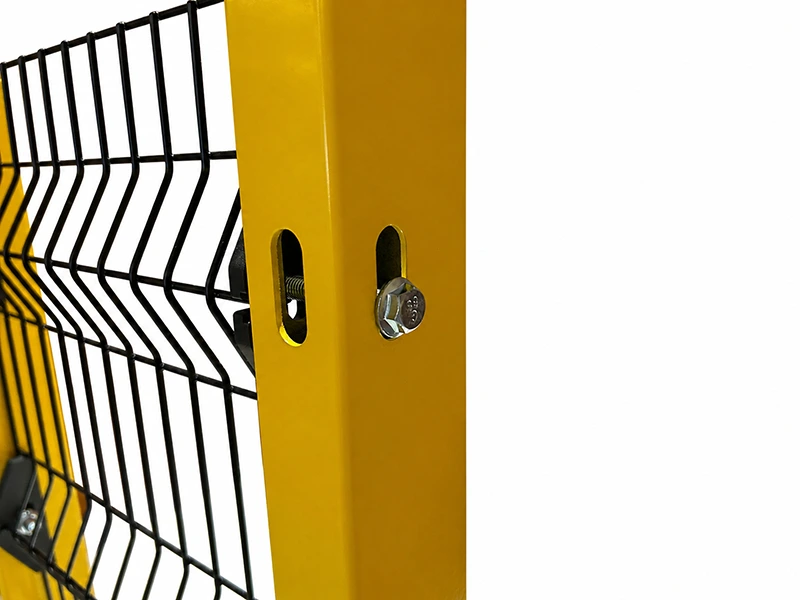
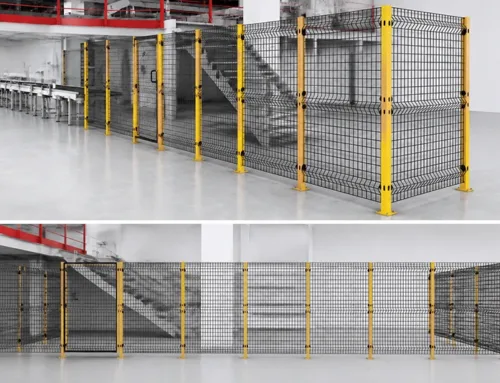
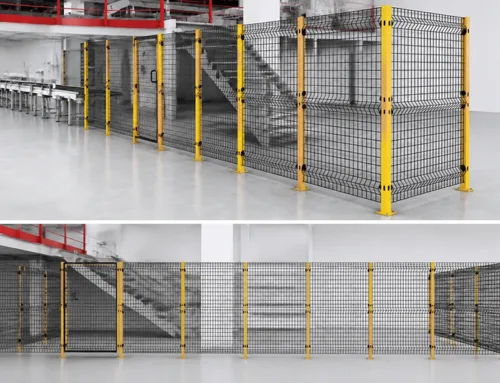
The second advantage is installation. The photo shows slotted mounting holes and a clean post-to-panel connection. That detail matters because it means adjustment is built into the system. No welding required, one-person installation is realistic on many segments, and the fence can be relocated when the warehouse changes lane flow, racking rows, or automation zones.
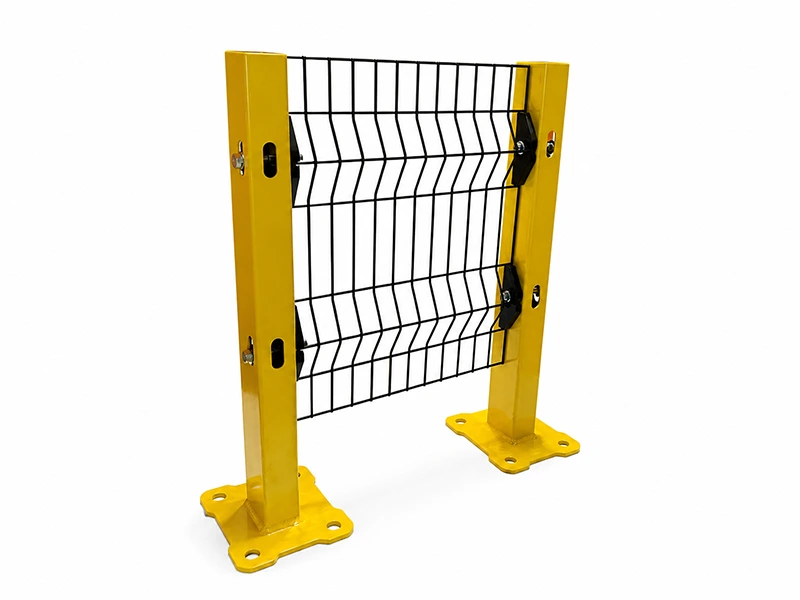
The third advantage is mechanical clarity. Bolt-down base plates and modular clips are exactly what a logistics team wants when the site must document changes, move a boundary, or expand a cell later. The system stays modular, and that means the original spend is not stranded when operations shift.
Where the system earns its keep
Mefence is a good fit for warehouse zoning, pedestrian-vehicle separation, forklift path barrier planning, storage area separation, automated equipment guarding, robotic workstation enclosure, and workshop isolation. It is also useful when a site needs a temporary partition that still feels like a real safety boundary rather than a soft warning line.
That is why the product terms in the market map matter: industrial safety fencing, machine guard fence, industrial safety fence, robot safety fence, and frameless safety fence all point to the same procurement requirement. The buyer wants a barrier that is visible, modular, reusable, and cheap enough to fit the project economics.
With Mefence, the site gets a powder-coated steel system, clip fixing, base plate posts, and a reconfigurable layout that supports the same operation over multiple lifecycle changes. For a 3PL provider, that is often the real purchase criterion: not just can it be installed, but can it be kept in service as the warehouse evolves.
What to specify before you buy
If you are quoting safety fencing industrial for a contract logistics site, specify the zone purpose, aisle width, post size, panel width, panel height, mesh opening, and whether the layout must be moved later. Mefence already covers those variables with 3–4 mm wire diameter, 50×50 or 20×100 mesh, 200–1400 mm panel widths, 200–3000 mm panel heights, and 40×60 or 60×60 posts. That means the project team is not forced to redesign the fence around a fixed SKU.
The photos above also show the proof points buyers usually ask for: slotted holes for adjustment, bolt-down base plates for stable anchoring, and modular connections that support phased expansion. Those are the details that keep a low-cost fence from becoming a weak fence.
Bottom line for 3PL buyers
If the fence is not supposed to generate revenue, it should at least preserve margin. Mefence gives contract logistics operators a way to buy safety fencing industrial at a factory-direct price, cover more area with the same budget, and keep the layout adaptable when customer demand changes.