EN
EN  DE
DE  RU
RU  PT
PT  JA
JA  ES
ES  IT
IT 
For any project manager overseeing an industrial fit-out, there’s a particular kind of dread reserved for the final stretch. The heavy machinery is scheduled, the electrical work is complete, and the project is 95% finished. Everything looks perfect on paper. Then, the call comes from the installation crew: “We have a problem. The last section of the fence doesn’t fit.”
Suddenly, the entire project timeline is in jeopardy. The cause is often trivial—a floor conduit not on the blueprints, a support column off by a few inches, or a wall that isn’t square. The consequences, however, are anything but trivial. The pre-fabricated steel panels, once a symbol of progress, now represent a critical planning flaw.
This moment is more than a logistical headache; it’s a symptom of a deeper problem. We treat the installation of infrastructure like a predictable, linear process. But the reality of a factory floor is dynamic. The issue isn’t that our plans fail; it’s that we create plans that don’t allow for failure.
The True Cost of a “Small” On-Site Mismatch
When a standard, welded-frame fence panel doesn’t fit, the physical gap quickly explodes into a financial crisis. To understand the damage, we need to account for all costs, both visible and hidden.
Direct Material & Logistics Costs:
- Sunk Cost: The non-fitting, custom panel is now effectively scrap material—an immediate write-off.
- Replacement Cost: A new panel must be rush-ordered, often incurring significant surcharges for expedited fabrication.
- Freight Premiums: Emergency shipping to get the new panel on-site adds another layer of unplanned expense.
Hidden Labor & Overhead Costs:
- Idle Labor: Your installation crew is now standing by. If a two-person team at a blended rate of $85/hour is idle for one day, that’s a $1,360 loss. A week-long delay can snowball into thousands of dollars.
- Project Management Burn: The project manager will spend days diagnosing the problem, getting new measurements, negotiating with the supplier, and adjusting schedules—valuable time stolen from other critical tasks.
The Catastrophic Opportunity Cost:
This is the cost that truly matters. That fenced-off area was designated for a new robotic welding cell or a critical inventory zone. If that new asset was projected to generate $25,000 in daily revenue, a one-week delay represents a $125,000+ opportunity cost. The “small” fence problem has directly impacted revenue and operational goals.
The Strategic Shift: From Predictive Planning to Adaptive Execution
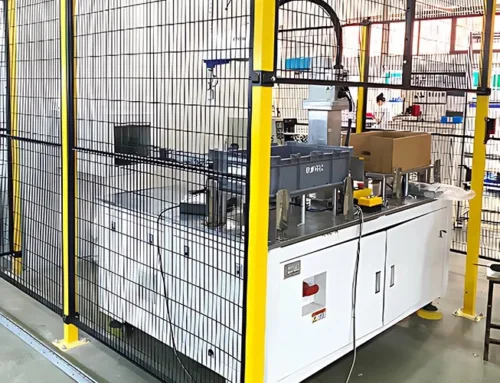
The root of the problem is our reliance on a predictive mindset. The solution lies in choosing methodologies and tools that are inherently resilient. For physical barriers, this means selecting an adaptive safety fence industrial system. The ideal hardware is not rigid but flexible and field-configurable.
- Field-Modifiable: Can be altered on-site with standard tools without compromising integrity.
- Modular: Composed of interchangeable components for easy assembly and reconfiguration.
- Forgiving: The design accommodates minor environmental imperfections without rework.
Equipping Your Team for an Adaptive Reality
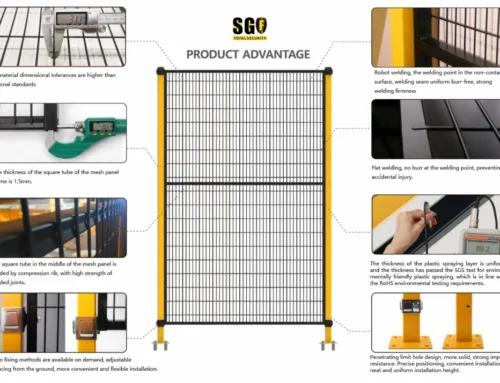
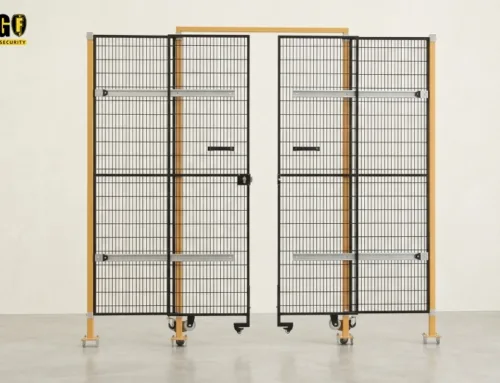
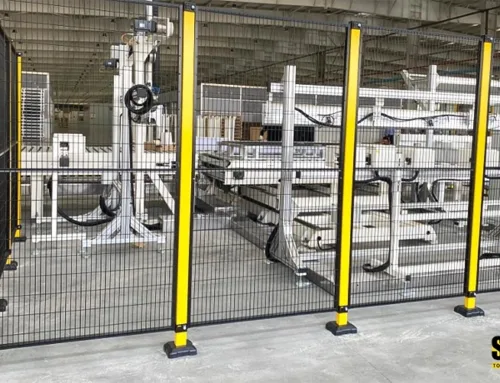
This is where systems built on a frameless mesh panel concept fundamentally change the game. Unlike traditional fences, a frameless design allows the mesh panel itself to be the adaptable element. It is constructed from robust materials like Q235 Carbon Steel, supported by strong posts.
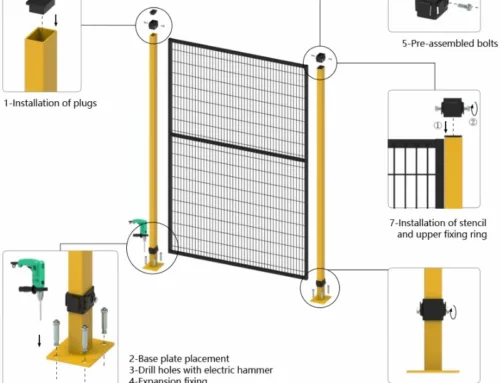
Imagine that unexpected floor conduit again. With a frameless system, the crisis becomes a 15-minute task. The technician measures the obstacle, uses a standard angle grinder to cut a clean notch in the mesh, and slots it perfectly into place. The panel is secured to the posts with simple fasteners. There is no delay, no idle labor, and no frantic calls. The project’s final 10% is completed on time because the chosen tool was designed for reality, not for blueprints.
Take Back Control of the Chaos
Persistent on-site installation failures are not an unavoidable cost of business; they are a strategic failure. By shifting from a rigid planning model to an adaptive one and equipping your team with a flexible, modular safety fence industrial system, you eliminate an entire category of project risk. You are no longer reacting to crises. You become the architect of a resilient and successful project outcome. You’re not just buying a fence; you are buying control.