EN
EN  DE
DE  RU
RU  PT
PT  JA
JA  ES
ES  IT
IT 
 |
For system integrators deploying automated production lines, the physical guarding is often the final bottleneck before sign-off. Integrating complex robotics with rigid safety standards requires more than just steel mesh; it demands a system that speaks the language of your electrical controls. Discover how our Industrial Safety Fencing reduces engineering hours by seamlessly accommodating safety interlocks and adapting to complex facility layouts, ensuring your turnkey solutions meet OSHA and ISO standards without delaying project handover. |
Bridging the Gap Between Mechanical Guarding and Electrical Safety
In the world of automation integration, the separation between mechanical assembly and electrical engineering often creates friction. A common scenario on the shop floor involves a safety engineer struggling to mount a precise safety interlock switch (like those from Omron or Pizzato) onto a generic fence post that wasn’t designed for it. This often leads to makeshift drilling, misalignment, and ultimately, sensor faults that cause nuisance tripping and downtime for the end-user.
The true value of a premium Industrial Safety Fencing system lies in its integration capabilities. By utilizing fencing that offers pre-engineered lock carrier kits and mounting plates, integrators can treat the physical barrier as an extension of the machine’s safety circuit. This means the PLC logic designed to stop a KUKA or ABB robot acts in perfect harmony with the physical gate mechanism, eliminating the need for custom fabrication on site. This “plug-and-play” approach to safety hardware significantly reduces the commissioning phase of a project.

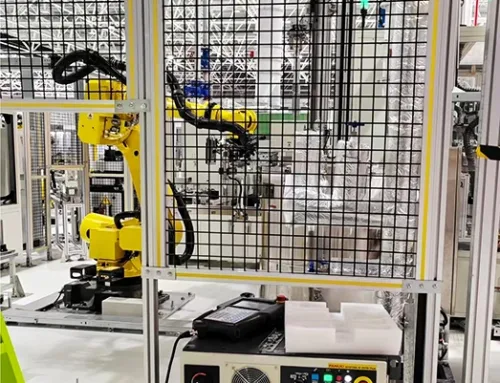
Pre-engineered integration for safety switches and mechanical locks.
Adapting to Real-World Manufacturing Footprints
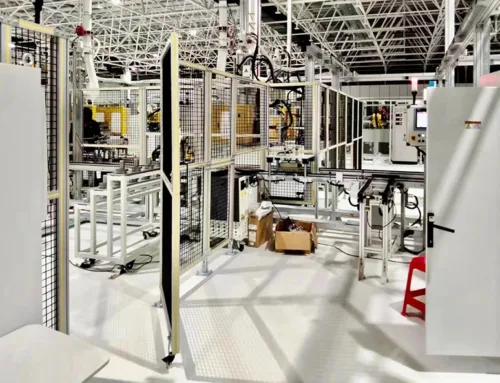
While CAD designs for robot work cells look perfect on a screen, the reality of a factory floor—with its columns, cable trays, and existing conveyors—is rarely so straightforward. Rigid, welded-in-place fencing solutions become a liability when a layout needs to shift by a few inches to accommodate a material handling path or an AGV route.
A modular system utilizing Q235 carbon steel frames provides the structural integrity of a welded fence with the flexibility of a erector set. The ability to mix standard framed panels with adjustable, cut-to-size sections allows installers to navigate around obstacles without compromising the safety distance required by ISO 14120. For a custom machinery builder, this flexibility means you are not waiting on a welder to fix a measurement error; you simply adjust the modular connection and move forward. This adaptability protects your project schedule and your profit margin.

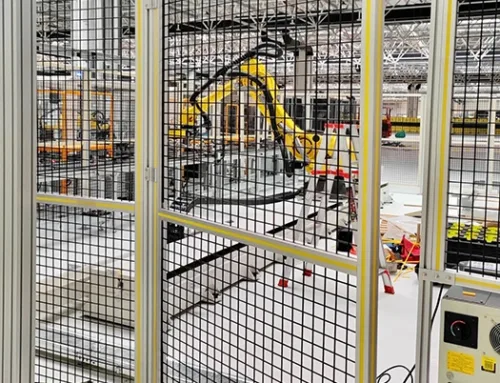
Complex layouts requiring precise customization for robotic cells.
Ensuring Compliance and Protecting Reputation
For the end-customer, typically in the automotive manufacturing or logistics sectors, the primary concern is liability and continuity. A Industrial Safety Fencing solution that is TUV certified for high impact resistance does more than just pass an inspection; it acts as an insurance policy for your reputation as an integrator.
When you deliver a cell where the guarding feels solid, the powder coating withstands the harsh industrial environment, and the doors operate smoothly without sagging, you are signaling quality. Conversely, a flimsy fence that rattles or rusts is a constant reminder of a corner cut. Utilizing a system with fully welded frames and robust 60mm posts demonstrates that the physical safety of the operators is valued as highly as the efficiency of the automation system itself.
Frequently Asked Questions
1. Can this fencing system integrate with third-party safety interlocks?
Yes, our system features specialized mounting kits and lock carriers designed to be compatible with major safety switch brands like Omron, Sick, and Pizzato, ensuring seamless integration with your PLC safety circuits.
2. What standards does the Mdfence system comply with?
Our guarding solutions are designed to meet rigorous international standards, including ISO 14120 (General requirements for guards) and ISO 13857 (Safety distances), and they are TUV certified for impact resistance.
3. Is welding required for installation on-site?
No. The system is entirely modular and uses a bolt-together assembly method. This eliminates the need for hot work permits and allows for faster, cleaner installation within active manufacturing environments.
4. How do you handle complex layouts or uneven floors?
We offer adjustable mounting accessories and can provide custom-sized panels or “cut-to-fit” kits. Our engineering team can also work from your CAD layouts to design a specific footprint that navigates columns and equipment.
5. What makes framed panels better than frameless mesh?
Framed panels feature a fully welded steel tube perimeter (20x30mm) which significantly increases rigidity and impact resistance compared to simple bent-wire mesh. This ensures the guard maintains its shape and safety integrity even under stress.