EN
EN  DE
DE  RU
RU  PT
PT  JA
JA  ES
ES  IT
IT 
 |
In any Automated Production Line, the safety gate is the most abused component. It is slammed, shaken, and cycled hundreds of times a day. For a System Integrator, a sagging door that fails to engage its interlock is a guarantee of frustrated support calls. Mdfence Industrial Safety Fencing is engineered to withstand this kinetic abuse. By reinforcing our entry systems with structural header beams and utilizing heavy-gauge Q235 Carbon Steel, we ensure that your Robotics Integration cells remain secure and your interlocks remain perfectly aligned, shift after shift.
|
The “Sagging Door” Syndrome: A Hidden Downtime Trigger
The number one failure mode for Machine Guarding isn’t the mesh breaking; it’s the door misalignment. Standard fencing systems often rely on the post’s inherent stiffness to hold up a heavy gate. Over time, gravity and vibration from nearby CNC Machinery cause the posts to lean inward slightly.
This microscopic shift is disastrous for modern safety switches (like RFID or tongue interlocks), which require precise alignment to close the safety circuit. When the door sags, the machine won’t start. Mdfence solves this structurally by including a rigid Door Frame Beam (header) on our gate systems. This beam locks the two posts together, creating a unified box frame that is geometrically immune to sagging, ensuring your Assembly Systems keep running without “phantom” stops.
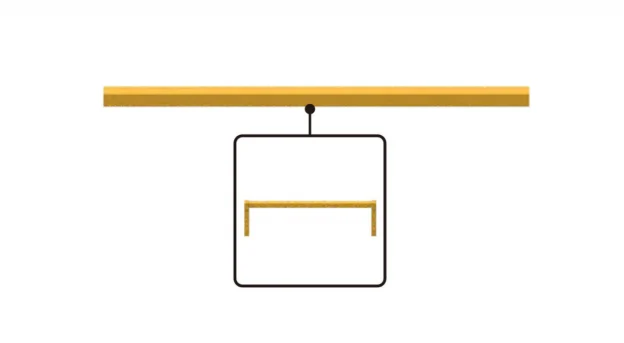
Structural header beams prevent post convergence and door misalignment.
Choosing the Right Lock for the Right Zone
Not every access point needs a complex electronic interlock. For maintenance hatches or rear access doors in a Material Handling Area, simplicity is often safer. Complex latches can jam or break under heavy industrial use.
We provide a range of robust mechanical locking options, from heavy-duty slide bolts to stainless steel mechanical locks. These are designed with tolerance in mind. Our slide bolt systems, for instance, feature reinforced mounting plates that distribute the stress of “slamming” across the mesh frame, rather than the wire itself. This prevents the common issue of locks tearing loose from the fence panel, maintaining the integrity of your Industrial Safety Fencing perimeter.

Robust mounting plates ensure locks withstand daily industrial abuse.
Space-Saving Mechanics for Tight Layouts
In high-density Turnkey Solutions, swing radius is a luxury you often don’t have. A hinged door blocking a forklift aisle creates a traffic hazard. Our sliding door systems utilize an overhead track or bottom-roller design that keeps the door profile flush with the fence line.
Unlike light-duty partition doors that rattle and jump their tracks, our sliding systems use bearing-equipped rollers and heavy-duty guide rails. This ensures smooth, one-handed operation even for large gates, reducing operator fatigue and encouraging compliance with safety protocols. Whether you are guarding a compact Automated Production Line or a sprawling warehouse zone, the mechanics of entry matter.
Frequently Asked Questions
1. Why is a door header beam important for safety fencing?
The header beam connects the top of the two gate posts, preventing them from leaning inward over time due to the weight of the door. This ensures the lock and safety switch remain perfectly aligned, preventing nuisance machine stoppages.
2. Can I retrofit a sliding door into a space designed for a hinged door?
Yes, our system is modular. You can swap out a hinged door panel for a sliding door module often using the same posts (depending on the width), allowing you to reclaim aisle space without rebuilding the entire fence line.
3. What maintenance is required for the sliding door tracks?
Our sliding doors use sealed bearings and durable powder-coated tracks, requiring minimal maintenance. We recommend a periodic visual inspection and cleaning of the bottom guide to ensure it’s free of debris, which is standard 5S procedure.
4. Are your mechanical locks compatible with Lock-Out/Tag-Out (LOTO) procedures?
Yes. Our slide bolts and mechanical latches are designed with hasps to accommodate standard safety padlocks. This allows maintenance personnel to physically lock the gate in the open position, ensuring personal safety during machine servicing.
5. How robust are the mounting points for the locks?
We use dedicated steel mounting plates that are bolted through the mesh frame or the post, rather than relying on the wire mesh itself. This provides a solid foundation that can withstand the force of the door being slammed shut repeatedly.