EN
EN  DE
DE  RU
RU  PT
PT  JA
JA  ES
ES  IT
IT 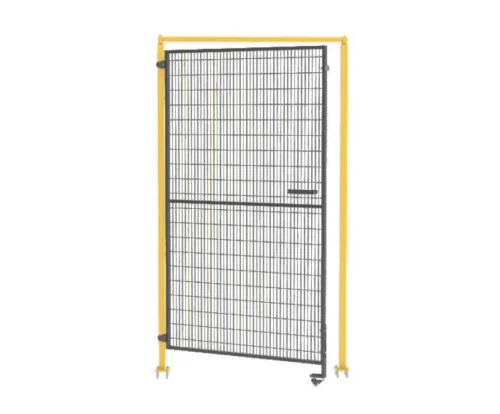

|
In automotive manufacturing and turnkey robotics integration, production line layouts are never static. When a new vehicle model drops or a CNC machining center is upgraded, the robotic cells must adapt. The problem? Tearing down traditional welded perimeter guards means angle grinders, flying sparks, hot work permits, and shutting down adjacent high-speed mechanical assembly machines. You are left with scrap metal and blown project timelines. It’s time to stop treating your safety barriers as disposable construction materials and start treating them as reusable automation assets. |
Moving robot fencing systems during plant layout changes.
The “Before”: The Nightmare of Relocating Welded Fences
When an automotive system integrator needs to shift an automated production line by just a few feet to accommodate a new material handling conveyor, traditional custom-fabricated fencing becomes a massive bottleneck. Because these legacy barriers are directly welded to embedded floor plates or joined with continuous welds, moving them requires destructive dismantling.
Maintenance crews must bring in angle grinders. This immediately triggers the need for “Hot Work” permits. Sparks and metal dust fly near sensitive servo drives and exposed PLC panels. To prevent contamination or fire, the adjacent Robot Safety Fencing Systems and their enclosed machinery must be powered down, killing your Overall Equipment Effectiveness (OEE). Once cut, the old fence is essentially scrap metal. You are forced to order new raw steel, wait for fabrication, and repaint everything on-site, extending the MTTR (Mean Time To Recovery) from hours to days.
Why It Works: Modular Engineering for “Cold Assembly”
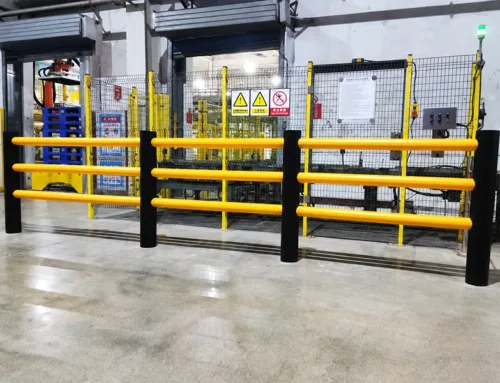
The Mdfence system eliminates this chaos through a 100% modular, bolted architecture. Instead of relying on field welds, the system utilizes high-tensile Q235 carbon steel framed panels (0.78″ x 1.18″ tubing) that connect to 2.36″ x 2.36″ posts via heavy-duty steel connection clips and M8 hex bolts.

This design enables true “Cold Assembly.” When a robotics layout needs to change, a single technician with a hex wrench can unbolt the panels in minutes. There is no drilling, no tapping, and absolutely no sparks. The epoxy polyester powder coating remains perfectly intact because the clamping mechanism hugs the post without piercing the metal. You can safely dismantle and rebuild the Machine Guarding Fence Panels right next to an active, high-speed mechanical assembly machine without triggering any safety alarms or halting neighboring production cells.
The “After”: 95% Asset Reuse and Zero Surrounding Downtime
By switching to a modular framework, automotive plants transform their physical safety barriers from a sunk construction cost into a reusable automation asset with a 95% reuse rate. When the layout shifts, the fence simply shifts with it.
Furthermore, new layouts often mean tighter floor space. Because the standard mesh size is 0.78″ x 3.9″ (20x100mm), it easily passes the ISO 13857 finger-safe test. This allows you to install the Industrial Safety Fencing as close as 4.7 inches (120mm) to the hazard zone, reclaiming valuable square footage for AGV (Automated Guided Vehicle) pathways.
Layout changes also frequently alter access requirements. A previously wide-open aisle might now be obstructed by a new palletizer, making a standard hinged door impossible to open. With modularity, you don’t need to scrap the entrance; you simply swap the hinged components for a sliding door track system using the exact same framed panels.

Re-integrating Safety Logic Seamlessly
Moving the physical barrier is only half the battle; relocating the machine safety logic is the other. In a turnkey solution, the fence doors are equipped with safety interlock switches (like Omron D4NL or Pizzato) tied to the PLC’s STO (Safety Torque Off) circuit.
During a layout change, custom-drilled holes on legacy fences often misalign when reassembled, causing the interlock keys to jam and triggering false machine stops. Mdfence solves this by utilizing pre-engineered, standardized lock carriers. These mounting plates bolt directly onto the 20x30mm panel frames, guaranteeing that when you move the door to a new location, the interlock alignment remains perfectly true. Your robotics integration team spends less time troubleshooting limit switches and more time commissioning the line.
Frequently Asked Questions (FAQs)
| Can we reuse the existing expansion bolts when moving the posts to a new layout? | No. For safety and structural integrity, once a wedge expansion bolt (like the M10 x 70mm) is removed from the concrete, it loses its holding power. You must use fresh expansion bolts when anchoring the relocated posts into the new concrete positions to maintain the 1600J impact resistance. |
| How fast can a 2-man crew dismantle and rebuild a standard robot cell guarding system? | Because the system uses cold assembly (only wrenches required), a trained 2-man crew can typically dismantle and reconfigure 50 linear feet of standard panels in under 3 hours, completely avoiding the delays associated with hot work permits and fire watches. |
| If our new layout requires a conveyor tunnel to pass through the fence, can we modify existing panels? | Yes. While we recommend ordering pre-fabricated tunnel guards to ensure strict ISO 13857 compliance, the framed mesh panels can be modified. However, any field-cut wires must be properly deburred and treated to prevent rust and ensure no sharp edges snag passing automotive components. |
| Does dismantling and reassembling the panels void the 1600 Joules impact resistance rating? | No, provided the system is reassembled using the original M8x10 flange bolts and connection clips, and torqued to the specified limits. The 1600J rating (capable of stopping a 220 lbs object moving at 12 mph) is inherent to the Q235 steel frame and the clamping mechanism, not a one-time factory seal. |
| How do we realign sliding doors after moving them to an uneven concrete floor in a different part of the plant? | The sliding door systems feature an adjustable top bearing rail and a customizable door frame beam. Even if the new floor has slight variations, the top-hung track can be leveled independently of the floor, ensuring the door glides smoothly and the safety interlocks align perfectly without binding. |