EN
EN  DE
DE  RU
RU  PT
PT  JA
JA  ES
ES  IT
IT What types of machine guards exist?

Machine guards are essential safety devices that are used to protect workers from hazardous machinery. They are designed to prevent accidental contact with moving parts, flying debris, and other dangerous components of machinery. There are various types of machine guards, each of which provides a specific level of protection. In this article, we will discuss some of the most common types of machine guards.
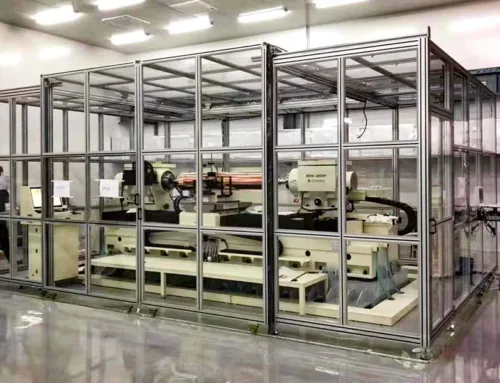
Fixed Guards: Fixed guards are the most basic type of machine guard. They are permanent barriers that are mounted to the machine or its surrounding area. Fixed guards are designed to prevent access to the hazardous areas of the machine, such as the blades or the motor. These guards can be made from various materials, such as metal, plastic, or wire mesh.
Interlocking Guards: Interlocking guards are designed to shut down the machine when the guard is opened or removed. They are typically used on machines that have high-risk areas that require frequent access, such as packaging machines or printing presses. Interlocking guards help to ensure that the machine cannot be operated until the guard is replaced or closed.
Adjustable Guards: Adjustable guards are used on machines where the size or shape of the workpiece being processed can vary. They are designed to be moved or adjusted to accommodate different sizes of workpieces while still providing protection. These guards are often used in conjunction with other types of guards, such as fixed or interlocking guards.
Self-Adjusting Guards: Self-adjusting guards are designed to move with the machine as it operates. They are commonly used on machines that have moving parts, such as conveyor belts or assembly lines. These guards help to ensure that the hazardous areas of the machine are always protected, regardless of the machine’s operation.
Pullback Devices: Pullback devices are designed to remove the operator’s hands from the danger zone of the machine. They are typically used on machines that have rollers, gears, or other moving parts that can pull the operator’s hands into the machine. Pullback devices use a spring-loaded cable that is attached to the operator’s hands. If the operator’s hands get too close to the danger zone, the cable will pull their hands away from the machine.
Two-Hand Controls: Two-hand controls are designed to prevent accidental operation of the machine. They require the operator to use both hands to activate the machine, which helps to ensure that the operator’s hands are out of the danger zone before the machine begins to operate. Two-hand controls are commonly used on machines that have high-speed operations, such as stamping machines or punch presses.
Safety Trip Controls: Safety trip controls are designed to shut down the machine if the operator trips or falls into the danger zone. They use pressure-sensitive mats or switches that are placed around the machine. If the operator steps on or falls onto one of these mats or switches, the machine will shut down immediately.
In conclusion, machine guards are essential safety devices that protect workers from the hazardous components of machinery. There are various types of machine guards available, each of which provides a specific level of protection. The type of guard that is used will depend on the specific machine and its application.
Interlock Switch Mounting Without Drilling: Why Alfence T-Slot Posts End Phantom Stops
Bolting an interlock switch bracket through a powder-coated steel post drills the coating, drops swarf into the cell and leaves a rust line — and when the hinged leaf sags, the tongue misaligns and the PLC reports a phantom guard fault. Alfence mounts sensors, e-stops and conduit in the T-slot groove of a 40×40 mm or 45×45 mm aluminum post, with door hardware sized to keep the safety switch aligned.
Phantom Safe Torque Off Stops: T-Slot Guarding Fence Posts Mount Interlocks Without Drilling
Painted steel guarding posts force maintenance to drill for interlock switches, dropping swarf in the cell and breaking the coating where rust starts. Sagging hinge doors then misalign the interlock tongue and the PLC trips Safe Torque Off while the gate is closed. Alfence industrial safety fence mounts sensors, e-stops and cable routing into the T-slot aluminum profile post without drilling, and uses hinged, folding or sliding door frames that keep interlock geometry stable - protecting OEE through phantom stops and line changes.
Automotive Plant Industrial Safety Fence: Keep the Robot Cell Close to the Hazard
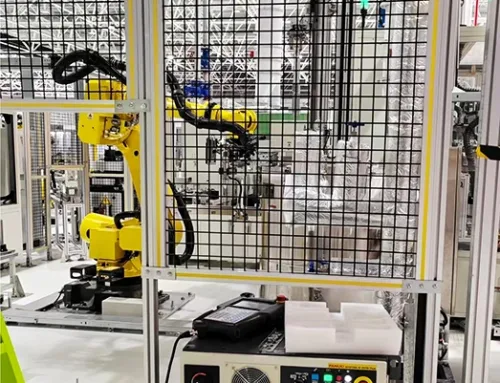
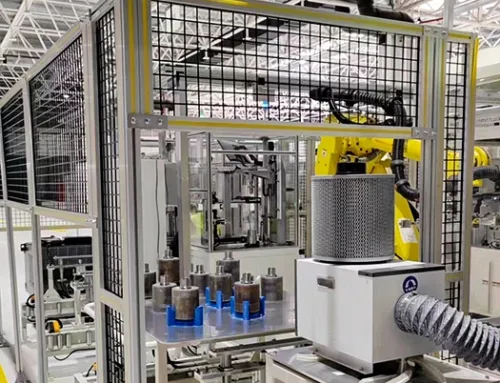
Automotive plants cannot afford to lose production floor to an oversized machine guarding perimeter. Alfence combines 20×100 mm mesh with slim 40×40 mm or 45×45 mm aluminum posts for a compact, reconfigurable industrial safety fence layout, with final clearance confirmed by the project risk assessment.