EN
EN  DE
DE  RU
RU  PT
PT  JA
JA  ES
ES  IT
IT 
Safety Guard Rails: Ensuring Workplace Safety and Productivity

Top Industrial Safety Fence Manufacturers: Heras, Betafence, Sonco, and Ameristar
Choosing the right industrial safety fencing is crucial for protecting personnel and assets. This guide highlights four leading manufacturers – Heras, Betafence, Sonco, and Ameristar – outlining their strengths and helping you navigate the selection process.
Leading Manufacturers of Industrial Safety Fencing
Heras: A prominent European manufacturer specializing in high-quality perimeter protection solutions. Heras offers a comprehensive range of fencing systems, including welded mesh, palisade, and high-security options, catering to diverse industrial, commercial, and public applications. They emphasize quality, safety standards, and bespoke solutions tailored to specific client needs.
Betafence: A global leader in perimeter security, Betafence provides comprehensive solutions for various industries, including energy, transportation, and government. Their product range encompasses welded mesh, chain link, ornamental steel, and high-security fencing, emphasizing integrated security solutions.
Sonco: A US-based manufacturer specializing in industrial safety fencing and barriers. Sonco caters to construction, manufacturing, and warehousing sectors, offering chain link, welded mesh, and portable safety barriers. They focus on practicality, durability, and meeting diverse industry-specific needs.
Ameristar: Another US-based manufacturer renowned for perimeter security solutions, including industrial safety fencing. Ameristar focuses on protecting critical infrastructure and assets in utilities, transportation, and government sectors. Their offerings include ornamental steel, welded mesh, and high-security fencing, emphasizing strength and resilience.
What Sets These Manufacturers Apart
These four companies stand out for their:
Proven Track Records: Each manufacturer has a demonstrable history of delivering high-quality, reliable fencing solutions.
Diverse Product Ranges: Their comprehensive offerings cater to various industries and applications, providing flexibility for specific needs.
Commitment to Innovation: They continually invest in research and development, ensuring their products remain at the forefront of safety and security technology.
Choosing the Right Manufacturer: Key Considerations
Specific Needs Assessment: Identify your facility’s specific safety requirements, considering potential hazards, security levels, and environmental conditions.
Product Suitability: Evaluate each manufacturer’s product range to determine the best fit for your application. Consider factors like material, height, and security features.
Quality and Durability: Assess the quality and durability of the fencing materials and construction. Look for certifications and warranties.
Customer Service and Support: Choose a manufacturer with a reputation for excellent customer service, including technical support and after-sales assistance.
Cost and Value: Compare pricing and consider the overall value proposition, including product quality, lifespan, and maintenance requirements.
Beyond the Big Four: Exploring Other Options
While the mentioned manufacturers are industry leaders, explore other reputable fencing providers to compare options and potentially find a better fit for your specific needs and budget.
Case Study: Securing a Logistics Hub
A large logistics hub chose Betafence for their perimeter security needs. Betafence’s integrated security solutions, including high-security fencing and access control systems, provided comprehensive protection for the facility and its valuable assets.
Frequently Asked Questions
Q: What type of fencing is best for a construction site? A: Chain link or welded mesh fencing are common choices for construction sites due to their affordability and ease of installation.
Q: What is the lifespan of industrial safety fencing? A: The lifespan varies depending on the material, coating, and environmental conditions. Galvanized steel fencing can last for decades with proper maintenance.
Q: What are the key safety standards for industrial fencing? A: Relevant safety standards vary by region and industry. Consult local regulations and industry best practices.
Choosing the right industrial safety fencing is an investment in the security and well-being of your workplace. By considering these factors and researching reputable manufacturers like Heras, Betafence, Sonco, and Ameristar, you can make an informed decision that provides long-lasting protection and peace of mind. Contact us for expert guidance and assistance in selecting the ideal fencing solution for your facility.
Interlock Switch Mounting Without Drilling: Why Alfence T-Slot Posts End Phantom Stops
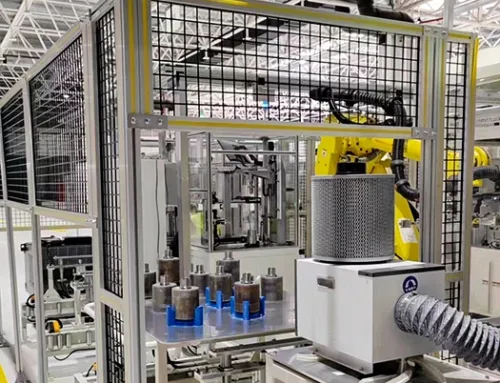
Bolting an interlock switch bracket through a powder-coated steel post drills the coating, drops swarf into the cell and leaves a rust line — and when the hinged leaf sags, the tongue misaligns and the PLC reports a phantom guard fault. Alfence mounts sensors, e-stops and conduit in the T-slot groove of a 40×40 mm or 45×45 mm aluminum post, with door hardware sized to keep the safety switch aligned.
Phantom Safe Torque Off Stops: T-Slot Guarding Fence Posts Mount Interlocks Without Drilling
Painted steel guarding posts force maintenance to drill for interlock switches, dropping swarf in the cell and breaking the coating where rust starts. Sagging hinge doors then misalign the interlock tongue and the PLC trips Safe Torque Off while the gate is closed. Alfence industrial safety fence mounts sensors, e-stops and cable routing into the T-slot aluminum profile post without drilling, and uses hinged, folding or sliding door frames that keep interlock geometry stable - protecting OEE through phantom stops and line changes.
Automotive Plant Industrial Safety Fence: Keep the Robot Cell Close to the Hazard
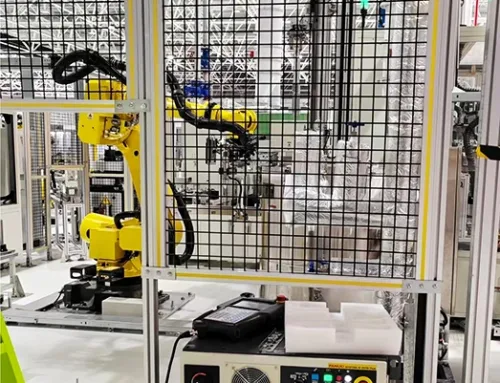
Automotive plants cannot afford to lose production floor to an oversized machine guarding perimeter. Alfence combines 20×100 mm mesh with slim 40×40 mm or 45×45 mm aluminum posts for a compact, reconfigurable industrial safety fence layout, with final clearance confirmed by the project risk assessment.