EN
EN  DE
DE  RU
RU  PT
PT  JA
JA  ES
ES  IT
IT 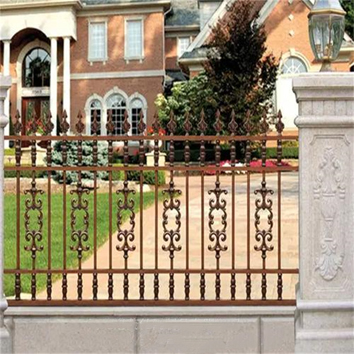
If you’re typing things like “how to choose a villa fence” or “best high-end fence” into Google, I can guess what your screen looks like: a dizzying grid of materials, styles, and conflicting claims. Wood looks classic, but will it rot? Aluminum won’t rust, but does it feel a bit… flimsy? Vinyl is low-maintenance, but will it look cheap next to the investment you’ve made in your home?
It’s overwhelming. And that feeling comes from a simple mistake we all make: we start by looking at products. As an industry consultant who has advised hundreds of homeowners through this exact process, I want to offer you a different starting point. The most satisfied homeowners I know—the ones whose fences look just as magnificent a decade later—didn’t start by comparing fences. They started by clarifying their own principles.
Before you look at another product, let’s walk through the three core principles that will make your decision for you. Get these right, and the perfect choice won’t be a guess; it will be an obvious conclusion.
Principle 1: Harmony with Your Architectural Language
Think of your fence not as a standalone object, but as the final sentence in your home’s architectural story. It can either complete the thought beautifully or interrupt it awkwardly. The question isn’t “Is this a nice fence?” The question is, “Does this fence speak the same language as my home?”
A home is more than its style (e.g., “Modern,” “Tuscan”). It has a “visual weight” and a rhythm. A sprawling stone villa in a neighborhood like Beverly Hills has a heavy, grounded presence. A minimalist home with clean lines and large glass panels has a light, airy presence. Your fence must respect this. A heavy, opaque wooden fence next to an airy, modern glass house can feel like a visual wall, suffocating the design. Conversely, a thin, lightweight aluminum fence next to a stately brick manor can feel out of scale and insignificant. The goal is harmony, ensuring your choice from a quality metal fence supply continues the lines and rhythm of your home.
Principle 2: The 20-Year True Cost of Ownership (TCO)
One of the biggest traps in choosing a fence is comparing the initial purchase prices. This is like choosing a car based only on the sticker price, ignoring fuel economy, insurance, and repair costs. A savvy homeowner plays the long game. Let’s calculate a “smart bill” by looking at the True Cost of Ownership over 20 years.
The Wood Fence Scenario: It might have the lowest initial cost. Let’s say $15,000. But wood is a living material in a battle against time and moisture. To keep it from warping, splitting, and rotting, you’ll need to sand and re-stain or repaint it every 2-3 years. Let’s be conservative and say that’s a weekend of your time and $500 in materials and labor each time. Over 20 years, that’s roughly $5,000 in maintenance costs. After 15-20 years, it’s likely you’ll face a major replacement. The 20-Year TCO could be around $35,000 plus immense hassle.
The High-Quality Steel Fence Scenario: The initial investment from a professional metal fence supply is higher. Let’s say $25,000. But if it’s properly engineered—meaning it’s hot-dip galvanized and has a high-quality powder coat finish—the maintenance requirement is close to zero. You might wash it down with a hose once a year. There is no re-painting, no re-staining, no rot repair. The 20-Year TCO is simply the initial $25,000, offering peace of mind. When you shift your perspective from “purchase price” to “long-term investment,” the definition of “expensive” completely changes.
Principle 3: The Dual Definition of Security
Every fence provides a boundary, but not all fences provide a true sense of security. Security is twofold: it’s physical, and it’s psychological. Physical security is objective: how hard is it to cut, break, or climb? A thick, solid-steel picket is objectively stronger than a hollow aluminum or thin wooden one. Psychological security is the subtle, more powerful element. It’s the feeling of safety communicated through sensory cues—the substantial thud of a heavy gate closing, not the tinny click of a lightweight one.
A flimsy-feeling fence, even if technically locked, communicates vulnerability. A fence with a heavy, unyielding presence creates a powerful psychological deterrent. It creates an aura of protection that allows you to relax completely within your domain. Ask yourself: Do I just need to mark a boundary, or do I want to create a genuine sanctuary where my family feels profoundly safe?
The Answer Finds You
Now, look back at these three principles. If you believe a fence must be an architectural asset, a wise long-term investment, and a source of profound security, your options narrow considerably. You will find that a modern, heavy-gauge steel fence—one properly engineered with advanced rust-proofing—becomes the only logical conclusion. Stop shopping for a product. Start defining your principles. The right choice will reveal itself.