EN
EN  DE
DE  RU
RU  PT
PT  JA
JA  ES
ES  IT
IT Mdfence blog | machine fencing
Why a safety guarding fence matters on a cut-heavy light-steel panel line
A safety guarding fence is not only there to block access. On a line where robots are cutting openings in light-steel panels, it has to stop flying debris, protect workers from sharp edge impact, and still keep the full cell visible from the aisle.
What the line needs before the first chip flies
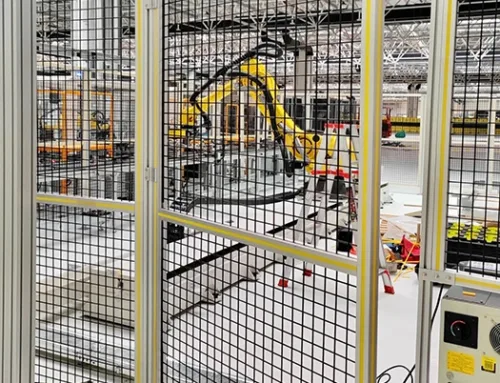
Light-steel panel assembly brings two risks at the same time: fast metal chips and gypsum dust from cutting, plus the need for uninterrupted line-of-sight over eight cooperating robots. A usable safety guarding fence must handle both. It has to close the cutting zone tightly enough to intercept debris, but it cannot turn the aisle into a blind corridor where supervisors lose the cell.
| Problem on site | Why Mdfence fits |
|---|---|
| Flying metal chips and dust at cutting stations | Fine mesh aperture and full-weld construction reduce openings and keep the panel rigid under impact. |
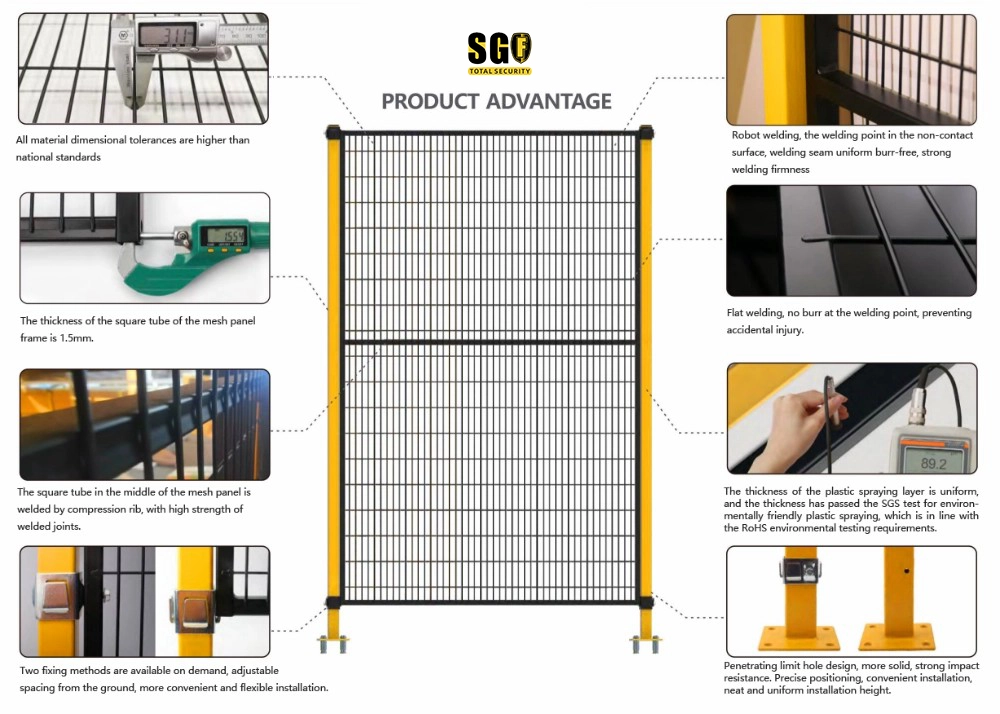
| Sharp edges that can injure nearby staff | The mesh frame is built around a 20x30x1.5mm rectangular tube, giving the guarding line a tough outer edge. |
| Supervisors need clear monitoring from the aisle | Deep black RAL 9005 mesh and safety yellow RAL 1023 posts keep the cell readable without visual clutter. |
| Multiple robots working in one coordinated cell | The modular fence layout makes the full automation bay easy to divide, inspect, and reconfigure. |
Why this structure works in a cutting-heavy cell
1) Full-welded frame and mesh hold the line under abuse
On a cutting line, the fence is exposed to vibration, repeated cleaning, and accidental contact with tooling traffic. Mdfence uses a 20x30x1.5mm rectangular tubular frame, and every steel wire is fully welded to the frame. That is the part that matters when the system must stay straight after long production shifts. The closed, rigid structure gives the safety guarding fence a better chance to stay aligned, keep panel gaps consistent, and maintain the same protective boundary day after day.
2) Narrow openings stop debris without killing visibility
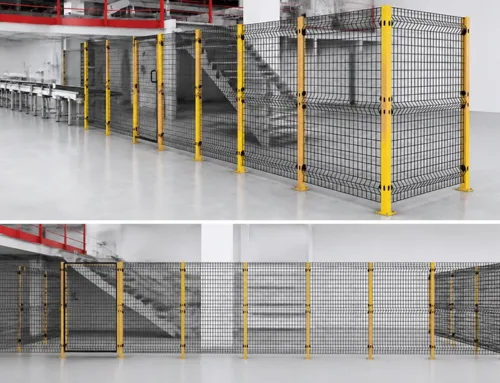
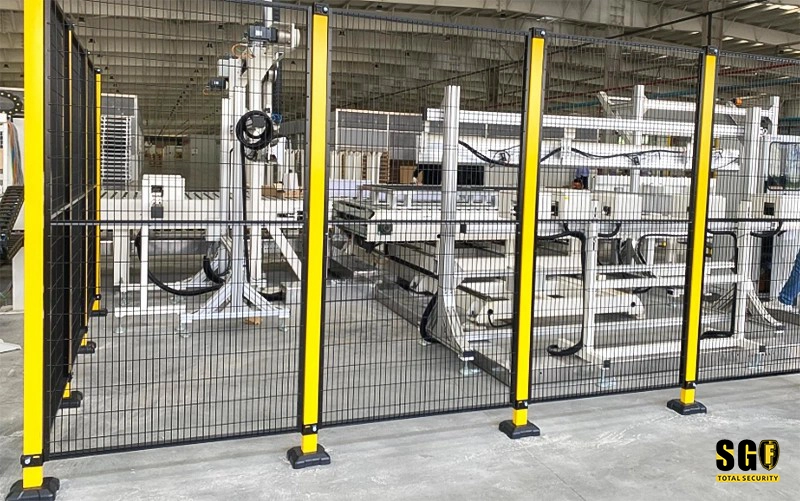
Many guarding systems fail for one of two reasons: the mesh is too open and lets debris escape, or it is so visually heavy that supervisors cannot see the robot cell. Mdfence solves the balance with a narrow-hole mesh and a deep black RAL 9005 finish. In practice, that makes the cutting zone look clean from the aisle while still giving the fence enough density to catch flying chips and limit the escape path of dust. The result is a safer view, not a blocked view.
3) Yellow posts and black mesh keep the automation cell easy to supervise
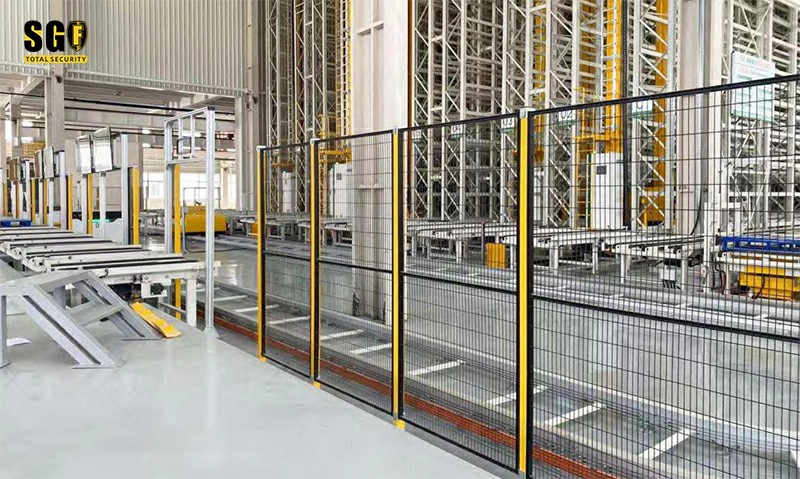
A line with eight robots cannot afford unnecessary blind spots. The safety yellow RAL 1023 posts create a clear perimeter reference, while the black mesh recedes visually and avoids the harsh glare that often comes from lighter guarding colors. That contrast helps managers read the cell from a distance, track motion, and confirm whether a robot or worker is where it should be. For a supervisor standing in the main aisle, the fence becomes part of the control system instead of a visual barrier.
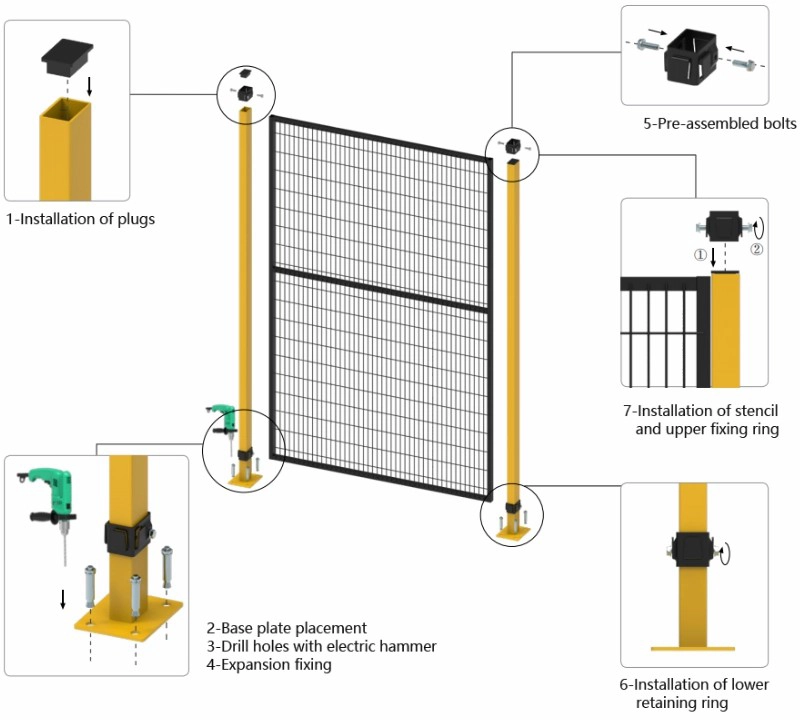
Where the same layout delivers the best result
- Robotic cutting cells for light-steel panel openings and edge trimming
- Production aisles that need debris interception without blocking operator visibility
- Multi-robot work zones that require fast inspection from a single corridor
- Plant layouts that need a repeatable, modular safety guarding fence around several stations
When the problem is both contamination control and line monitoring, the fence must do more than separate space. It must protect workers from fly-off debris, keep the cutting zone readable, and support daily supervision of the whole automated line. That is exactly where Mdfence turns a simple barrier into a practical production tool.
Need a guarding layout for your cutting line?
If you are planning a new light-steel panel line or upgrading an existing robot cell, start with the cutting radius, the walking aisle, and the viewing angle. Then match the fence frame, mesh density, and color contrast to the actual shop-floor workflow. Mdfence is built for that kind of site-first planning.
Build a clearer, safer cutting cell
Specify the cutting zone, the robot count, and the aisle that supervisors use for daily checks. Mdfence can be configured as a safety guarding fence that blocks debris, protects staff, and still keeps the whole line visible.