EN
EN  DE
DE  RU
RU  PT
PT  JA
JA  ES
ES  IT
IT Safety fencing machine guarding for cut-heavy light-steel panel lines
Safety fencing machine guarding that keeps debris in and the line visible
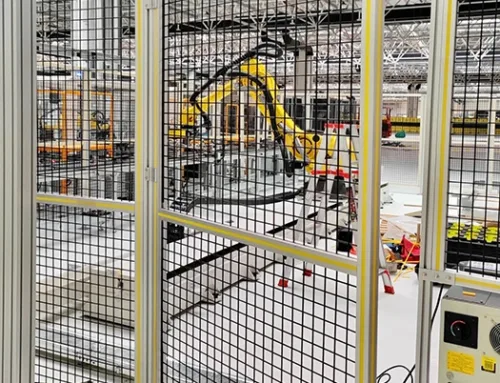
Mdfence is built for light-steel panel lines where robot cutting throws metal chips and gypsum dust, while supervisors still need a clear view across multiple machines. The narrow-aperture mesh, full-weld frame, and black-and-yellow contrast solve both problems at once.
Why this line needs a tougher guarding specification
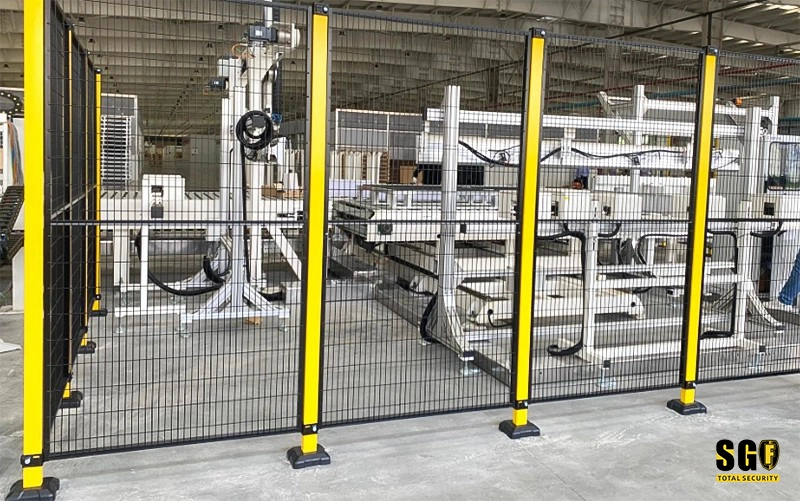
When a light-steel panel line starts cutting door and window openings, the main risk is not only access control. High-speed offcuts, chips, and dust leave the cutting zone fast enough to injure operators, while a busy 8-robot cell can become difficult to oversee if the fence blocks the view. A generic barrier may close the perimeter, but it often fails on debris containment, rigidity, or visibility.
| Guarding requirement | Mdfence response |
|---|---|
| Flying chips and gypsum dust | Narrow-aperture mesh helps block fast moving debris before it reaches the aisle. |
| Panel-line rigidity | 20x30x1.5mm rectangular tube frame adds a stiff perimeter structure. |
| Long weld seams under vibration | All steel wires and frame members are fully welded for a solid panel body. |
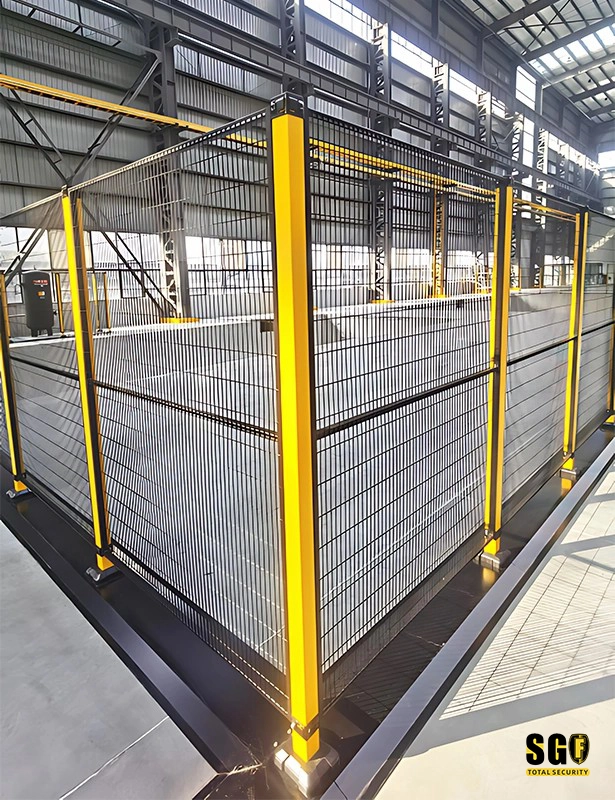
| Supervisor line-of-sight | RAL 9005 black mesh with RAL 1023 yellow posts avoids a visually dead wall effect. |
| Multi-robot coordination | Clear sightlines help managers monitor the whole automated flow from the aisle. |
What makes Mdfence fit this application
1. Full-weld panel strength for hard cutting environments
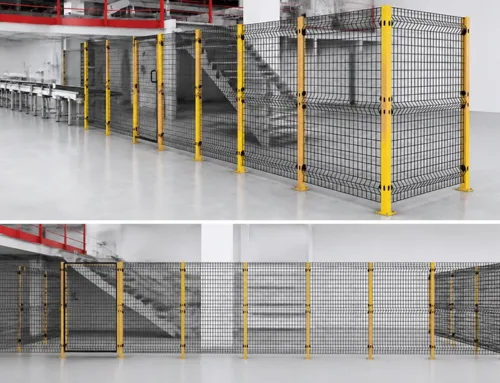
The cutting zone on a light-steel panel line sees repeated vibration, impact, and airborne fragments. Mdfence uses a 20x30x1.5mm rectangular tube frame, and every wire-to-frame joint is fully welded. That detail matters: a fence that depends on light spot fixing or weak seams can loosen over time, but a fully welded structure stays stable around high-output robotic stations.
2. Narrow mesh geometry for debris interception
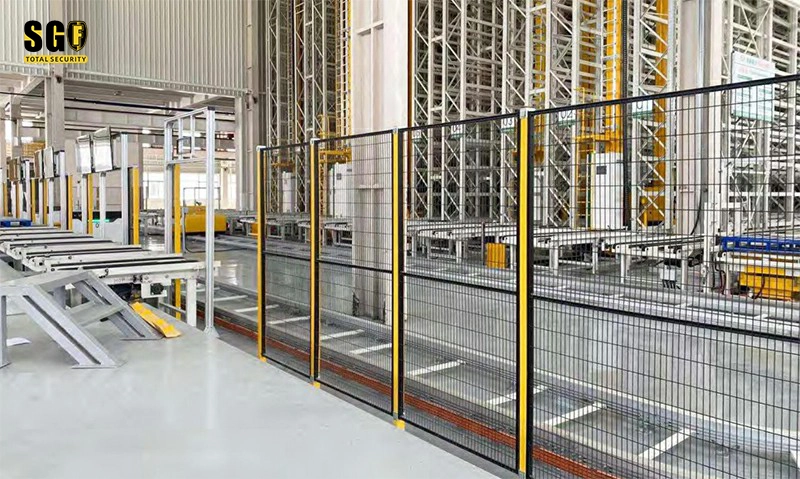
The biggest gap in many old fencing setups is not the height, but the opening size. Wide openings let chips and dust escape and force nearby workers to share the same contamination path. Mdfence’s standard black mesh creates a tighter barrier that helps intercept flying offcuts at the source, so the aisle stays safer and the cleaning load stays lower.
3. High-contrast color control for better supervision
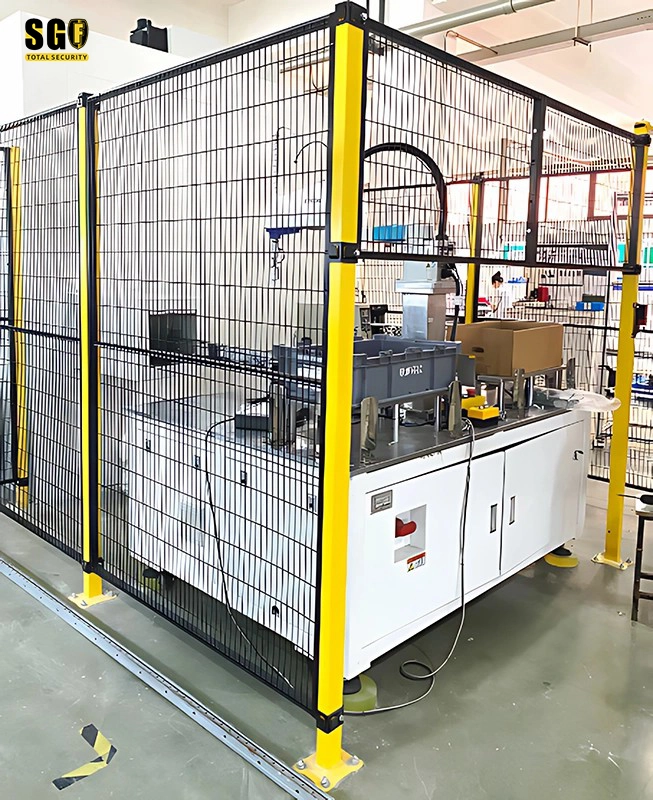
Machine guarding should protect people without making the whole line visually opaque. The black mesh in RAL 9005 reduces glare and keeps the perimeter readable, while the RAL 1023 yellow posts stand out clearly on the aisle side. That color pairing helps production leaders see robot motion, identify access points, and check line status across multiple stations without leaning into the danger zone.
Where this guarding setup performs best
- Robot cutting cells that generate metal chips and gypsum dust during door and window openings.
- Light-steel panel lines where eight or more machines must be monitored from a shared aisle.
- Automation zones that need debris control without losing visual access to the process.
- Plants replacing weak, gap-prone barriers with a fully welded machine guarding system.
Mdfence is not just a perimeter fence. In this application it becomes a process tool: it contains the fragments, keeps the route open, and leaves the supervisor with the visibility needed to manage a synchronized cutting line.
Specification proof for machine guarding buyers
If your line is producing sharp debris, dust, and frequent changeover activity, specify the frame thickness, weld method, mesh opening, and color contrast together. Mdfence answers those purchase checks directly with a 20x30x1.5mm rectangular frame, full weld construction, narrow aperture mesh, and black/yellow visibility control.
Need safety fencing machine guarding for a cut-heavy cell?
Share the cell layout, machine count, and aisle width, and we will match the guarding to the debris zone and the supervisor sightline.