EN
EN  DE
DE  RU
RU  PT
PT  JA
JA  ES
ES  IT
IT Why a dedicated manufacturing lines safety system matters for equipment sales into CE and ISO markets
When a buyer’s machine package is shipped into the UK, Nordics, or any other strict European market, the fence is no longer a commodity accessory. It becomes part of the compliance story, the customer’s uptime story, and your own brand story. Mdfence is built to keep that story credible.
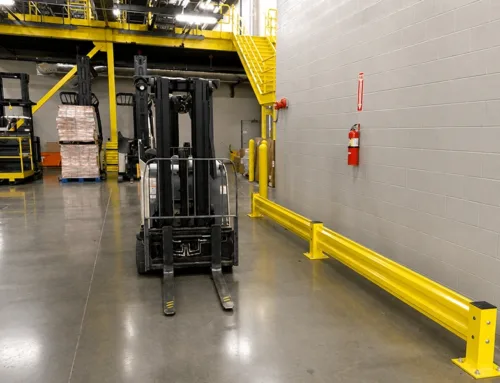
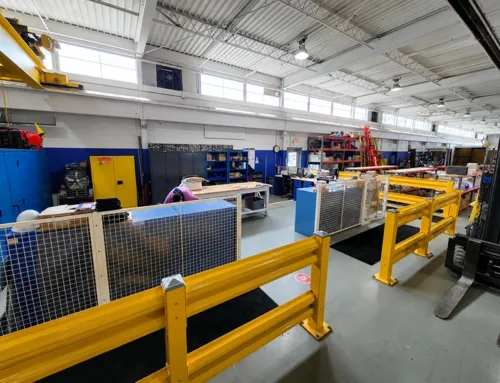
For distributors and equipment makers selling with their own racking, the risk is simple: if the guarding fails, the package fails with it. A weak fence that bends under impact, leaks debris, or blocks a safe working distance can put CE and ISO claims under pressure and damage the reputation built over decades.
What the old solution gets wrong
Many low-cost guarding systems look fine on a quotation sheet but collapse under real factory conditions. Panels loosen, posts flex, and the fence becomes the first point of blame when a forklift brushes the line or when flying fragments leave the cell. In export projects, that is not just a technical issue. It is a liability issue.
Mdfence is designed for the opposite outcome: to help the machine seller present a guarding package that looks engineered, tested, and export-ready from day one.
| Buyer concern | Why basic fencing fails | Why Mdfence fits the job |
|---|---|---|
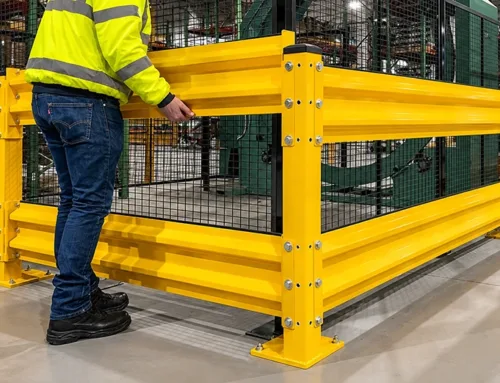
| Impact and collision risk | Light frames deform too easily | TUV-tested to withstand 1600 joules of impact, equivalent to a 100 kg object striking at 20 km/h |
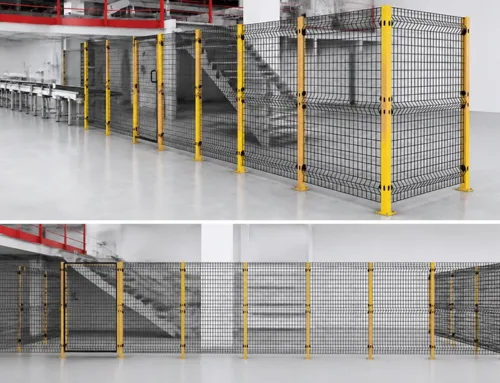
| Safe distance around hazards | Bulky panels force the fence too far away | 20 x 100 mm anti-reach mesh supports installation as close as 120 mm from the danger source |
| European compliance confidence | Generic supplier claims are hard to defend | Clear technical proof that can be shown in a sales catalog and used in customer-facing documentation |
Why Mdfence is easier to sell
The strongest sales argument is not only that the fence protects people. It is that the fence protects the customer’s approval process. With Mdfence, the buyer sees a solution that is engineered for heavy industrial use, not just assembled for visual separation.
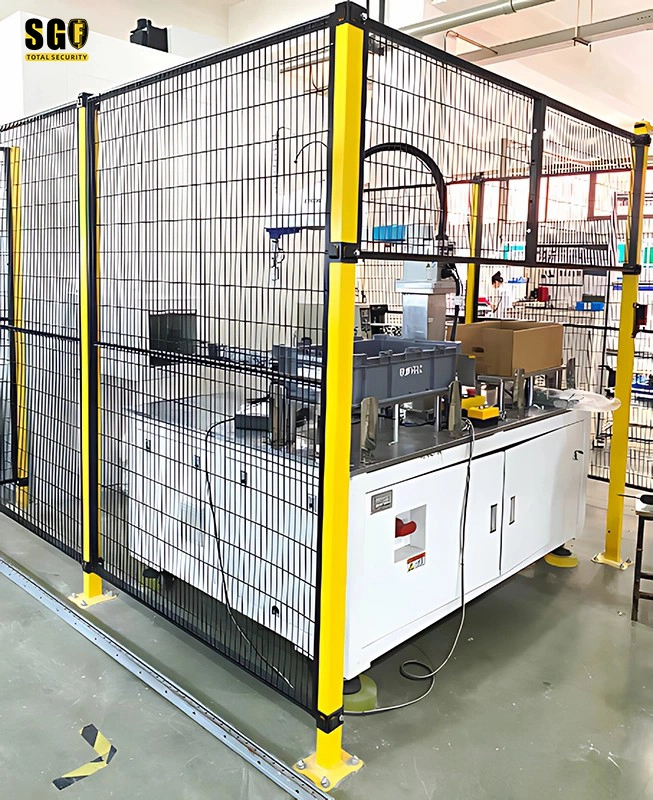
Structure that supports the claim
The post-and-panel layout with fixing clamps gives the system a clear mechanical logic. It is easy for a procurement team to understand, and it is easy for your catalog to explain.
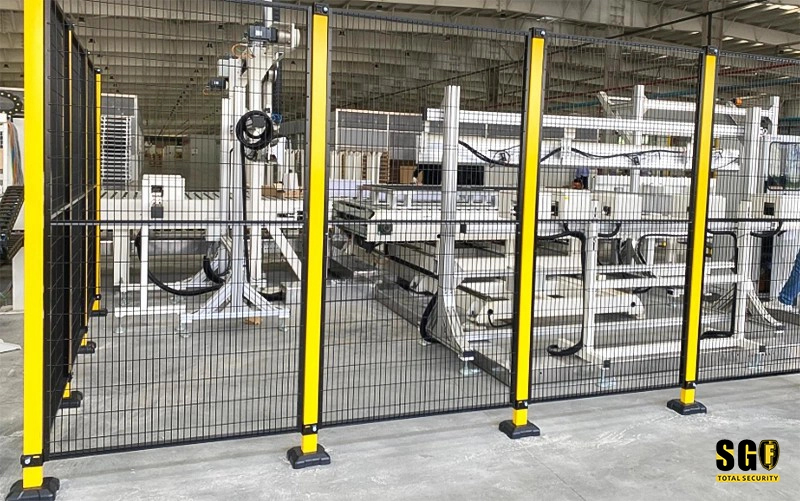
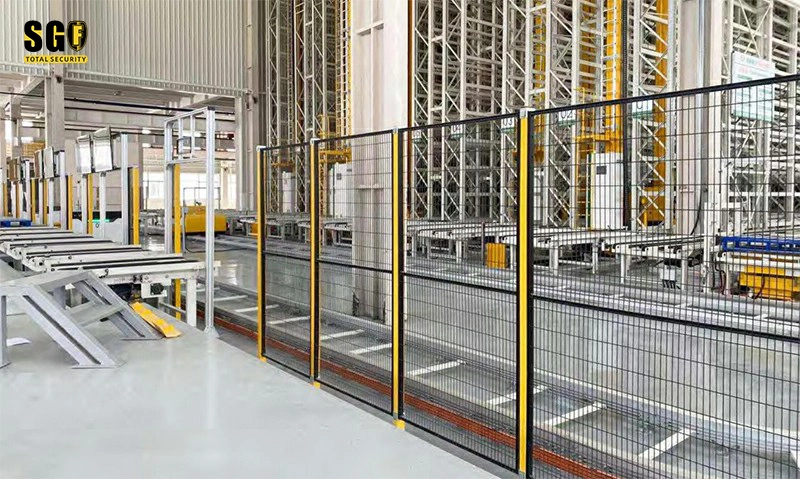
Proof at the detail level
Weld seam quality, coating finish, and base plate construction are the details that separate a genuine industrial guard from a price-only substitute. Those are the details buyers remember when they audit the system later.
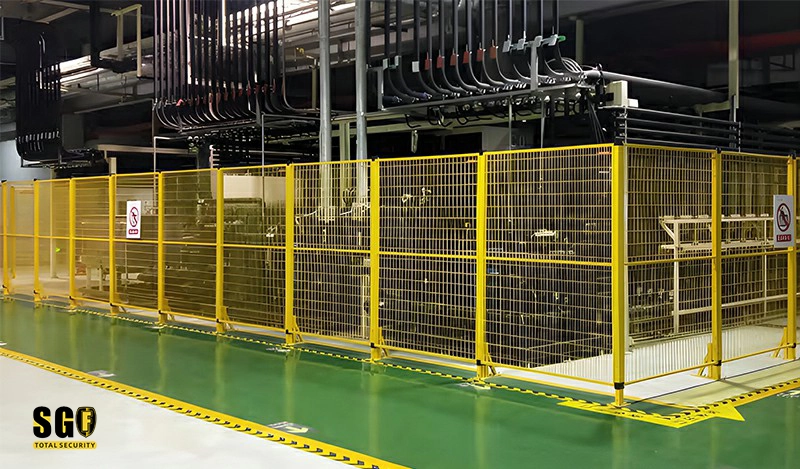
Installation that looks serious
Expansion bolts, drilling steps, and retaining-ring assembly show that the system is meant to be fixed, aligned, and trusted over time. That matters when your customer asks how the fence will perform after years of use.
Where the solution lands best
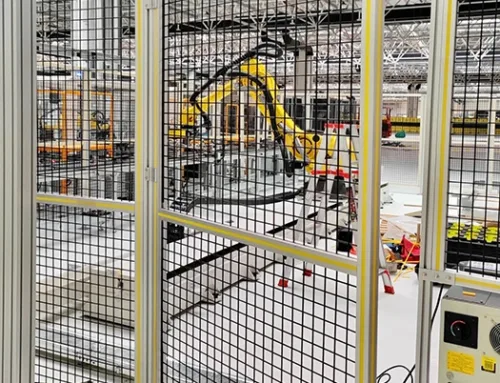
Mdfence is the right fit when the machine package is being sold into a factory that already understands safety expectations. It works well for automated cells, conveyor-adjacent zones, and any line where a selling partner needs to prove that the guarding system will not weaken the main equipment story.
It also helps sales teams who need one message across multiple European countries: the fence is not a local workaround; it is a dedicated manufacturing lines safety system with the technical backbone to support export conversations.
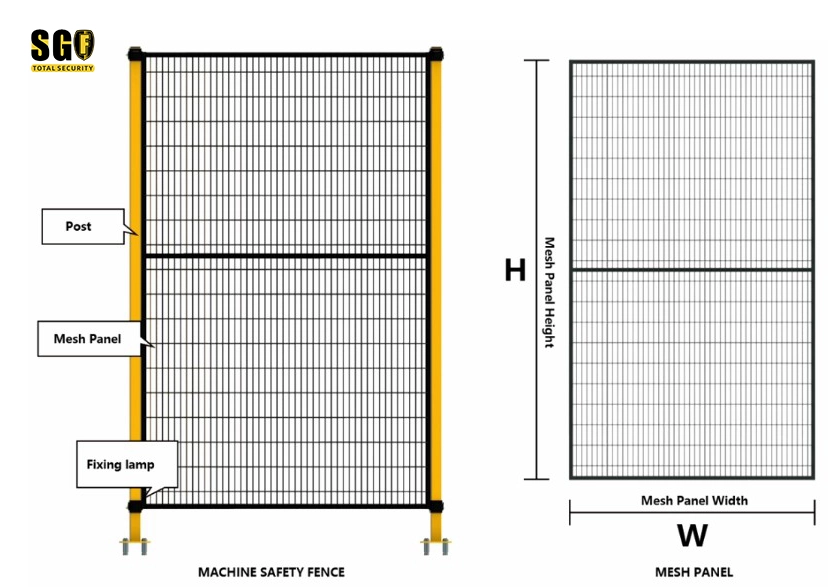
What the buyer gets in the end
The final result is not just a safer perimeter. It is easier catalog selling, stronger compliance confidence, and less friction when the equipment crosses into regulated markets. Instead of defending a weak accessory, you can present a full industrial package that is built to protect both the operator and the reputation of the company selling it.
For machine builders, integrators, and dealers, that is the real commercial value: Mdfence helps turn guarding into a reason to trust the whole line.