EN
EN  DE
DE  RU
RU  PT
PT  JA
JA  ES
ES  IT
IT FORKLIFT SAFETY | FCBarrier
Impact Resistant Barrier for Warehouse Forklift Zones
An Impact Resistant Barrier gives warehouse and factory traffic lanes a flexible safety barrier that absorbs collision energy instead of sending a rigid rebound into the forklift. FCBarrier uses ARMORFLEX polymer to protect racking, columns, machinery and floor-mounted routes while reducing repainting, repair work and accident downtime.
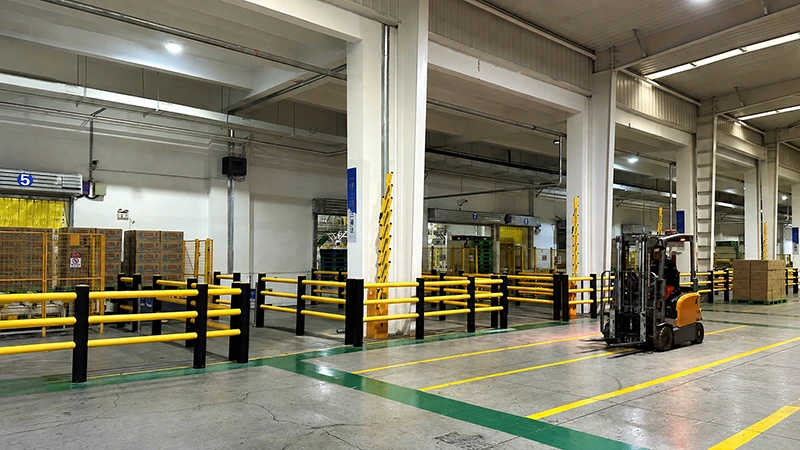
Why Replace a Steel Barrier After the First Impact?
In a busy warehouse aisle, loading bay or manufacturing plant, a steel barrier can stop a vehicle but remain permanently deformed. The usual response is cutting, welding, grinding and repainting. A rigid collision also transfers more of the impact back into the forklift, anchors, concrete floor and nearby building structure. FCBarrier is specified for the same mixed-traffic problem with a different impact response: flexible, energy absorbing and self-rebounding.
| Operating issue | FCBarrier response |
|---|---|
| Steel guardrail deformation | ARMORFLEX polymer absorbs up to 80% of collision energy and is designed to return toward its original form after impact. |
| Forklift and floor damage | A flexible safety barrier reduces the rigid rebound path, helping protect vehicles, floor anchors, concrete and adjacent assets. |
| High-impact forklift routes | The top verified ratings reach 28,950 J for DR190, TR190+ and CTR190+ configurations—equivalent in the brief to an 8-ton forklift at 9.6 km/h. |
| Different protection zones | SR, DR, TR and CTR series cover single-rail, double-rail, traffic-rail and column-protection requirements. |
| Frequent repainting | The polymer body is self-coloured, corrosion free and UV resistant in the product positioning, so routine impact does not create the same repainting cycle as painted steel. |
| Retrofit installation | Modular sections use a mortise-and-tenon quick-install approach and are floor anchored with expansion bolts; damaged sections can be addressed without replacing a whole line. |
Structure and Evidence Behind the Impact Protection
1. Flexible polymer for repeat-contact areas
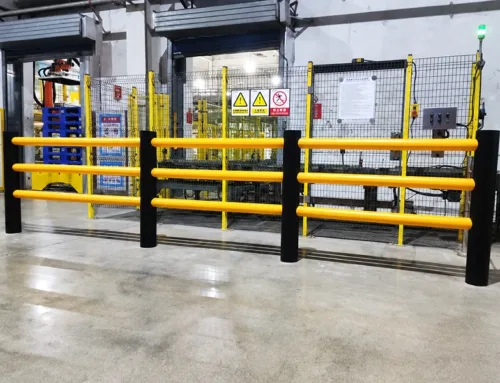
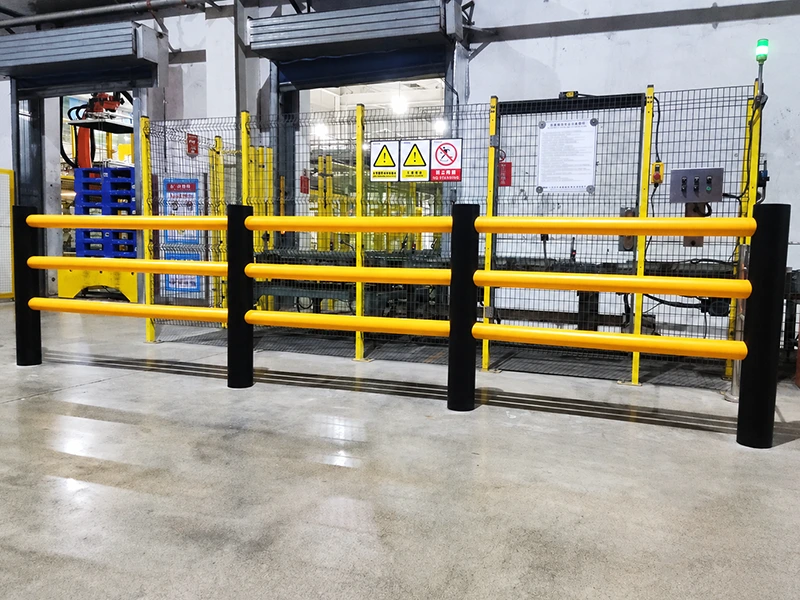
FCBarrier is a Polymer Safety Barrier, not a decorative fence or a simple crowd-control rail. Its flexible guardrail profile is intended for warehouse safety barrier layouts where forklifts, carts, equipment and pedestrians share floor space. The factory image below shows the type of continuous machinery-access separation the system is used to create; the image supports the layout and installation context, while the energy-absorption claim comes from the product brief.
2. Ratings matched to the protection zone
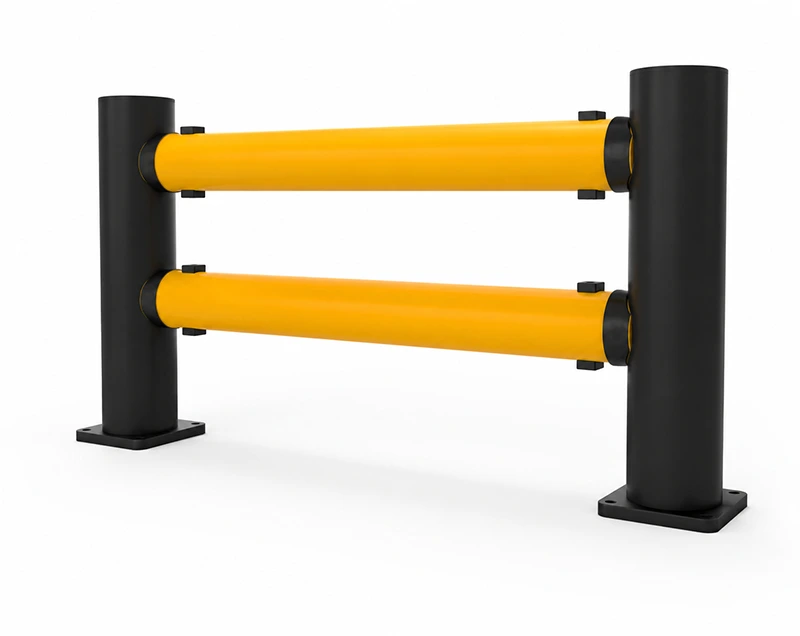
Selection should follow the traffic path and expected impact load rather than rail appearance alone. The verified series data lists SR100 at 3,850 J, SR148 at 14,400 J, SR190 at 21,350 J, DR100 at 6,500 J, DR148 at 19,000 J, and DR190 at 28,950 J. TR and CTR options extend to 28,950 J in their 190 configurations. The dual-rail render shows the floor-mounted base plates and connection geometry that support a modular industrial safety barrier installation.
3. Separate people, vehicles and equipment
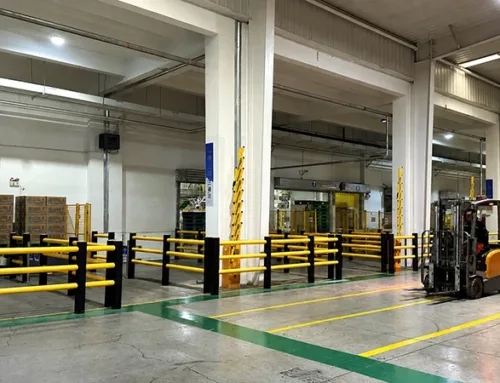
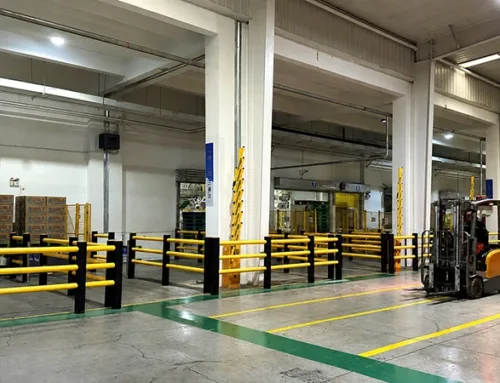
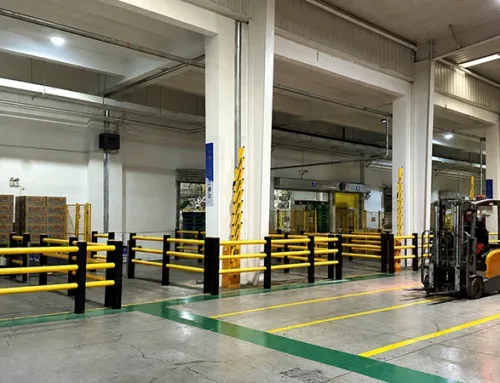
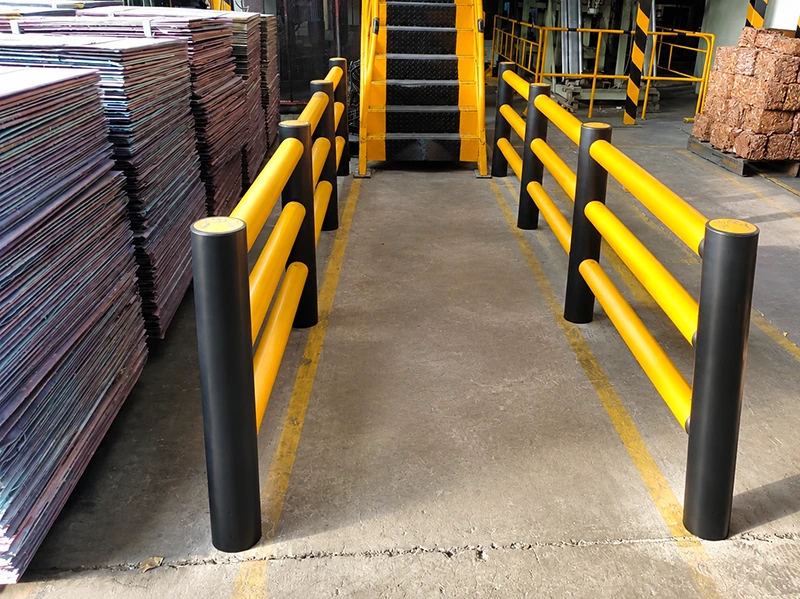
A forklift safety barrier can define an aisle, protect rack ends, shield a column or create a pedestrian barrier without rebuilding the facility layout. The floor-mounted dual-rail installation shown here supports a retrofit safety upgrade around factory walkways and equipment edges. For a detailed design, confirm the concrete condition, anchor layout, traffic direction and required clearance before selecting SR, DR, TR or CTR components.
Where an Impact Resistant Barrier Fits
- Warehouse safety barrier: protect rack ends, columns and narrow aisles from forklift impact.
- Loading dock protection: define loading-bay edges and reduce damage escalation in repeat-contact areas.
- Logistics centre barrier: separate vehicle routes from people and fixed assets.
- Manufacturing plant safety: guard machinery access, production-line edges and equipment zones.
- Pedestrian barrier: create visible walkways and controlled crossings inside mixed-traffic plants.
- Retrofit barrier: add modular protection to an existing warehouse without a full layout rebuild.
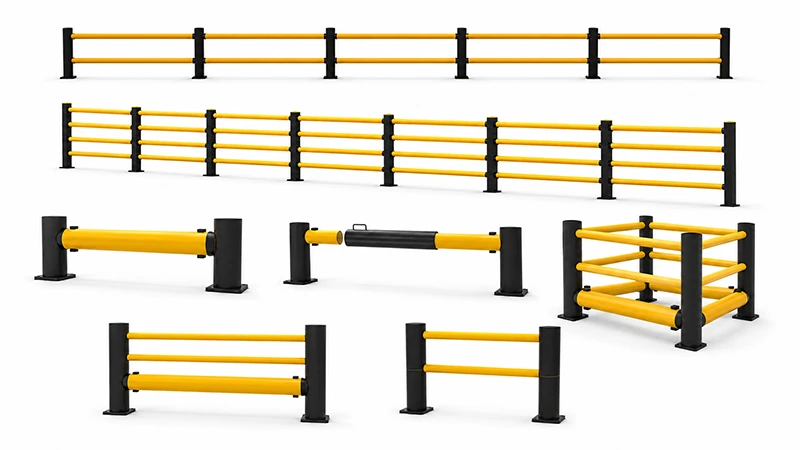
Multi-rail configurations let the design team match protection to the zone. Use a column protector or CTR layout around structural posts, a double rail for rack and equipment edges, and a traffic rail where pedestrian and vehicle movement must be clearly separated. The configuration image below supports this modular selection logic; it is a product-structure reference, not a standalone impact test.
What to Confirm Before Specifying FCBarrier
Start with the traffic type, forklift mass and speed, impact direction, aisle width, rack or column position, pedestrian route and floor condition. Then select the series and impact rating, confirm floor-anchored base details, and plan the two-person installation workflow using an electric hammer drill, hand drill, torque wrench and rubber mallet. FCBarrier can support a low-maintenance, corrosion-free alternative to a steel barrier, but concrete grade, slab thickness, anchor pull-out values, fire rating and temperature range should be confirmed for the project rather than assumed.
Reduce Steel Barrier Repairs in Your Forklift Zones
Replace repeated cut, weld and repaint work with an energy-absorbing Flexible Safety Barrier planned around your actual warehouse, logistics centre or manufacturing plant traffic. Share a layout, protection zones and forklift details with SGF to review the right FCBarrier configuration.