EN
EN  DE
DE  RU
RU  PT
PT  JA
JA  ES
ES  IT
IT FLEXIBLE GUARDRAIL FOR HIGH-THROUGHPUT BEVERAGE PLANTS
Flexible Guardrail for Beverage Production Lines: Reduce Forklift Downtime Without Repainting Steel Rails
When a beverage plant runs close to 24/7 and output can peak at 6,000 bottles per minute, a forklift impact near a filler, conveyor, racking end or column can stop more than a barrier. A Flexible Guardrail built around FCBarrier impact protection helps separate traffic from equipment and stock, absorb energy, self-rebound after impact, and keep one collision from becoming a line-wide shutdown.
Why a Flexible Guardrail Fits Continuous Beverage Production
The risk is not limited to a visibly damaged rail. A rigid steel barrier can transfer impact into its anchors, slab, protected machine or rack. If the barrier remains standing while the production asset shifts, the protection has failed at the point that matters. FCBarrier uses ARMORFLEX™ polymer and an energy-absorbing, self-rebounding design to make the protective zone part of the plant’s uptime strategy rather than a repair item.
| Production protection requirement | FCBarrier / Flexible Guardrail response |
|---|---|
| High-consequence forklift impact | 28,950J rated barrier reference for an 8-ton forklift at 9.6 km/h. |
| Repeated contact around active traffic routes | Self-rebounding construction absorbs up to 80% of impact energy and returns to position after impact. |
| Equipment, racking and column exposure | SR single rail, DR double rail, TR traffic rail and CTR column protector configurations can be matched to the hazard zone. |
| Maintenance after a collision | Flexible, low-maintenance protection reduces the need for repainting, re-anchoring and slab repair associated with damaged steel barriers. |
| Retrofit in an operating plant | Modular sections, floor-anchored bases and mortise-and-tenon quick-install assembly support phased installation. |
From Impact Exposure to Practical Protection
Protect the line before the forklift reaches it
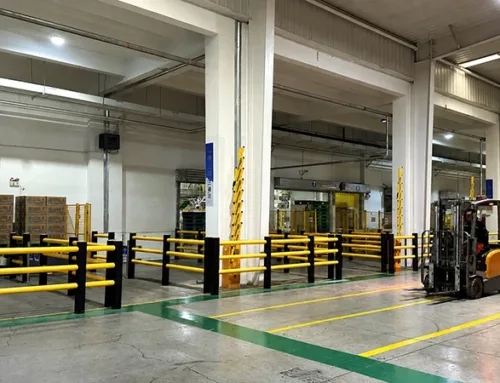
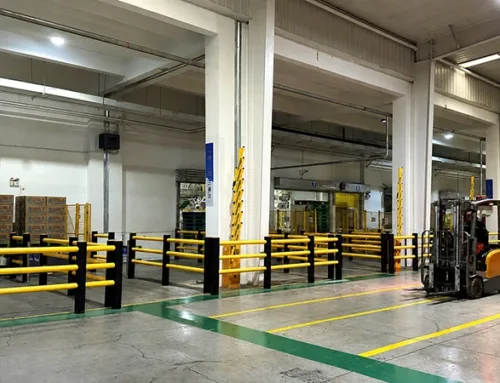
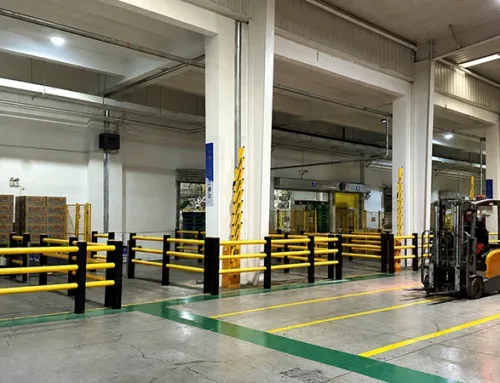
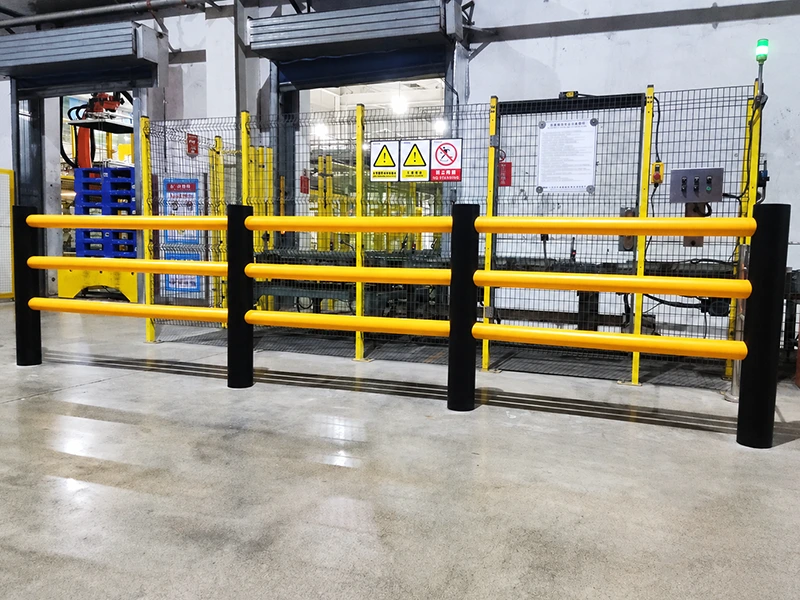
Place the Flexible Guardrail around machinery access, conveyor approaches and production-line corners where turning space is limited. The factory image shows a continuous barrier line beside an equipment zone; that arrangement is useful because it creates a clear physical boundary instead of relying on paint or operator attention alone. In a beverage plant, the same principle can protect the machine envelope while preserving a defined forklift and pedestrian route.
Use the right rail arrangement at each hazard
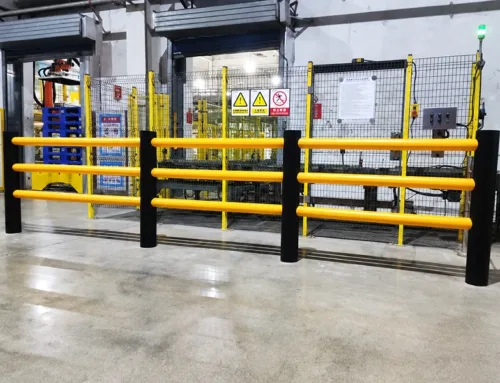
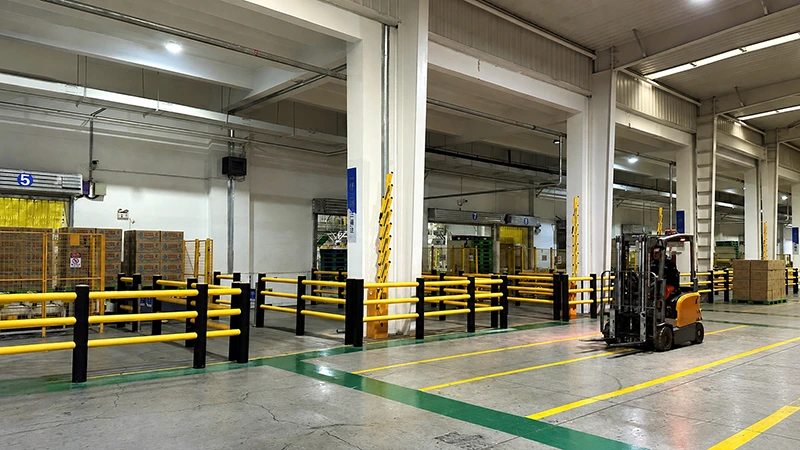
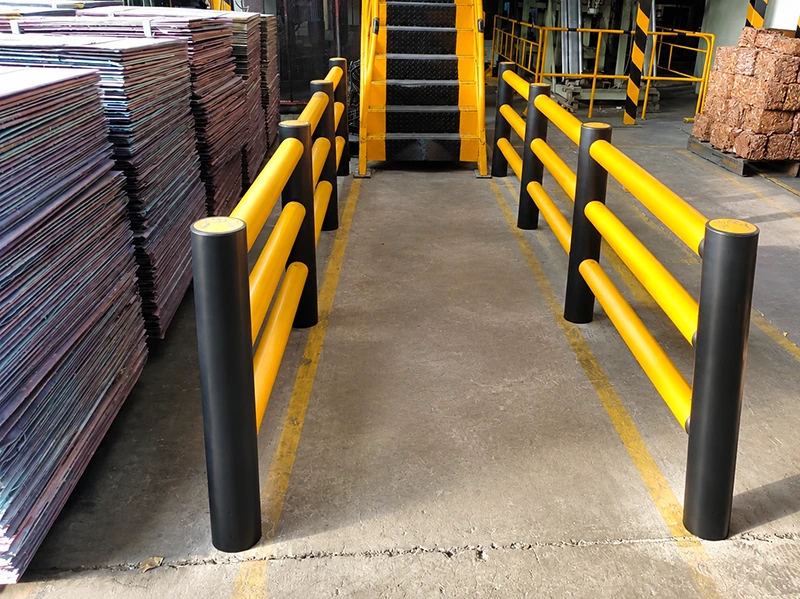
Not every location needs the same geometry. A single rail can define a lower-risk route, while a double rail or TR traffic rail can create a stronger separation between moving vehicles and people. At rack ends and exposed columns, CTR column protectors and corner barrier sections address the approach angle directly. The installed dual-rail image provides visual evidence of floor-mounted posts, continuous alignment and a segregated walkway; it supports layout planning, not an unverified claim about a particular rail series.
Reduce the secondary cost of a collision
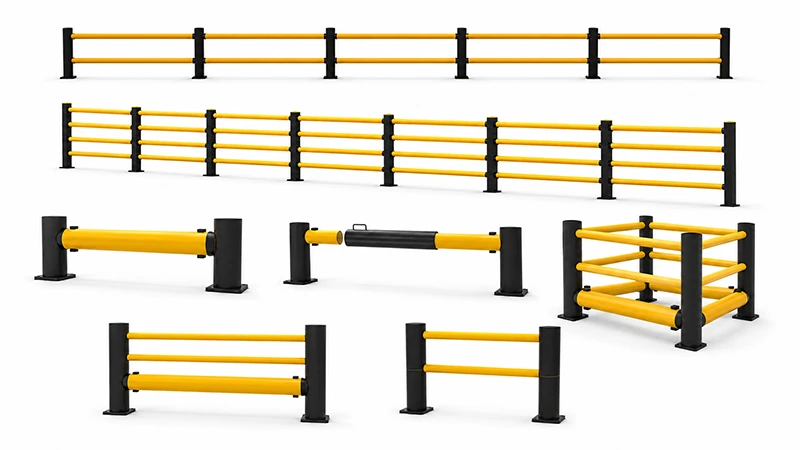
FCBarrier is designed to absorb impact and self-rebound rather than become a rigid sacrificial frame. That changes the post-impact job: the team can inspect the affected module and replace a damaged section when necessary, instead of automatically planning rail straightening, repainting, new anchors or concrete repair. The modular product image shows multiple rail configurations and bolted base-plate layouts, evidence of a system that can be specified around equipment, racking, loading dock protection and plant walkways.
Where to Deploy Flexible Guardrail in a Beverage Plant
- Production-line protection: shield fillers, conveyors, case packers and machine access points from forklift traffic.
- Racking protection: protect rack ends and loading routes where finished goods movement is frequent.
- Column and wall protection: use CTR column protectors and suitable corner sections at structural pinch points.
- Pedestrian safety: establish a visible separation between operators, visitors and industrial vehicles.
- Loading dock protection: define staging and approach zones without turning every impact into a steelwork repair project.
For a high-throughput manufacturing plant, the result is straightforward: fewer impact-related repairs, lower maintenance exposure and less risk that a local forklift accident will interrupt the entire production line. Flexible Guardrail does not replace traffic management or operator training; it adds an energy-absorbing physical layer around the assets that are most expensive to stop.
Specify the Barrier Around the Real Traffic Pattern
Before selecting SR, DR, TR or CTR components, map forklift direction, turning radius, rack ends, pedestrian crossings, machine clearance and floor anchoring points. Then match the barrier height and rail arrangement to the exposure. FCBarrier’s modular installation and quick-release approach support retrofit work in phases, helping the plant strengthen the highest-consequence zones first.
Keep One Collision from Stopping One Line
Share your production-line layout, forklift route and priority assets with SGF. We can help identify where a Flexible Guardrail, flexible bollard, warehouse barrier rail or column protector should be deployed for equipment protection, racking protection and workplace safety.