EN
EN  DE
DE  RU
RU  PT
PT  JA
JA  ES
ES  IT
IT AGV / ROBOT MIXED-TRAFFIC SAFETY
Corrosion Free Barrier for AGV Cells: Live Warehouse Separation
Corrosion Free Barrier gives AGV routes, robot charging bays, and human-robot transfer zones a Flexible Safety Barrier that absorbs low-speed contact, protects automation hardware, and installs with less disruption in live operations.
What changes when automation meets people
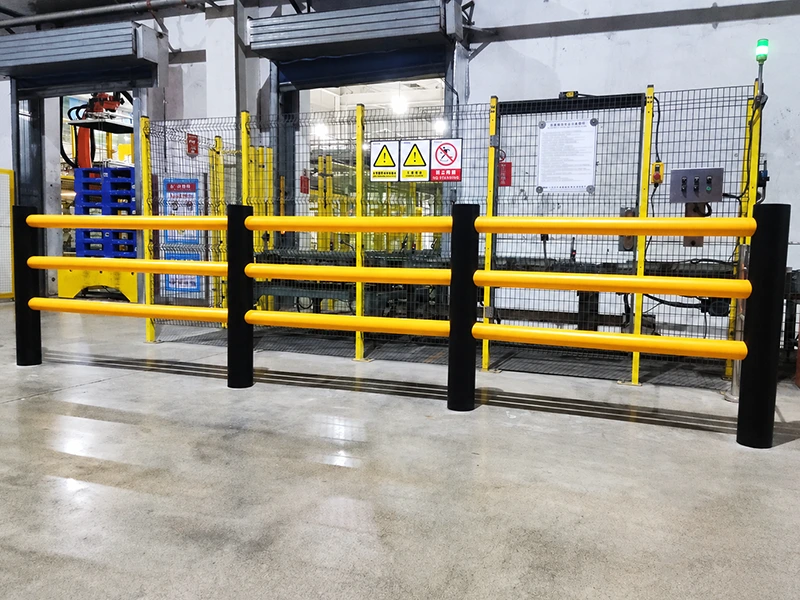
The problem in AGV and robot-heavy warehouses is not just impact. It is repeated low-speed contact, tight transfer points, and the cost of keeping a line running while the layout is still changing. A painted lane does not stop a vehicle. A rigid steel rail can stop the vehicle, but it can also transfer damage into the robot body, sensor housing, or nearby equipment. Corrosion Free Barrier is built to close that gap with a Polymer Safety Barrier approach: physical separation, impact resistance, and less secondary damage.
| AGV / Robot Cell Requirement | How FCBarrier responds |
|---|---|
| Mixed traffic needs a real boundary | Flexible Safety Barrier forms a visible, fixed line for people, AGVs, and service carts. |
| Low-speed rubs still cause expensive damage | Impact Resistant and Energy Absorbing structure helps take the contact instead of the machine. |
| Retrofits must happen without long shutdowns | Mortise & Tenon Quick-Install plus Modular Installation reduces disruption in live plants. |
| Humid, dusty, or washdown zones need lower maintenance | Corrosion Free, UV Resistant, and Recyclable material supports long service life. |
| Some lanes face heavy vehicle exposure | Published heavy-duty configurations include a 28,950J rated barrier option for tougher impact points. |
Why this barrier fits automation sites
1) The old problem: steel rails and floor paint do not solve mixed traffic
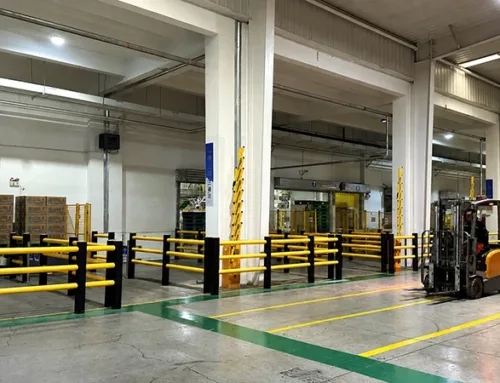
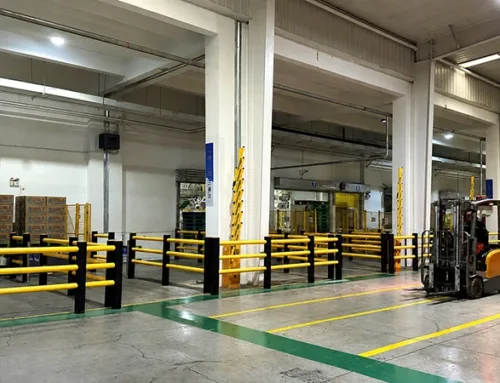
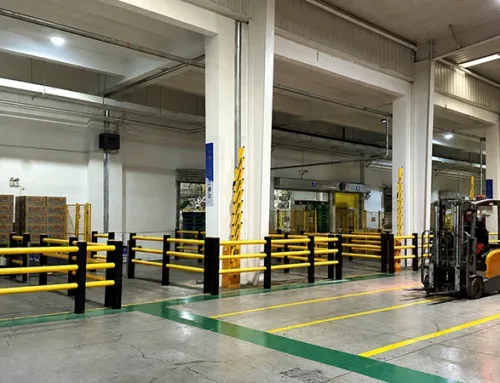
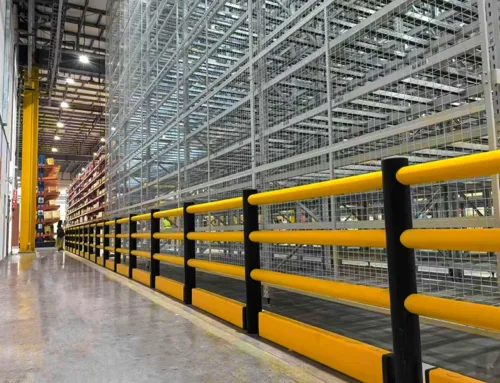
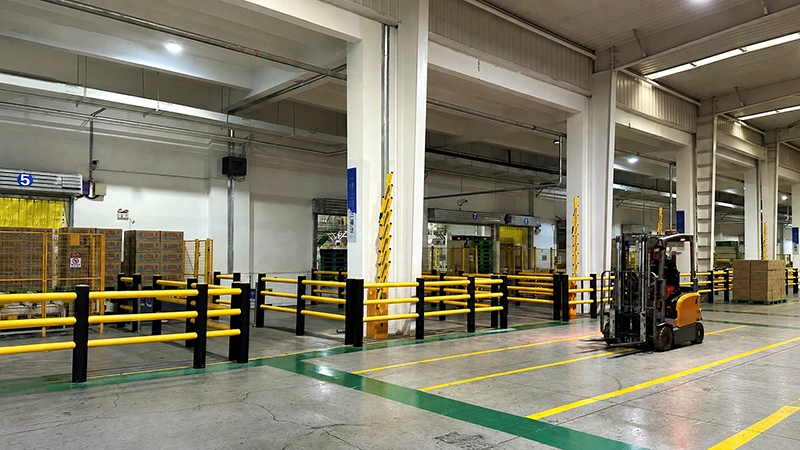
In a live warehouse, the most dangerous points are often the quiet ones: robot charging bays, handoff points, and narrow crossings where operators and automated vehicles share the same envelope. The warehouse image below shows how loading bays, columns, and access corridors sit inside one operating zone. A paint line tells a driver where to go; it does not protect an AGV battery cover or a robot sensor from a side brush. Corrosion Free Barrier gives the cell a physical edge without turning that edge into a hard, equipment-damaging surface.
2) The contact point: self-rebounding structure reduces secondary damage
FCBarrier is not about making every collision disappear. It is about managing the collision so the damage stays local. The product profile calls out Self-Rebounding behavior, with the barrier absorbing most of the energy and returning to shape instead of staying bent like a rigid steel guardrail. That matters when a low-speed AGV drift, a pallet cart bump, or a careless turn happens near an expensive automation asset. The result is fewer sharp metal edges, less scraping, and less unplanned repair work around the machine itself.
3) The retrofit answer: modular segments that can go in while operations continue
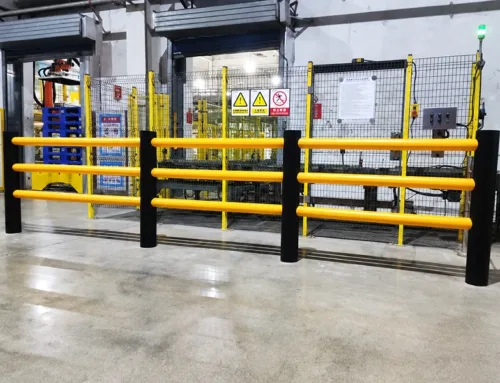
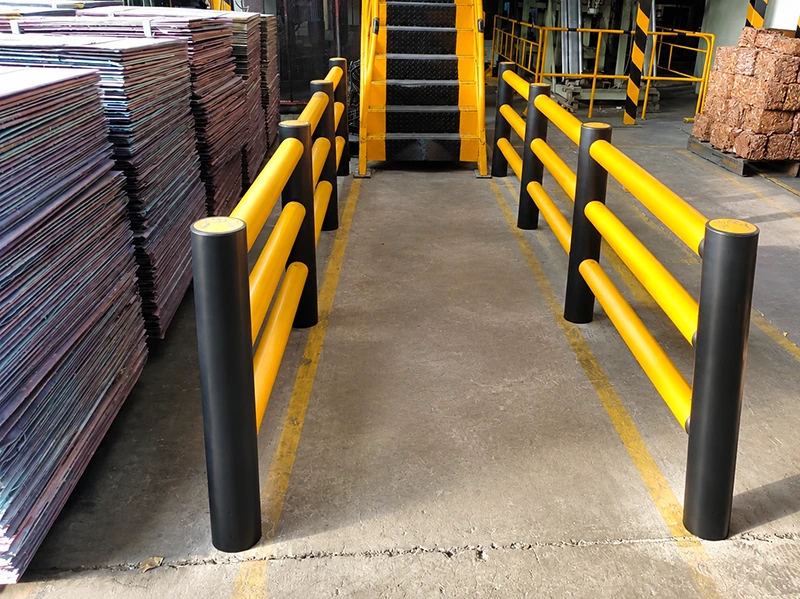
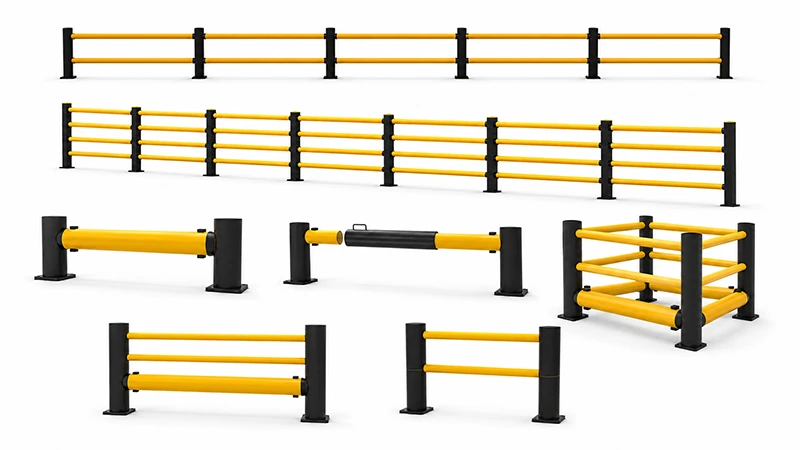
Automation projects often happen in stages. One month it is the AGV main lane. The next month it is a robot charging bay or a transfer zone at the end of a conveyor. FCBarrier is built for that reality with Modular Barrier logic, Floor-Anchored Base fixing, and Mortise & Tenon Quick-Install assembly. The 3D configuration image below shows the base plates, uprights, and repeated rail modules clearly: once the route is defined, the barrier can be extended, shortened, or reworked without rebuilding the entire zone.
Where FCBarrier is being applied
- AGV route separation in mixed human-machine traffic
- Robot charging and docking bay protection
- Handoff zones between conveyors, operators, and autonomous vehicles
- Equipment perimeter protection around cabinets, sensors, and service access points
- Retrofit upgrades in active warehouses, logistics centers, and manufacturing plants
For automation teams, the value is simple: keep people on the safe side, keep robots in their lane, and keep the barrier from becoming the next thing that needs repair. Corrosion Free Barrier supports warehouse safety barrier planning, forklift safety barrier separation, and manufacturing plant safety upgrades without overbuilding the line with rigid steel.
What to request before you specify the layout
Ask for the route sketch, the corner list, and the anchoring plan for your AGV cells, robot charging points, and human handoff zones. If the site has higher vehicle exposure, request the heavy-duty barrier configuration data as well. The goal is to match the barrier line to the real traffic pattern, not the other way around.
Start with the route map, not the fence catalog
If your plant is moving toward AGV, AMR, or robot-assisted flow, send the lane sketch and the contact points. We will map the barrier run, the corner protection, and the retrofit sequence so the site gets physical separation with less downtime.