EN
 DE
 RU
 PT
 JA
 ES
 IT

Barrier Rails
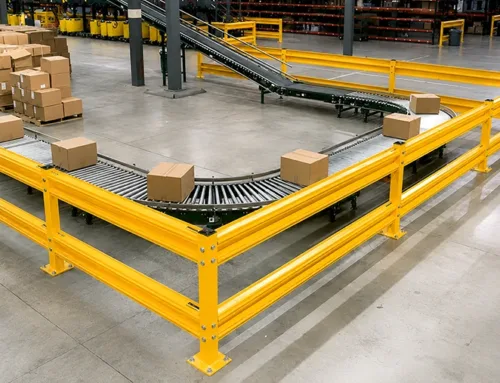
Barrier Rails are an essential safety feature for various applications, designed to provide reliable protection and control access to specific areas. These sturdy and versatile rail systems are commonly used in industrial, commercial, and public spaces to enhance safety and security. With their durable construction and customizable options, Barrier Rails are a reliable solution for safeguarding your environment.
Key Features of Barrier Rails
1. Enhanced Safety
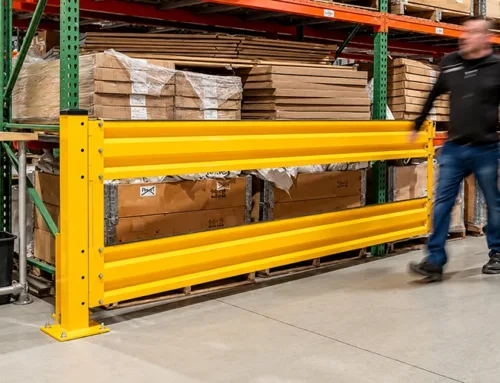
Barrier Rails serve as a physical barrier, preventing unauthorized access to dangerous or restricted areas. They are ideal for creating safe walkways, segregating work zones, and ensuring the well-being of employees, visitors, and equipment. Their robust design and construction contribute to a safer environment.
2. Durable Materials
Constructed from high-quality materials, our Barrier Rails are built to last. Whether you choose galvanized steel, aluminum, or other corrosion-resistant materials, you can trust that your rail system will withstand the test of time and harsh environmental conditions.

3. Customizability
We understand that each space has unique requirements. Barrier Rails can be customized to fit your specific needs. You can select the height, length, and design that best suits your environment, ensuring a perfect fit and maximum effectiveness.
4. Easy Installation
Installing Barrier Rails is a straightforward process. With our user-friendly instructions and the availability of mounting options, you can have your rail system in place quickly. Whether you need permanent installation or a temporary solution, we have you covered.
Applications of Barrier Rails
Barrier Rails find wide-ranging applications in:
- Warehouses and distribution centers
- Manufacturing facilities
- Construction sites
- Retail stores
- Public venues
- Airports and transportation hubs

No matter the industry or setting, Barrier Rails offers an effective solution for controlling access, enhancing safety, and protecting valuable assets.
Why Choose Barrier Rails?
Choosing Barrier Rails is a smart investment in safety and security. With their exceptional durability, customizability, and ease of installation, they are a practical choice for businesses and organizations looking to create safer environments. Whether you need to create pedestrian walkways, secure equipment, or protect sensitive areas, Barrier Rails provides a reliable solution.
Get Your Barrier Rails Today
Contact us now to discuss your specific requirements and get started with Barrier Rails that are tailored to your needs. Our team is here to assist you in creating a safer and more secure environment.
Black-Ice Skid Between 23:00 and 05:00 No Operator Reports: Reading a 4 mm Q235 Warehouse Guard Rail with a 160×160×16 mm Base Plate the Next Morning
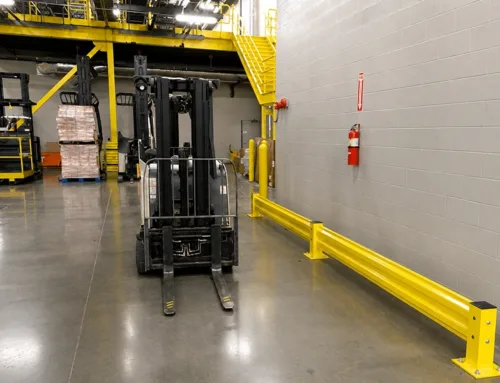
On a −6 °C ambient dock apron between 23:00 and 05:00, a counter-balanced forklift skids 1.2 m past the floor-mark, finds the rail instead of the rack, and walks away without filing a near-miss entry. A 4 mm Q235 corrugated steel warehouse guard rail with a custom 160×160×16 mm base plate is the only forensic read the 5 a.m. EHS walk-around has on what actually happened.
Frozen Loading Bay Floors and Skid-Out Forklifts: Heavy Duty Warehouse Guard Rails as the Last Physical Line of Defense for Racks, Columns, and Precision Equipment
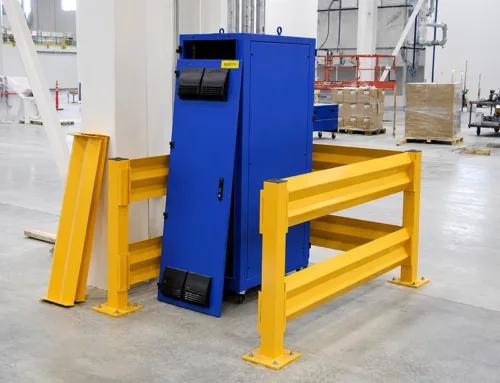
On a -8 °C dock apron a 2.5 t counterbalanced truck slides straight into rack upright A12. A 4 mm Q235 heavy duty warehouse guard rail with a custom 160×160×16 mm base plate from technical case 15176 is the last physical line of defense around racks, columns and precision equipment when the bay floor turns to ice.
Cold Storage Robots and Pickers Share an Aisle at –25 °C — and a Yellow Reflective Q235 Warehouse Guard Rail Is the Passive Boundary Neither Will Cross
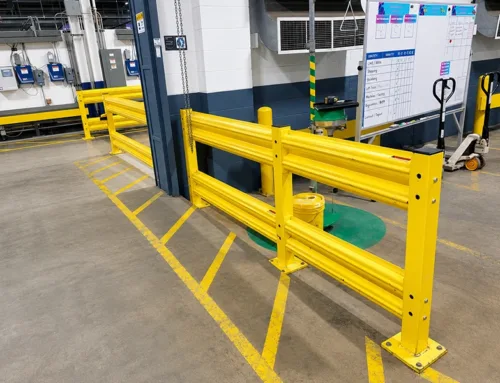
ROLT robotic pallet shuttles, reach trucks, and seasonal pedestrian pickers share the same –25 °C cold storage pick aisle. A bolted, yellow, reflective Q235 warehouse guard rail with end-cap bollards forms the physical boundary a robotic shuttle will not cross into the pedestrian lane — completing the UWB proximity and blue-light active warning stack on the layer that does not depend on training, sensor battery, or the operator's mood.