EN
EN  DE
DE  RU
RU  PT
PT  JA
JA  ES
ES  IT
IT Industrial Guard Rail · Variant Changeover
Mixed-Model Assembly Cells Reshape Every Shift: A Bolted, Lift-Out Corrugated Steel Guard Rail Carries the Boundary Through Body and Powertrain Changeovers
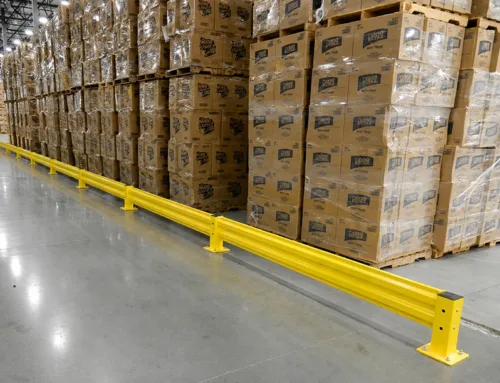
When an automotive body shop or contract manufacturer runs three body styles and two powertrains on the same line, the AGV queue path, pallet buffer and forklift-permitted cell redraw every shift. A bolted, modular Q235 corrugated steel guard rail built from 1,500 mm standard panels plus 680–1,140 mm custom fillers travels with that redraw — without hot work, without a slab re-pour, and without taking the cell offline.
Why Site-Welded Pipe Railing Falls Behind a Variant Changeover
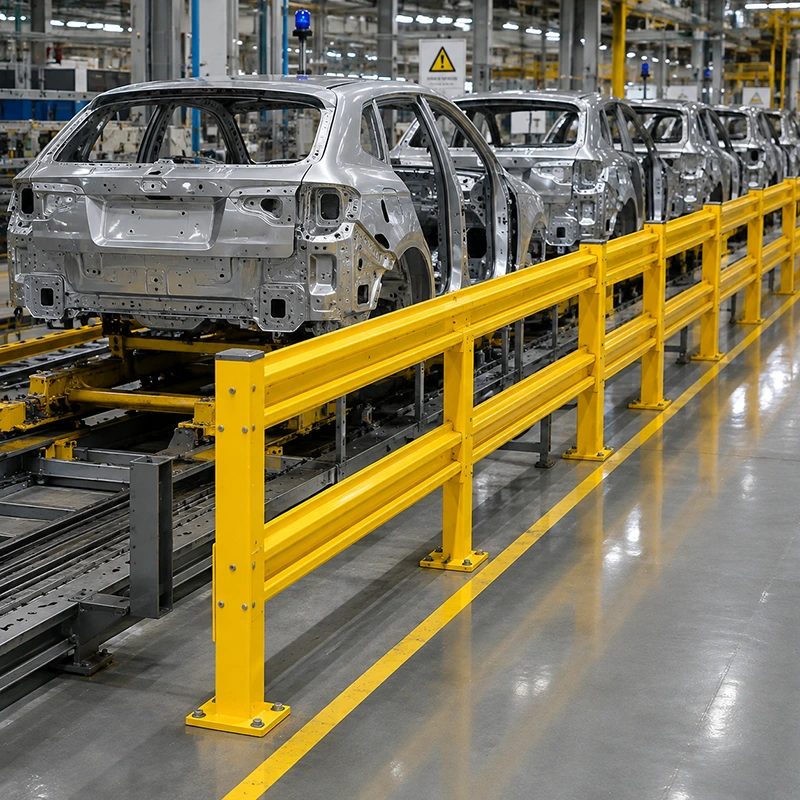
In a mixed-model cell, the boundary that holds the AGV queue today gets redrawn the day a new body style or a new powertrain enters the line. Site-welded steel pipe railings treat each re-anchoring as a hot-work project: arc flash, paint-shop dust, anchor bolts drilled into rebar, and an entire day shift lost to grinding. A bolted guard rail moves those cost lines off the welded-steel path and onto a base-plate-and-bolt cycle the maintenance team can run inside a single shift.
| Pain point on a variant changeover | Site-welded steel pipe railing | Hsafety bolted corrugated steel guard rail |
|---|---|---|
| Boundary shift to the new cell layout | Cut the old weld, re-weld on the new line | Unbolt at the floor anchor, re-bolt on the new line |
| Hot-work permit and fire watch | Required at every re-position | Not required |
| Concrete slab damage | Drill new anchor holes, patch the old ones | Bolts ride into existing floor inserts; base plate stays in place |
| Time per cell re-position | Half a shift per section, fumes in the paint area | Minutes per section with socket wrench and torque tool |
| Cell downtime | Cell offline during cutting and grinding | Cell keeps running while rails shift one panel at a time |
| Reusable after the next change | Cut, re-weld, re-paint | Bolts reverse; the same panel posts walk to the next cell |
Three Mechanical Facts That Make a Variant Changeover a 30-Minute Job
Lift-Out Segment Opens a Temporary Gate Through the Boundary
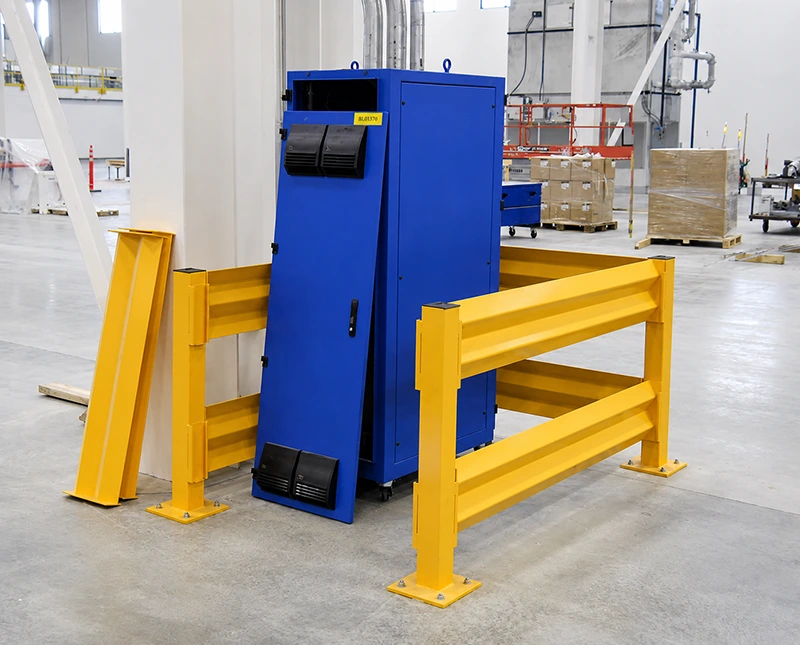
When the contract manufacturer runs an end-of-pallet transfer during the body-style changeover, the AGV path needs a physical opening. The lift-out segment unbolts at the post-to-panel joint and lifts clear by hand in seconds — no torch, no crane, no floor anchor pulled out. The bolted base plate stays anchored in the concrete at the original cell footprint, so when the next variant lands the segment bolts back in on the same anchors and the boundary closes again. Floor anchors are drilled once; the cell boundary is shaped around them every shift.
Bolted Base Plate Stays in the Slab While the Panel Walks to the Next Cell
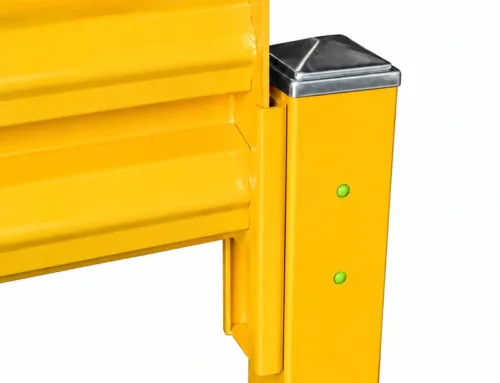
In a mixed-powertrain cell, the AGV drop zone for the e-axle line sits two metres from where the ICE axle drop zone lives. The Hsafety bolted base plate is fixed at a 160×160×16 mm footprint, drilled into the existing floor insert. When the cell reshapes for the next variant, the post unbolts at the base, the panel stack rides to the next cell, and the anchor footprint remains a clean, documented point on the slab. No diamond-drilled rebar, no patched concrete, no second-floor-anchor survey before the EHS walk-through.
1,500 mm Standard Modules + 680–1,140 mm Custom Fillers Cover Any New Cell Length
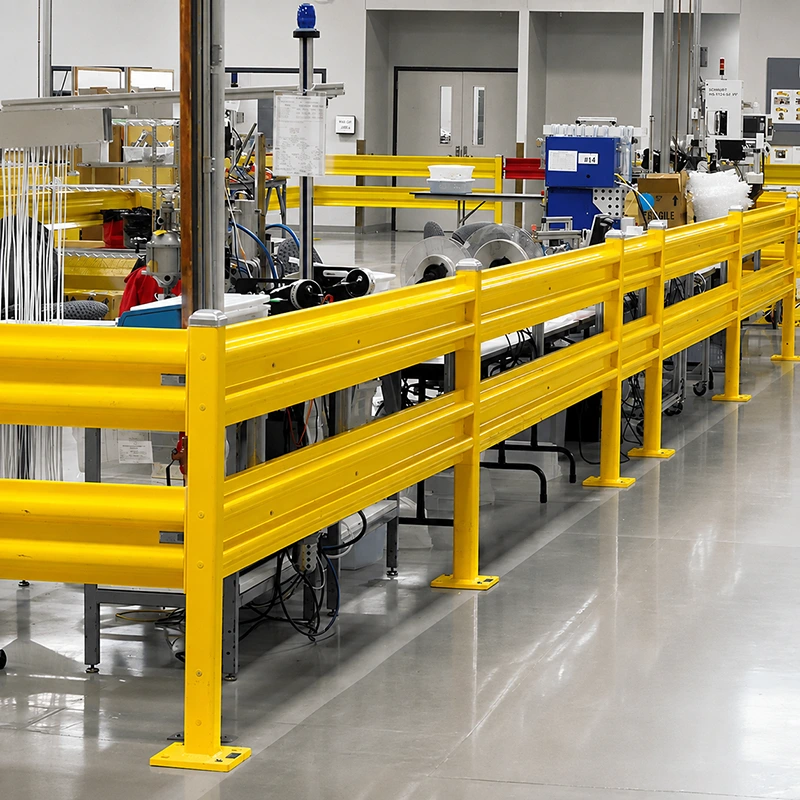
The Hsafety BOM is written in 1,500 mm standard modules with mill-cut fillers at 680, 780, 1,040 and 1,140 mm — four cell lengths in the same project (17,000 / 12,000 / 17,100 / 11,900 mm) ship on two pallets with one spec. The 80×80×6 mm post, 160×160×16 mm base plate and Q235 corrugated panel are the same drawing for every cell; the special filler is the only BOM line that changes between shifts. When the variant changeover asks for a different cell length, the filler inventory absorbs the change without forcing a new steel purchase.
Where a Bolted Lift-Out Guard Rail Sits on a Mixed-Model Floor
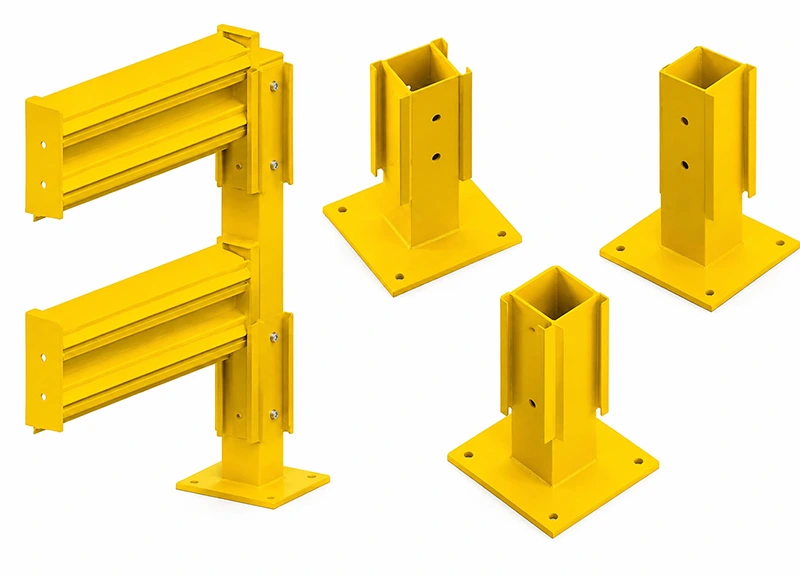
- Body-style changeover cell in an automotive welding and assembly line — variant A to B to C runs through the same 1,000 mm cell boundary
- Powertrain changeover zone in a contract-manufacturer cell where the e-axle pallet and the ICE axle pallet share the same bay footprint
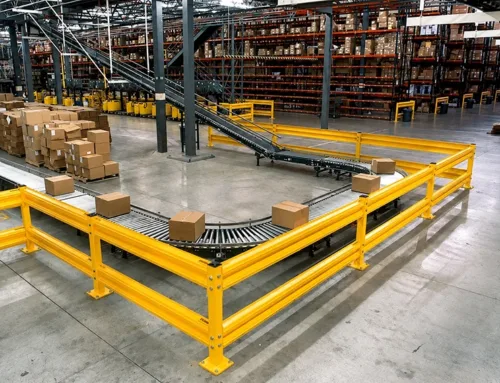
- Pallet change-over buffer lane fed by mixed-product AGVs needing a temporary lift-out gate during model transitions
- Robot painting booth strip where hot work is blocked by the booth permit, but the boundary still has to follow the conveyor route
- Mixed-cell manufacturer running three body styles + two powertrains on one line with cell footprints that change every Friday
Across all five scenarios the bolted base plate stays anchored at the original slab insert while the panels and posts walk the boundary to the next cell shape — no diamond core, no paint-shop dust, no hot-work permit and no half-shift outage folded into the changeover plan.
Sample Cell Length Pack — Mixed-Model Plant Reference Drawing
Four cell lengths in a single project pack: 17,000 mm + 12,000 mm + 17,100 mm + 11,900 mm, uniform height 1,000 mm, BOM of 72 panels (64 standard 1,500 mm + 8 custom fillers) and 42 posts on two pallets. Standard module 1,500 mm; filler lengths 1,140 / 1,040 / 780 / 680 mm selected to land each cell boundary on a whole panel count. Posts 80×80×6 mm Q235 box section, base plates 160×160×16 mm, panel Q235 corrugated steel at 3 or 4 mm. Send your cell dimensions for a quote and drawing pack.
Plan a Lift-Out Boundary for the Next Variant Changeover
Send the cell dimensions, the panel-length options and the number of body-style or powertrain switches per quarter. Hsafety returns a drawing pack, a base-plate layout and a special-filler BOM that travels from one cell to the next without re-drilling the slab.