EN
 DE
 RU
 PT
 JA
 ES
 IT

Is there a safety hazard in using Steel Portable Barricade Gate?

Proper Handling and Installation
Steel portable barricade gates serve as valuable tools in crowd management and access control, but their weight and stability can present potential safety hazards. To ensure a safe environment during their usage, it is vital to adhere to proper handling techniques and installation procedures.
Handling and Lifting Techniques: Due to their substantial weight, it is crucial to avoid manual lifting of these gates. Instead, implement the use of equipment such as dollies or carts to move and position the barricades. Furthermore, it is advisable to assign a team of individuals to handle the task, reducing the risk of accidents and injuries associated with lifting heavy objects alone.
Secure Installation: The stability of steel portable barricade gates is paramount in ensuring the safety of both attendees and organizers. Careful attention must be paid to following the manufacturer’s instructions for proper installation. Utilize the appropriate anchors and fasteners to firmly secure the gate in place, preventing potential toppling hazards, especially during inclement weather or high winds. Regular inspections should also be carried out to ensure the gates remain stable and secure.
Minimizing Risks and Hazards
Apart from weight and stability concerns, other potential risks are associated with steel portable barricade gates. Addressing these hazards proactively can further enhance the safety of the environment in which the gates are utilized.
Preventing Entrapment and Crushing: The design and construction of steel portable barricade gates should prioritize safety to prevent entrapment or crushing incidents. Manufacturers must adhere to safety standards and guidelines, ensuring that no moving parts pose risks to individuals operating the gates. Additionally, personnel handling the gates should receive proper training to minimize the risk of accidents related to gate operation. Employ warning signs to alert attendees to potential hazards and remind them to exercise caution.
Electrical Wiring and Grounding: For gates equipped with electric motors for automated operation, electrical wiring safety is of utmost importance. Faulty or improperly installed electrical systems can lead to severe injuries or even electrical hazards. Routine inspections of the wiring and electrical components are crucial to identifying and rectifying potential issues promptly. Ensuring proper grounding and circuit protection will further mitigate electrical risks.
Reducing Tripping and Falling Hazards: Positioning the gates with care can help reduce tripping and falling hazards. Ensure gates are placed on level ground and appropriately spaced to avoid obstructing pathways. Adequate lighting around the gates will further enhance visibility, reducing the likelihood of accidents during low-light conditions or nighttime events.
Steel portable barricade gates are indispensable tools for crowd control and access management, but their safety must be a priority. By adhering to proper handling and installation procedures, along with addressing potential risks, organizers can provide a safe and secure environment for attendees and staff alike. With vigilant attention to safety measures and precautions, steel portable barricade gates will continue to be valuable assets in various events and situations.
Money Welded to the Floor: Mefence Frameless Industrial Safety Fence Re-Zones a Packaging Plant in One Weekend
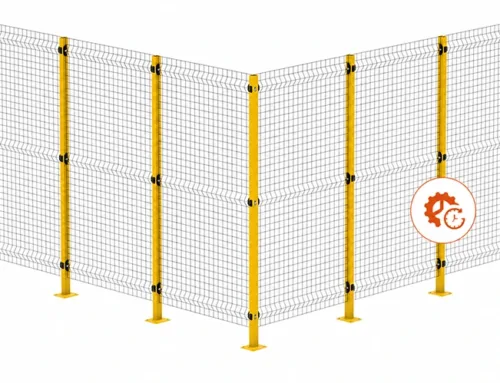
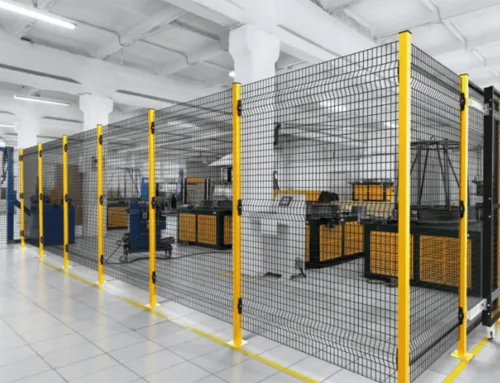
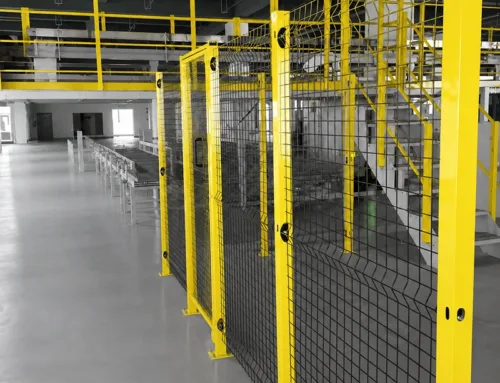
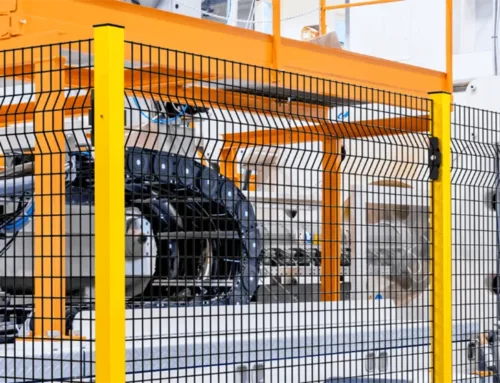
A packaging plant on a 14-day order book redraws its zones faster than a welded perimeter can be justified. Mefence frameless industrial safety fence is a Q235 welded mesh boundary with 3-4 mm wire, 20x100 or 50x50 mm mesh openings and clip-and-screw fixing on base plate posts with slotted mounting holes - unclip the panels, cut the last bay on site, re-bolt them into the new layout. Built for warehouse zoning, storage area separation, pedestrian vehicle separation, forklift path barrier and AGV lane control, with strike points routed to the impact-rated Machine Fence line.
Mesh Opening Over Panel Thickness: Frameless 3D Industrial Safety Fence for Robot Palletizer Cells
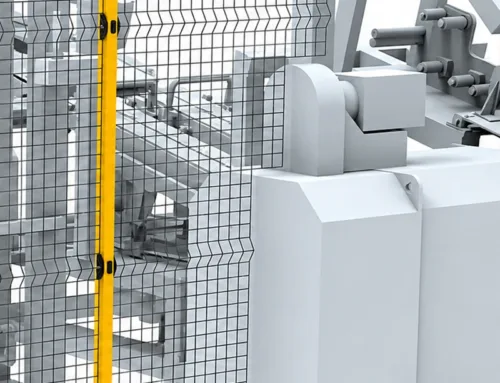
An end-of-line palletizer needs a boundary that keeps people out without taking the sightline with it. Mefence frameless 3D industrial safety fence is a Q235 welded mesh boundary with 20 x 100 mm or 50 x 50 mm openings, clip and self-tapping screw fixing on base plate posts, on-site cut panels and T-shaped ridges that carry interlock, sensor and camera cable — built for robotic workstation enclosure, AGV lane separation and warehouse zoning, with impact-rated strike points on the Machine Fence line.
Open-Mesh Frameless Safety Fencing for Robot Palletizing Cells: Sightline, Camera and AGV LiDAR Without a Solid Panel Wall
Solid panel walls around an end-of-line palletizer keep people out and blind everyone else: the operator cannot see the cycle, the camera sees a grey rectangle, and the AGV map has a new hard surface in it. Mefence frameless 3D safety fencing is a Q235 welded mesh boundary with 20x100 or 50x50 mm openings, clip and self-tapping screw fixing on base plate posts, on-site cut panels and a T-shaped ridge that carries interlock and camera cable — built for robotic workstation enclosure, AGV lane separation and warehouse zoning, with strike points routed to the impact-rated Machine Fence line.