EN
 DE
 RU
 PT
 JA
 ES
 IT
Would you choose pvc fence for protecting workshop safety?

PVC fencing is a type of fence made of polyvinyl chloride (PVC) material. This type of fence is becoming increasingly popular because of its durability, low maintenance, and affordability. PVC fencing is also an environmentally friendly alternative to traditional wood fencing.
One of the main advantages of PVC fencing is its durability. Unlike wood, which rots, warps, and cracks over time, PVC fencing is resistant to moisture, weathering, and insect damage. It is also less likely to crack or fade over time, making it a great choice for homeowners who want a long-lasting fence that requires minimal maintenance.
Another advantage of PVC fencing is the low maintenance cost. Unlike wood fences that require regular staining or painting to maintain their appearance, PVC fences only require occasional cleaning with soap and water. This makes it ideal for homeowners who want a beautiful fence without the hassle of ongoing maintenance.
PVC fences are also more affordable than traditional wood fences. While the initial cost of a PVC fence may be higher than a wood fence, the long-term savings can be significant. PVC fences do not require ongoing maintenance, which can save homeowners repair and replacement costs over time.
In addition to being durable, low-maintenance, and affordable, PVC fencing is also an environmentally friendly option. PVC fencing is made from recycled materials, which means it does not contribute to deforestation or other environmental concerns associated with traditional wood fencing. PVC fencing is also recyclable, which means it can be reused or repurposed at the end of its useful life.
There are several types of PVC fencing available, including privacy fences, picket fences, and ranch-style fences. Each type of fence is designed to provide a specific level of privacy and security and can be customized to meet the unique needs of each homeowner.
In short, PVC fencing is a durable, low-maintenance, affordable, and environmentally friendly option for homeowners who want to build an attractive and durable fence for their property. PVC fencing is available in a variety of styles and colors and can be customized to fit each homeowner’s unique needs and design preferences.
Money Welded to the Floor: Mefence Frameless Industrial Safety Fence Re-Zones a Packaging Plant in One Weekend
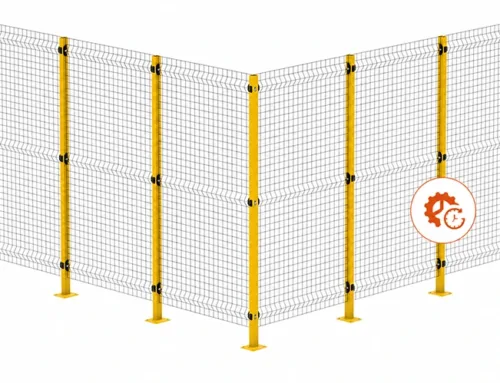
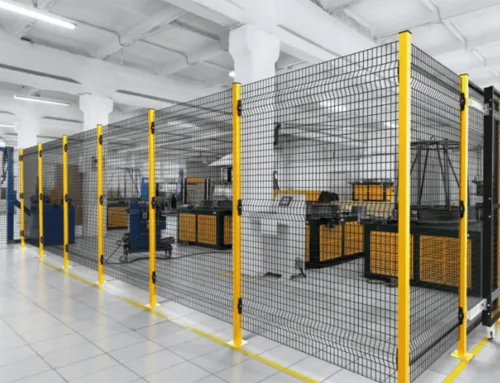
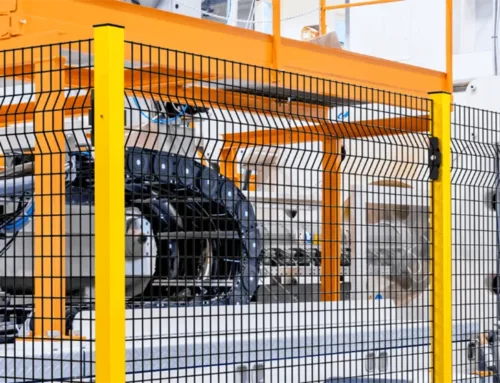
A packaging plant on a 14-day order book redraws its zones faster than a welded perimeter can be justified. Mefence frameless industrial safety fence is a Q235 welded mesh boundary with 3-4 mm wire, 20x100 or 50x50 mm mesh openings and clip-and-screw fixing on base plate posts with slotted mounting holes - unclip the panels, cut the last bay on site, re-bolt them into the new layout. Built for warehouse zoning, storage area separation, pedestrian vehicle separation, forklift path barrier and AGV lane control, with strike points routed to the impact-rated Machine Fence line.
Mesh Opening Over Panel Thickness: Frameless 3D Industrial Safety Fence for Robot Palletizer Cells
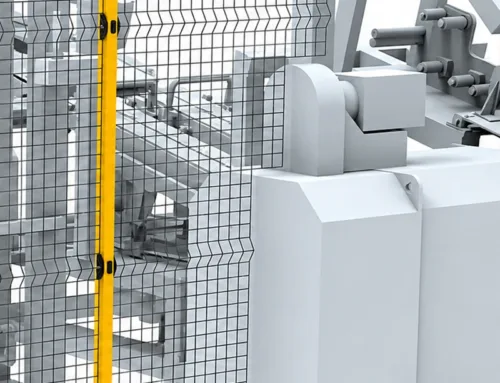
An end-of-line palletizer needs a boundary that keeps people out without taking the sightline with it. Mefence frameless 3D industrial safety fence is a Q235 welded mesh boundary with 20 x 100 mm or 50 x 50 mm openings, clip and self-tapping screw fixing on base plate posts, on-site cut panels and T-shaped ridges that carry interlock, sensor and camera cable — built for robotic workstation enclosure, AGV lane separation and warehouse zoning, with impact-rated strike points on the Machine Fence line.
Open-Mesh Frameless Safety Fencing for Robot Palletizing Cells: Sightline, Camera and AGV LiDAR Without a Solid Panel Wall
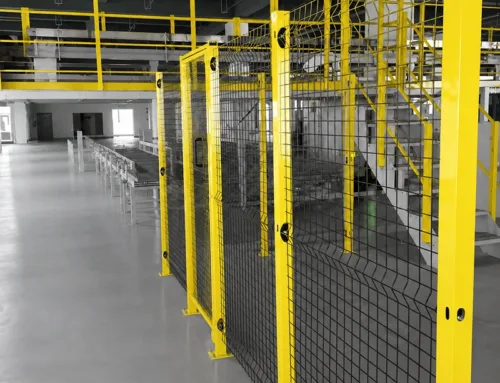
Solid panel walls around an end-of-line palletizer keep people out and blind everyone else: the operator cannot see the cycle, the camera sees a grey rectangle, and the AGV map has a new hard surface in it. Mefence frameless 3D safety fencing is a Q235 welded mesh boundary with 20x100 or 50x50 mm openings, clip and self-tapping screw fixing on base plate posts, on-site cut panels and a T-shaped ridge that carries interlock and camera cable — built for robotic workstation enclosure, AGV lane separation and warehouse zoning, with strike points routed to the impact-rated Machine Fence line.