EN
EN  DE
DE  RU
RU  PT
PT  JA
JA  ES
ES  IT
IT 
For any logistics operations manager, the lead-up to the annual peak season is a high-stakes race against time. Every piece of equipment, every workflow, and every square foot of floor space must be perfectly optimized to handle the coming surge. It was in this pressure-cooker environment that David Chen, Operations Manager at a major U.S. e-commerce hub, received an unexpected, last-minute directive.
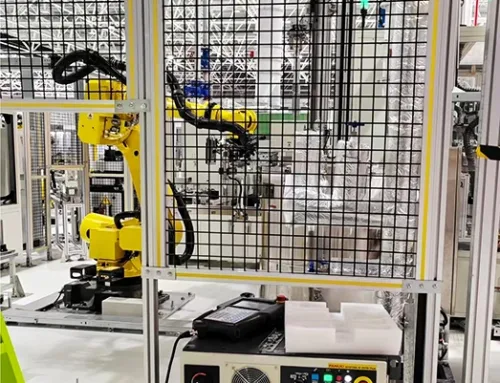
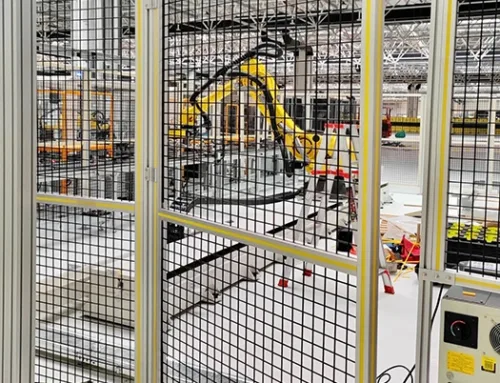
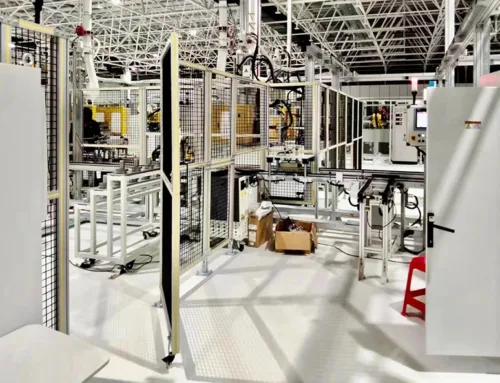
With just two weeks until the new automated sorting system was scheduled to go live, the automation vendor added a critical requirement: a 100-meter physical barrier was mandatory. This was a crucial safety fence industrial installation needed to separate the new robotic zone from the manual picking aisles for safety and workflow integrity.
The go-live date was immovable. The success of the entire peak season strategy depended on this new system. David was faced with a seemingly impossible challenge.
The Challenge: A Perfect Storm of Constraints
David’s problem wasn’t just about finding a fence; it was about navigating a perfect storm of operational, temporal, and physical constraints.
- Extreme Time Pressure: A traditional fencing contractor quoted a 4-6 week lead time for custom-welded panels, which would have been two weeks too late. He needed a solution that could be sourced and installed in a matter of days, not weeks.
- A “Live” 24/7 Environment: The logistics hub was in full operation. Any solution involving welding would require extensive safety protocols, hot work permits, and potential shutdowns of nearby conveyor lines, causing disruptions that were simply unacceptable so close to the peak season.
- On-Site Complexities: The designated area was not a simple, clear rectangle. The fence line had to navigate around three structural support columns and leave precise openings for existing conveyor belts. A pre-fabricated system based on initial blueprints was a high-risk gamble, as a single measurement error could be catastrophic.
- Limited Labor Resources: Pulling the entire maintenance team off their critical pre-season preventative maintenance tasks was not an option. David needed a solution that could be installed by a small, non-specialized team without impacting other essential work.
The Solution: Shifting to an Adaptive, Modular System
Facing a dead end with traditional methods, David searched for “rapid deployment industrial fencing.” This led him to a modular system built on a frameless mesh panel design (MEfence). While the short lead time was the initial draw, he quickly realized the system’s core features were a direct solution to every one of his constraints.
The execution plan was simple and agile:
- The standard components—posts, panels, and fasteners—were in stock and arrived at his facility three days after the order was placed.
- David assigned just two of his own maintenance technicians to the project.
- The installation began exactly 48 hours before the scheduled go-live of the sorting system.
The Installation in Action:
The process was a revelation in efficiency. On the first day, the two-person team focused on the long, straight runs. The work fell into a simple, repeatable rhythm: anchor a post, hang a panel, lock it in with the plastic fasteners and through-bolts, and move to the next. By the end of their shift, they had completed over 60 meters of the installation.
The real test came on the second day when they reached the structural columns. This is where a traditional project would have ground to a halt. Instead, it became a 20-minute problem-solving exercise. One technician measured the precise distance between the last post and the column, while the other took a standard panel to a safe area. Using a portable angle grinder, he cleanly cut the frameless panel to the exact required length. They then installed the custom-fit piece, resulting in a perfect, professional finish.
By midday on the second day, the full 100-meter installation was complete. Total labor invested: 32 man-hours. There were no external contractors, no hazardous welding fumes, and zero disruption to the ongoing facility operations.
The Results: Beyond a Simple Barrier
The success of the project was measured in clear, tangible business outcomes.
- On-Time Go-Live: The new automated sorting system was commissioned exactly on schedule. It performed flawlessly, allowing the facility to handle a 30% increase in volume during peak season, a success directly enabled by the rapid deployment of the fencing.
- Significant Cost Savings: An initial rough estimate for a contracted, welded solution was nearly double the final cost of the MEfence project. By using a system that was not only more affordable in material but also saved an estimated 50% on installation time and used in-house labor, David brought the project in significantly under budget.
- Future-Proof Flexibility: Three months after peak season, a workflow analysis identified a minor bottleneck. David’s team spent a single morning unbolting and reconfiguring a 10-meter section of the same fence to create a wider access point, improving efficiency by 5%. The initial investment wasn’t just preserved; it became a flexible tool for continuous improvement.
The Right Tool for a High-Stakes Environment
David’s success story illustrates a critical lesson for modern industrial environments. In sectors like e-commerce and logistics, where speed and adaptability are the keys to competitive advantage, the physical infrastructure must be able to keep pace. The choice of a modular, frameless safety fence industrial system was not just a procurement decision; it was a strategic one that prioritized operational agility, risk mitigation, and long-term value.