EN
EN  DE
DE  RU
RU  PT
PT  JA
JA  ES
ES  IT
IT AGV / forklift separation
Construction Safety Fence for AGV and Forklift Separation
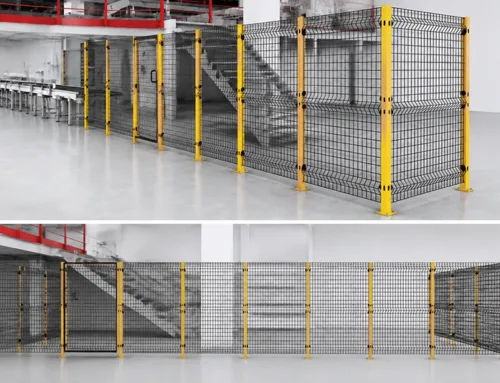
For warehouses where AGV and AMR routes cross pedestrian and forklift traffic, Mefence construction safety fence creates a visible physical boundary, reduces ghost downtime from random crossings, and keeps automated lanes open without blocking navigation.
What a construction safety fence has to do in a mixed-traffic warehouse
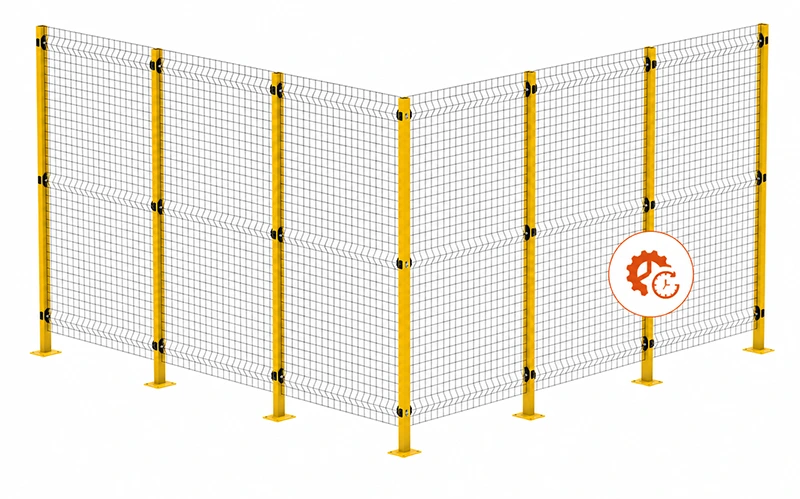
This is a modular industrial safety fencing system for area demarcation, pedestrian vehicle separation, warehouse zoning, and robotic workstation enclosure. It is built to separate people from AGV and forklift routes with a fence line that is easy to see, easy to install, and easy to reconfigure when the layout changes.
| Warehouse problem | Mefence answer |
|---|---|
| People cut across AGV lanes and trigger emergency stops | Physical lane separation with controlled crossings, so the route stays open and ghost downtime drops |
| Forklift and pedestrian traffic share the same floor space | Industrial safety fencing creates a hard boundary for traffic flow planning and hazard zone separation |
| Solid walls block visibility and make supervision harder | Welded wire mesh gives high visibility for operators and supervisors while still defining the boundary |
| Retrofit windows are short and welding work is disruptive | Clip fixing, self-tapping screw fixing, and expansion bolts support cold-work installation |
| Layout changes after automation expansion | Modular reconfigurable system with panel widths from 200-1400mm and heights from 200-3000mm |
| Need a visible safety line people recognize from distance | Yellow black safety fence styling and powder coated steel posts improve boundary recognition |
Why the structure fits AGV and forklift separation
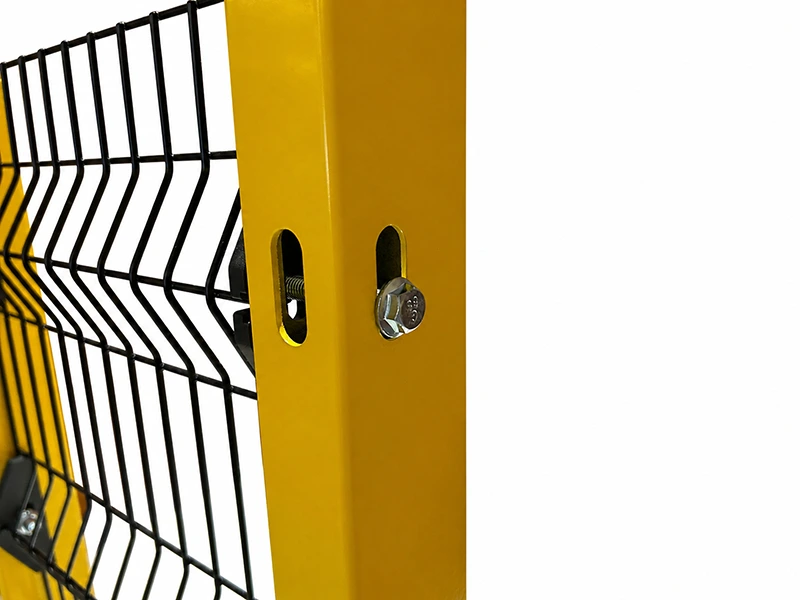
1) Post and panel connection stays stable under daily movement
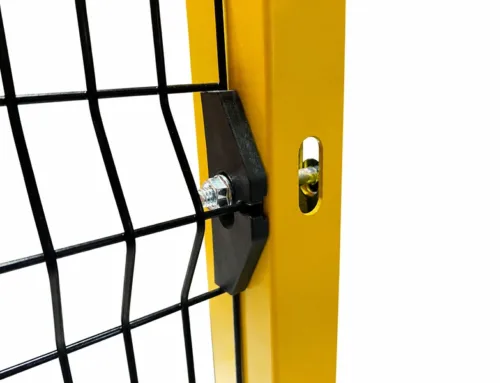
The close-up connection detail shows the fence as a working industrial safety fence, not a decorative barrier. Slotted mounting holes, bolt fastening, and a powder coated steel post let the installer set alignment accurately, then lock the panel in place. That matters in AGV and forklift zones because the boundary must stay straight, visible, and repeatable after routine impacts, vibration, and maintenance access.
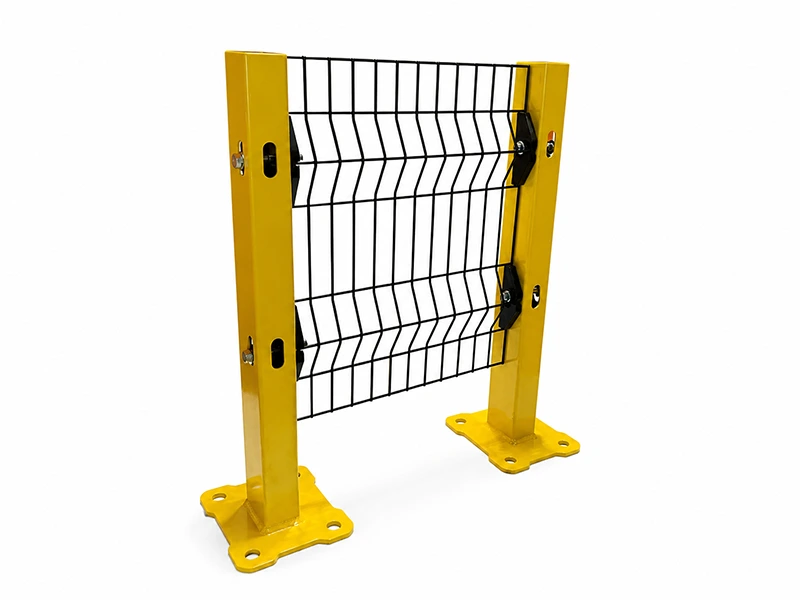
2) Base plates and slotted holes support fast cold-work retrofit
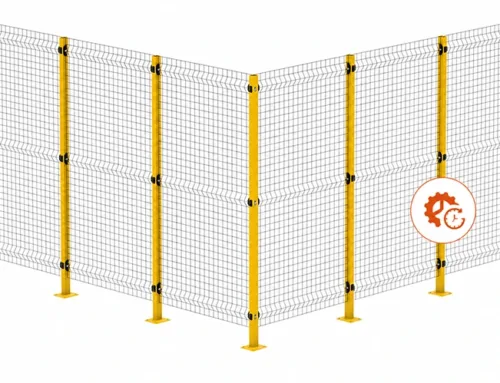
The base-plate detail is what makes a short retrofit window realistic. A construction safety fence for live warehouses usually cannot wait for welding crews or long shutdowns. Using base plate posts, expansion bolts, and modular panel fixing, the system can be laid out around existing aisles, docks, and equipment islands. That is why it suits warehouse zoning, storage area separation, and workshop isolation projects that need to move fast.
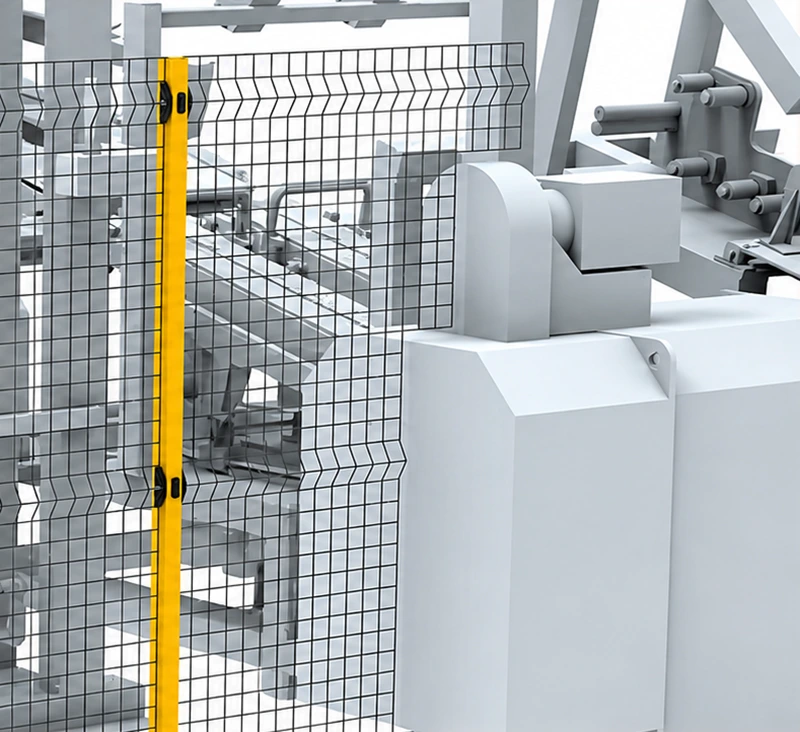
3) Controlled access points protect the route without making a dead end
The gate hardware view shows how the fence guides people instead of just blocking space. In an automation zone, the goal is not to stop every movement; it is to force movement through the right crossing point. That is how a robot safety fence or machine guarding fence reduces accidental lane entry, protects equipment from collision, and keeps the operating area readable for operators, maintenance staff, and supervisors.
Where Mefence fits best
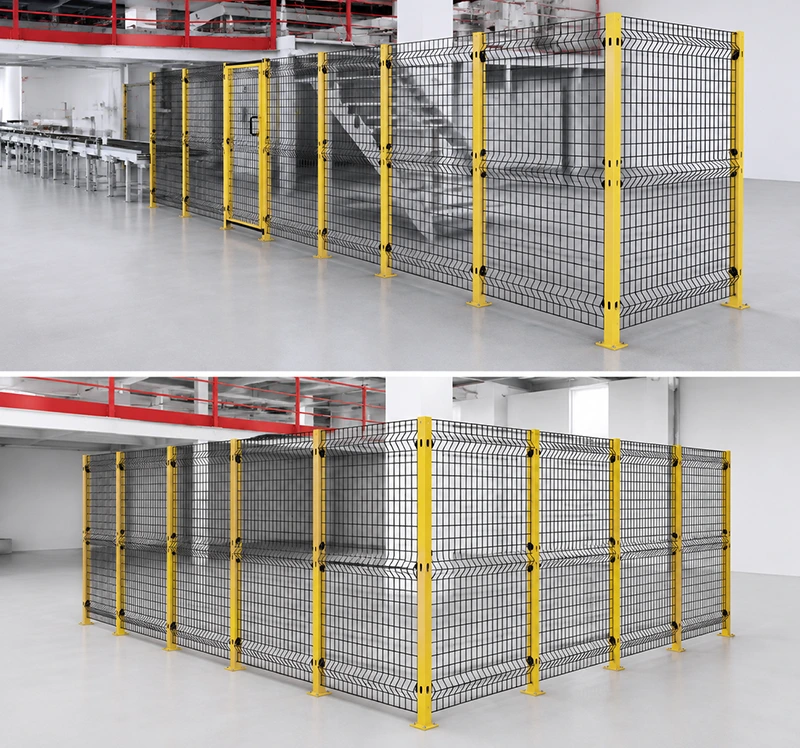
- Warehouse zoning where AGV and AMR routes need a visible edge
- Pedestrian vehicle separation around forklift paths and cross-aisles
- Automated equipment guarding for conveyor, picking, and transfer zones
- Robotic workstation enclosure where access must stay controlled
- Temporary construction fence and site demarcation during retrofit work
Mefence uses a frameless safety fence structure with welded wire mesh, Q235 carbon steel, powder coated steel posts, and modular panel widths from 200-1400mm. Common options include wire diameter 3mm or 4mm, mesh openings such as 20×100 or 50×50, and post sizes like 40×60 or 60×60. For mixed-traffic warehouses, that mix gives the right balance of visibility, reconfigurability, and physical guidance.
What to specify before layout finalization
Send the aisle width, the AGV turning radius, the forklift crossing points, and the panel height target. From there, the layout can be matched to the modular reconfigurable system and the installation method can be set for clip fixing, self-tapping screw fixing, or expansion bolt anchoring. That keeps the fence line practical instead of overbuilt.
Use the right barrier for the right risk
For large-area pedestrian vehicle separation, Mefence construction safety fence gives you the visible boundary, fast install, and modular changeability you need. For high-impact points, use certified machine fence protection where impact resistance is required. That split keeps the total cost under control and keeps each zone protected by the right product.