EN
EN  DE
DE  RU
RU  PT
PT  JA
JA  ES
ES  IT
IT Cold-storage retrofit / zero-hot-work install
Construction Safety Fence for Cold-Storage Retrofit Windows
When a freezer room cannot be warmed up or shut down, Mefence gives you a construction safety fence that goes in with three-step clip installation, zero sparks, and no hot work permit.
Why cold-storage sites choose this industrial safety fence
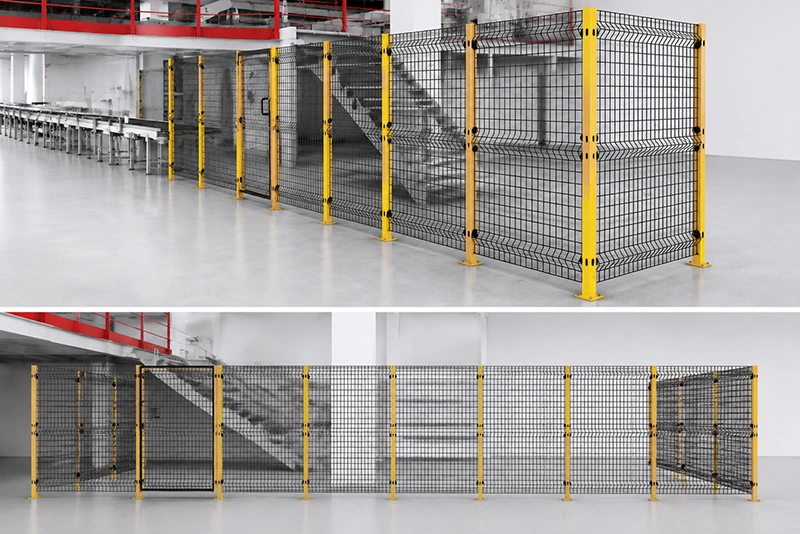
Cold storage is a bad place for a welded frame fence. Hot work approvals are hard to get, insulation panels do not like sparks, and the room usually cannot be taken offline long enough to warm up for a conventional install. Mefence is built for that reality: it is a frameless safety fence system designed for fast area demarcation, hazard zone separation, and live-site work where the crew must move fast and leave the room in service.
| Cold-storage requirement | How Mefence answers it |
|---|---|
| No hot work permit | Three-step clip installation with no welding required, so the fence can enter an operating room without sparks. |
| Live cold-room operations | Install during defrost windows, night shifts, or weekends without stopping the whole storage zone. |
| Retrofit around existing assets | Modular posts and mesh panels let the crew route around equipment, aisles, and access points. |
| Fast reconfiguration | A modular reconfigurable system supports temporary partition changes when the layout changes. |
| Clean installation footprint | Slotted mounting holes and bolt-down base plates keep the assembly compact and predictable on site. |
What the structure proves on site
No welding, no fire-permit bottleneck
The first barrier in a cold room is usually not the wall. It is the permit. Welded square tube fence systems and other hot-work installs can be blocked before the crew even unloads. This industrial safety fencing system avoids that problem by using a clip-fixed, bolt-fastened structure that can be assembled in a controlled, cold-work sequence.
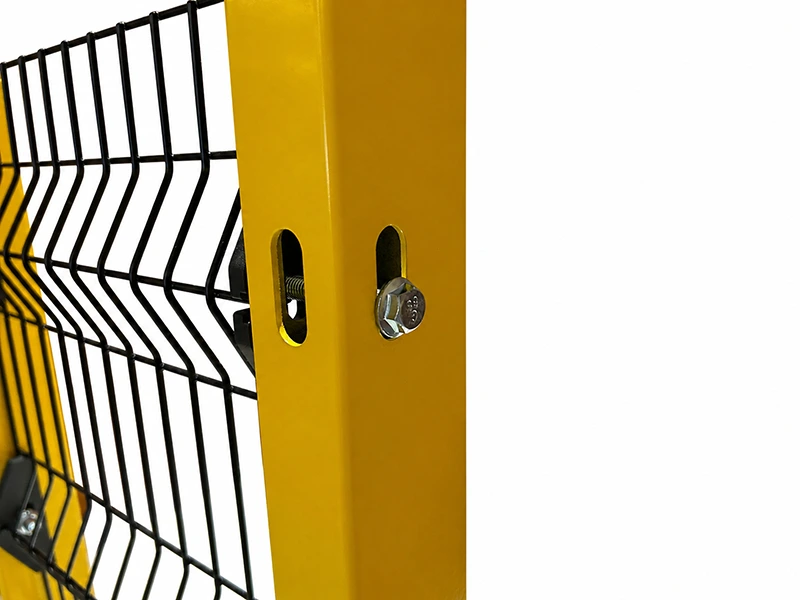
Slotted holes and connector detail make the install predictable
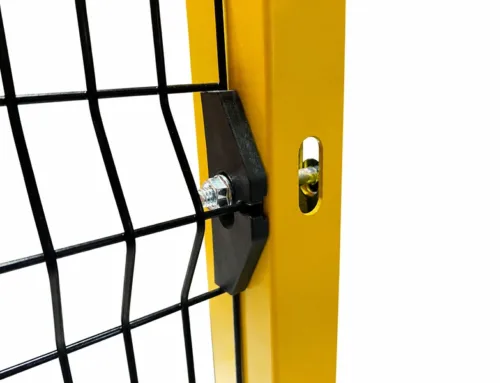
Cold-storage crews do not have time to improvise. The post detail matters because it shows how the fence is actually built: slotted mounting holes for positioning, bolt fastening for clamp pressure, and a rigid post-and-panel connection that keeps the run aligned while the crew works around doors, evaporators, and narrow aisles.
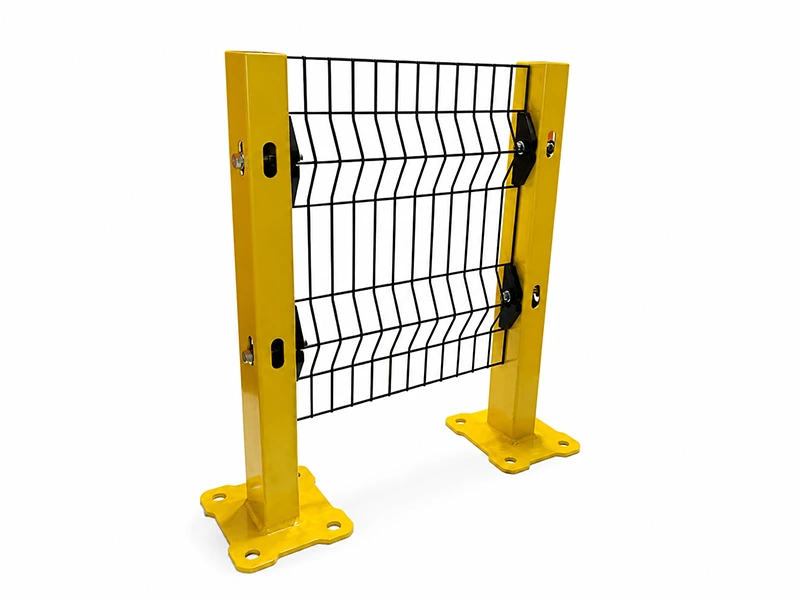
Bolt-down base plates keep the fence stable without turning the room into a workshop
The last thing a frozen-store project needs is a messy install. Base plates and modular posts give the team a fixed, repeatable landing point. That is why Mefence works as a quick install safety fence: the crew can set the line, lock the base, and finish the separation work without opening a welding machine or heating the room.
Where it fits in a cold-room project
- Cold-storage retrofit windows where the room must stay operational
- Defrost windows that are too short for a conventional welded fence install
- Night-shift and weekend work when the permit window is tight
- Temporary partition work for maintenance lanes and access control
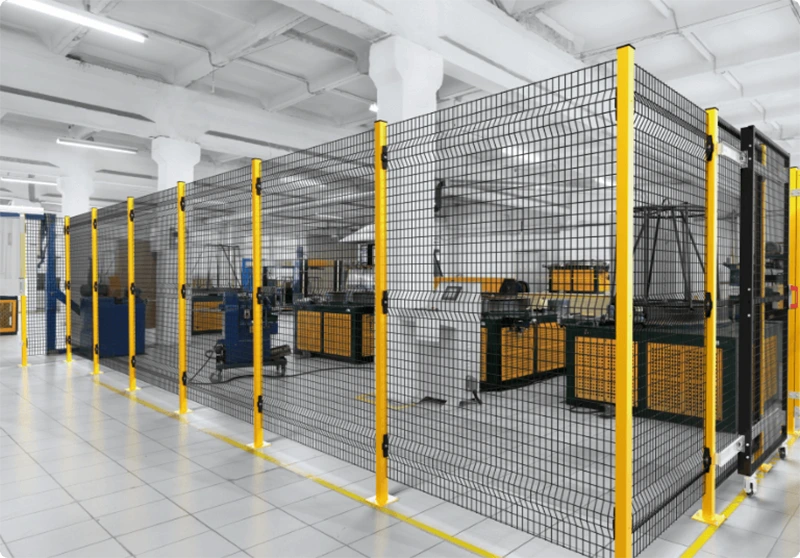
- Area demarcation between active storage zones and construction work zones
- Hazard zone separation around active traffic paths and service points
In this kind of job, the fence is not a decorative perimeter. It is the entry ticket that lets the project happen at all. Once the crew can install without hot work, the rest of the planning becomes practical: map the aisle, confirm access, set the post positions, and leave the cold room running.
Why this is an entry ticket, not a nice-to-have
For cold storage, price comes after feasibility. If the team cannot get a hot work permit, cannot stop the room, and cannot raise the temperature for a conventional weld-in fence, the project stalls. Mefence solves the feasibility problem with a frameless safety fence built around modular panels, powder coated steel posts, clip fixing, and bolt-down base plates. That combination is what makes a live-site install realistic instead of theoretical.
Need a construction safety fence that can enter a live cold room?
Send the room layout and the allowed work window. We will map the post spacing, access path, and modular reconfiguration points before the crew arrives.