DE
DE  EN
EN  RU
RU  PT
PT  JA
JA  ES
ES  IT
IT 
Choosing the Right Safety Door for Machine Protection Systems

Safety doors play a crucial role in machine protection systems by preventing unauthorized access to hazardous areas, reducing the risk of accidents, and ensuring a secure working environment. Selecting the appropriate safety door is essential to meet safety standards, comply with regulations, and safeguard both operators and equipment. In this article, we will explore the key factors to consider when choosing the right safety door for machine protection systems.
1. Understanding Safety Requirements
Before selecting a safety door, it is vital to assess the specific safety needs of the machine or equipment. Different machines may have unique hazards, such as moving parts, high temperatures, or potential emissions. Identifying these risks will help determine the necessary safety features required for the door, such as interlocking mechanisms, safety sensors, or warning indicators.
2. Compliance with Safety Standards
Ensure that the chosen safety door complies with relevant safety standards and regulations in your region. Standards such as ISO 13849, IEC 62061, or ANSI B11 provide guidelines for the design and implementation of safety systems. Adhering to these standards not only ensures a higher level of protection but also minimizes legal liabilities.
3. Type of Safety Door
There are various types of safety doors available, each suitable for different applications. Swing doors are ideal for areas where frequent access is required while sliding doors are more suitable for confined spaces with limited clearance. Folding doors are practical for large openings, and interlocked gates are commonly used for robotic systems. Understanding the advantages and limitations of each type will help make an informed decision.
4. Material and Durability
Selecting the right material for the safety door is crucial, as it directly impacts the door’s durability and longevity. Doors made from stainless steel or robust metals offer excellent resistance to corrosion, making them suitable for harsh environments. For less demanding applications, doors made from high-quality plastics may provide a cost-effective solution without compromising safety.
5. Ease of Integration and Maintenance
Consider the ease of integration of the safety door with your existing machine protection system. Some safety doors come with modular designs that simplify installation, while others may require more complex adjustments. Additionally, opt for doors that are easy to maintain and service to minimize downtime and ensure continuous machine safety.
Schlussfolgerung
Selecting the right safety door for machine protection systems is a critical step in creating a safe and efficient working environment. Understanding safety requirements, compliance with standards, and choosing the appropriate door type and materials are key factors in making an informed decision. By prioritizing safety and considering ease of integration and maintenance, businesses can enhance workplace safety and protect valuable assets.
Interlock Switch Mounting Without Drilling: Why Alfence T-Slot Posts End Phantom Stops
Bolting an interlock switch bracket through a powder-coated steel post drills the coating, drops swarf into the cell and leaves a rust line — and when the hinged leaf sags, the tongue misaligns and the PLC reports a phantom guard fault. Alfence mounts sensors, e-stops and conduit in the T-slot groove of a 40×40 mm or 45×45 mm aluminum post, with door hardware sized to keep the safety switch aligned.
Phantom Safe Torque Off Stops: T-Slot Guarding Fence Posts Mount Interlocks Without Drilling
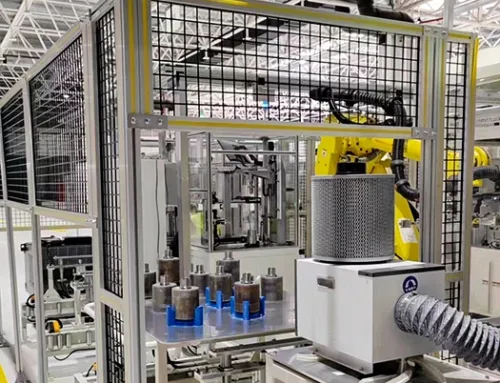
Painted steel guarding posts force maintenance to drill for interlock switches, dropping swarf in the cell and breaking the coating where rust starts. Sagging hinge doors then misalign the interlock tongue and the PLC trips Safe Torque Off while the gate is closed. Alfence industrial safety fence mounts sensors, e-stops and cable routing into the T-slot aluminum profile post without drilling, and uses hinged, folding or sliding door frames that keep interlock geometry stable - protecting OEE through phantom stops and line changes.
Automotive Plant Industrial Safety Fence: Keep the Robot Cell Close to the Hazard
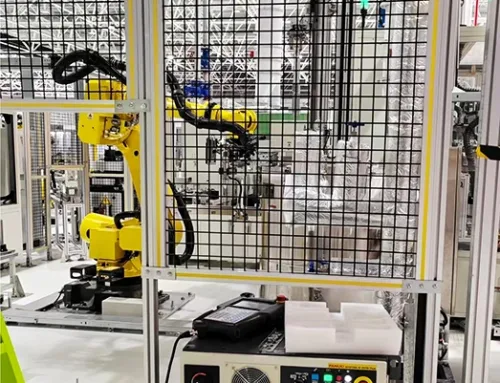
Automotive plants cannot afford to lose production floor to an oversized machine guarding perimeter. Alfence combines 20×100 mm mesh with slim 40×40 mm or 45×45 mm aluminum posts for a compact, reconfigurable industrial safety fence layout, with final clearance confirmed by the project risk assessment.