DE
DE  EN
EN  RU
RU  PT
PT  JA
JA  ES
ES  IT
IT 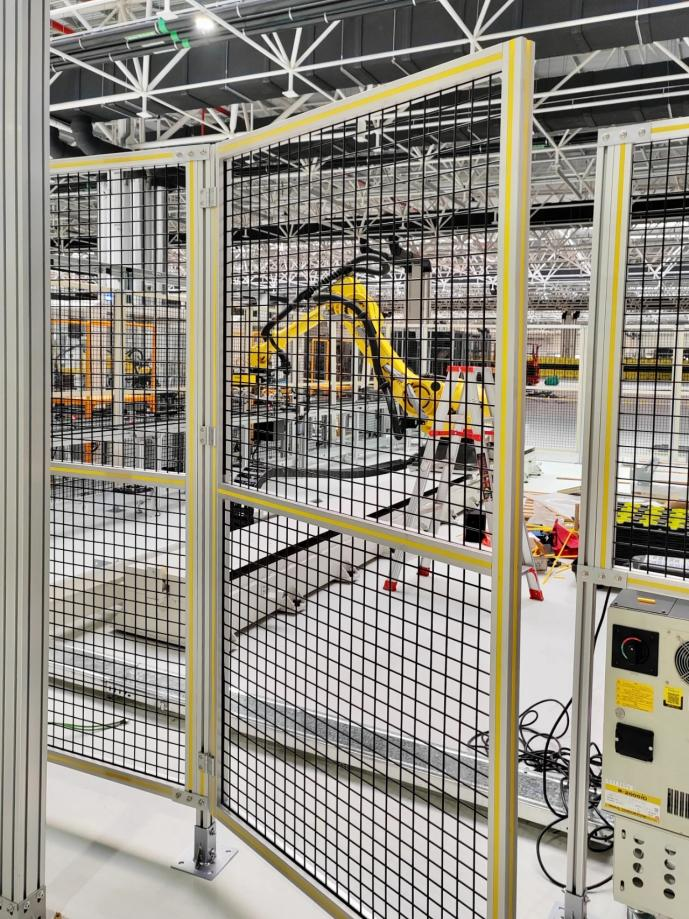
If you’re reading this, chances are you’re a plant manager or an equipment engineer facing a familiar challenge. The good news arrives: a major new order, a product line extension, or a breakthrough in process efficiency. Your team needs to adapt the production floor. But as you look at the schematics, a familiar, sinking feeling emerges. It’s not the robots, the conveyors, or the PLCs that worry you. It’s your existing Sicherheitsumzäunung.
Die starre Sicherheitsverkleidung aus geschweißtem Stahl, die einst ein Symbol für Sicherheit war, sieht jetzt wie eine Gefängnismauer aus, die Sie vom Wachstumspotenzial Ihrer eigenen Fabrik ausschließt. Sie steht für Ausfallzeiten, hohe Kosten und betriebliches Kopfzerbrechen.
Dies ist kein Verkaufsgespräch. Dies ist eine Entscheidungshilfe von einem Ingenieur zum anderen. Mein Ziel ist es, Ihnen einen Rahmen zu bieten, der Ihnen hilft, Ihre eigene Situation zu diagnostizieren, die versteckten Kosten der Inflexibilität zu quantifizieren und eine strategische Entscheidung zu treffen, die Ihrer Einrichtung nicht nur heute, sondern auch in den kommenden Jahren dienen wird.
Teil 1: Die Diagnose - Berechnung des wahren “Agilitätsdefizits”
Before looking for solutions, let’s accurately define the problem. The issue isn’t just that your current perimeter solution is “hard to move.” The issue is the quantifiable “Agility Deficit” it creates. Let’s get specific and do the math.
A. Das Agilitäts-Audit: Stellen Sie sich diese Fragen
- Wie oft hat Ihr Team in den letzten 24 Monaten eine Produktionszelle umkonfiguriert?
- More importantly, how many times did you want to make a small, incremental improvement—a kaizen—but decided against it because the hassle of modifying welded Sicherheitsumzäunung was too great?
- Welchen strategischen Wert hat es, in der Lage zu sein, innerhalb von Tagen statt Wochen “Ja” zu einer neuen Kundenanfrage oder einer Layoutänderung zu sagen?
B. Die tatsächlichen Kosten einer einzigen Nacharbeit: Rechnen wir mal nach
The expense of modifying traditional welded Sicherheitsumzäunung goes far beyond a welder’s hourly rate. Let’s calculate the true cost:
- Downtime Costs (Often Biggest Expense): (Ausfallstunden der Linie) x (entgangener Umsatz pro Stunde oder Arbeitskosten pro Stunde) = $____
- Direct Rework Costs (Most Visible Part):
- (Hours for Welding Crew) x (Loaded Hourly Rate @ $XX USD) = $____
- (Kosten für neuen Stahl und Verbrauchsmaterial) - (Schrottwert des alten Zauns) = $____
- Hidden & Administrative Costs (Silent Killers):
- Kosten für die Vorbereitung von Genehmigungen für Heißarbeiten und die Sicherheitsüberwachung.
- Kosten für die Aufräumarbeiten nach der Arbeit (Schleifstaub, Farbdämpfe).
- Risiko der Produktkontamination durch luftgetragene Partikel.
- Gemeinkosten für Projektmanagement und Koordination.
Wahre Gesamtkosten für eine Nacharbeit = $____
When you see the final number, it becomes clear. This is not a minor maintenance task; it’s a significant financial event. Every single time.
Part 2: The Solution Landscape – From Rigid to Agile
Once you’ve quantified the pain, evaluate solutions clearly. Here are the main philosophies for industrial fencing today:
Option A: Die traditionelle Festung (geschweißter Stahl)
The classic approach. Perceived as strong with lower initial material cost. Adequate for a *truly* permanent layout. But in a dynamic environment, its near-infinite cost of change (as calculated above) becomes a significant liability, turning a depreciating asset into a recurring nightmare. It resists the change modern factories demand.
Option B: Das schwere Lego (zusammengeschraubter Stahl)
An improvement, eliminating hot work. However, components remain heavy, requiring multiple staff/lifting equipment. The reconfiguration process is cumbersome, components prone to damage and rust. More flexible than a fortress, but far from agile.
Option C: Der agile Rahmen (modulare Aluminiumsysteme)
Built fundamentally for change. Modern Aluminiumprofil-Zaun solutions use lightweight, high-strength, standardized aluminum profiles featuring T-slot systems and universal connectors. Value stems from the systemic approach, solving core agility problems:
- Slash Downtime: Reconfigurations take hours, not days. Often completed in-house with simple hand tools, eliminating specialized contractors.
- Eliminate Material Waste: The system is 100% reusable. Fencing sections are redeployable assets, not one-time expenses.
- Foster Continuous Improvement: Minimal change costs empower engineers to constantly iterate and optimize, driving real efficiency gains.
Diese Aluminiumprofil-Zaun approach transforms your Sicherheitsumzäunung from a bottleneck into a growth enabler.
Teil 3: Ein Rahmen für Ihre Entscheidung
No one-size-fits-all answer exists. The right choice depends on your factory’s priorities. Use this matrix to evaluate options based on what matters most. Rate each solution from 1 (poor) to 5 (excellent) and multiply by your assigned weight (1-10).
| Entscheidungskriterium | Ihr Gewicht (1-10) | A: Geschweißter Stahl | B: Geschraubter Stahl | C: Modular Aluminum Profile Fencing |
|---|---|---|---|---|
| Kosten des Ersterwerbs | ||||
| Lebenszykluskosten (TCO) | ||||
| Nacharbeit / Geschwindigkeit ändern | ||||
| Wiederverwendbarkeit von Vermögenswerten | ||||
| Auswirkungen auf den Betrieb (Ausfallzeiten, Sauberkeit) | ||||
| GESAMTPUNKTE |
Bauen Sie für morgen, nicht nur für heute
Wählen Sie Sicherheitsumzäunung is no longer a simple procurement decision. It’s a strategic choice about your factory’s future. Are you building an infrastructure that resists change, or one that embraces it?
Look at your factory floor. When your next big opportunity arrives, will your physical infrastructure be the anchor holding you back, or the flexible framework enabling you to seize it?
We hope this guide has clarified your options. If exploring how modern Aluminiumprofil-Zaun solutions can unlock your facility’s potential, that’s a conversation worth having.