RU
RU  EN
EN  DE
DE  PT
PT  JA
JA  ES
ES  IT
IT 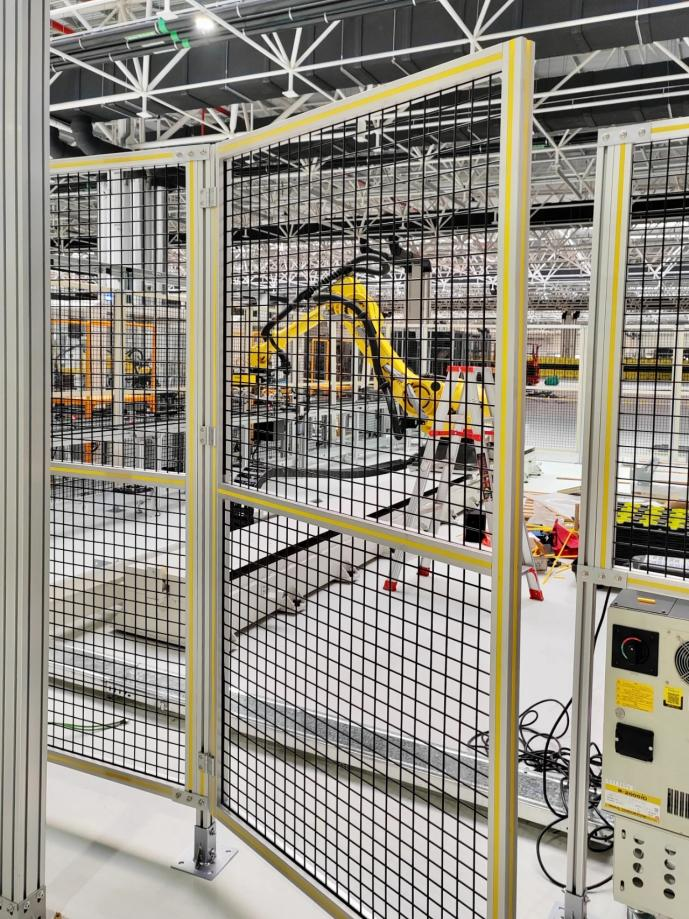
If you’re reading this, chances are you’re a plant manager or an equipment engineer facing a familiar challenge. The good news arrives: a major new order, a product line extension, or a breakthrough in process efficiency. Your team needs to adapt the production floor. But as you look at the schematics, a familiar, sinking feeling emerges. It’s not the robots, the conveyors, or the PLCs that worry you. It’s your existing safety fencing.
Жесткие сварные стальные защитные ограждения, которые когда-то были символом безопасности, теперь выглядят как тюремная стена, закрывающая вас от потенциала роста вашего собственного завода. Это означает простои, высокие затраты и головную боль при эксплуатации.
Это не рекламный ролик. Это руководство по принятию решений от одного инженера к другому. Моя цель - создать основу, которая поможет вам продиагностировать собственную ситуацию, оценить скрытые издержки негибкости и принять стратегическое решение, которое будет служить вашему предприятию не только сегодня, но и в течение многих лет.
Часть 1: Диагноз - вычисление вашего истинного “дефицита ловкости”
Before looking for solutions, let’s accurately define the problem. The issue isn’t just that your current perimeter solution is “hard to move.” The issue is the quantifiable “Agility Deficit” it creates. Let’s get specific and do the math.
A. Аудит гибкости: Задайте себе эти вопросы
- Сколько раз за последние 24 месяца ваша команда меняла конфигурацию производственной ячейки?
- More importantly, how many times did you want to make a small, incremental improvement—a kaizen—but decided against it because the hassle of modifying welded safety fencing was too great?
- Какова стратегическая ценность возможности сказать “да” новому запросу клиента или изменить планировку за несколько дней, а не недель?
B. Реальная стоимость одной переделки: Давайте посчитаем
The expense of modifying traditional welded safety fencing goes far beyond a welder’s hourly rate. Let’s calculate the true cost:
- Downtime Costs (Often Biggest Expense): (Часы простоя линии) x (Потерянная выручка в час или стоимость труда в час) = $____
- Direct Rework Costs (Most Visible Part):
- (Hours for Welding Crew) x (Loaded Hourly Rate @ $XX USD) = $____
- (Стоимость новой стали и расходных материалов) - (стоимость лома старого ограждения) = $____
- Hidden & Administrative Costs (Silent Killers):
- Расходы на оформление разрешений на проведение горячих работ и надзор за безопасностью.
- Стоимость уборки после работы (шлифовальная пыль, пары краски).
- Риск загрязнения продукта частицами, находящимися в воздухе.
- Накладные расходы на управление и координацию проекта.
Общая истинная стоимость одной переделки = $____
When you see the final number, it becomes clear. This is not a minor maintenance task; it’s a significant financial event. Every single time.
Part 2: The Solution Landscape – From Rigid to Agile
Once you’ve quantified the pain, evaluate solutions clearly. Here are the main philosophies for industrial fencing today:
Вариант A: Традиционная крепость (сварная сталь)
The classic approach. Perceived as strong with lower initial material cost. Adequate for a *truly* permanent layout. But in a dynamic environment, its near-infinite cost of change (as calculated above) becomes a significant liability, turning a depreciating asset into a recurring nightmare. It resists the change modern factories demand.
Вариант B: Тяжелое "Лего" (стальные болты)
An improvement, eliminating hot work. However, components remain heavy, requiring multiple staff/lifting equipment. The reconfiguration process is cumbersome, components prone to damage and rust. More flexible than a fortress, but far from agile.
Вариант C: Agile Framework (модульные алюминиевые системы)
Built fundamentally for change. Modern Забор из алюминиевого профиля solutions use lightweight, high-strength, standardized aluminum profiles featuring T-slot systems and universal connectors. Value stems from the systemic approach, solving core agility problems:
- Slash Downtime: Reconfigurations take hours, not days. Often completed in-house with simple hand tools, eliminating specialized contractors.
- Eliminate Material Waste: The system is 100% reusable. Fencing sections are redeployable assets, not one-time expenses.
- Foster Continuous Improvement: Minimal change costs empower engineers to constantly iterate and optimize, driving real efficiency gains.
Это Забор из алюминиевого профиля approach transforms your safety fencing from a bottleneck into a growth enabler.
Часть 3: Рамки для принятия решения
No one-size-fits-all answer exists. The right choice depends on your factory’s priorities. Use this matrix to evaluate options based on what matters most. Rate each solution from 1 (poor) to 5 (excellent) and multiply by your assigned weight (1-10).
| Критерий принятия решения | Ваш вес (1-10) | A: Сварная сталь | B: Сталь с болтами | C: Modular Aluminum Profile Fencing |
|---|---|---|---|---|
| Первоначальная стоимость покупки | ||||
| Стоимость жизненного цикла (TCO) | ||||
| Скорость переработки/изменения | ||||
| Возможность многократного использования активов | ||||
| Влияние на работу (время простоя, чистота) | ||||
| ОБЩИЙ ИТОГ |
Стройте для завтрашнего дня, а не только для сегодняшнего
Выбор safety fencing is no longer a simple procurement decision. It’s a strategic choice about your factory’s future. Are you building an infrastructure that resists change, or one that embraces it?
Look at your factory floor. When your next big opportunity arrives, will your physical infrastructure be the anchor holding you back, or the flexible framework enabling you to seize it?
We hope this guide has clarified your options. If exploring how modern Забор из алюминиевого профиля solutions can unlock your facility’s potential, that’s a conversation worth having.