DE
DE  EN
EN  RU
RU  PT
PT  JA
JA  ES
ES  IT
IT 
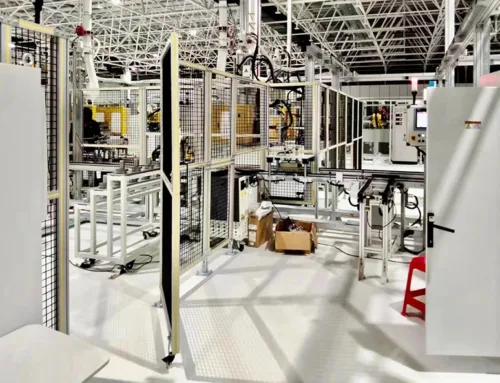
Die Wahl der richtigen Höhe und Breite von Schutzzäunen für die Industrie ist ein entscheidender Schritt, um die Sicherheit von Mitarbeitern und Anlagen in industriellen Automatisierungsumgebungen zu gewährleisten.
Zögern Sie nicht, uns jetzt zu kontaktieren - unser professionelles Team steht bereit, um alle Ihre Fragen zu beantworten, und unsere Experten können Ihnen sofort ein individuelles Angebot unterbreiten. Wir sind ein chinesischer Hersteller, der hochwertige Produkte zu wettbewerbsfähigen Preisen anbietet.

Key Factors in Selecting Robot Safety Fencing
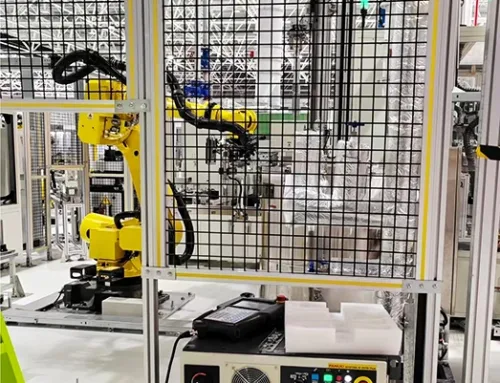
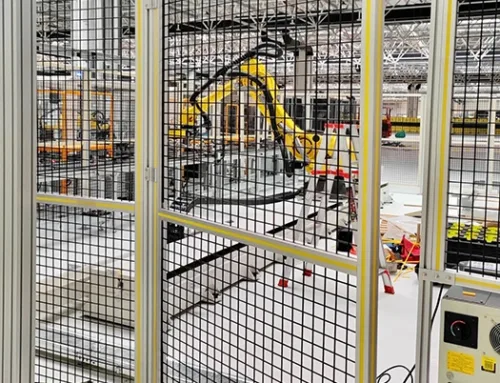
Protecting personnel from hazards in a robotic work environment is a top priority. A well-designed Roboter-Schutzzäune system provides a critical physical barrier, preventing accidents and ensuring a secure, productive workspace. Choosing the correct height, width, and overall configuration is essential for maximizing its effectiveness. This guide outlines the most important factors to consider when designing and installing safety guarding for your robotic applications.
Conducting a Thorough Risk Assessment
Before selecting any fencing components, you must perform a comprehensive assessment of the robotic workcell to identify all potential hazards. A detailed analysis is the foundation of a safe and compliant system. Consider the following:
- Robot Dynamics: Analyze the robot’s full range of motion (its “work envelope”), maximum speed, and potential failure points. High-speed robots or those handling heavy payloads require more robust fencing and must be installed at a greater safety distance.
- Application Hazards: Certain robotic processes generate their own unique risks. Welding applications can project sparks and spatter, while cutting or grinding can eject material fragments. Your fencing must be designed to effectively contain these projectiles.
- Human Interaction: Evaluate how and when operators need to interact with the workcell. The level of access required for maintenance, programming, or material handling will directly influence the placement and type of access points, such as doors and light curtains.
Adhering to Mandatory Safety Standards
Compliance with industry and government safety regulations is non-negotiable. Your Roboter-Schutzzäune solution must meet or exceed the requirements of all relevant standards. Key regulations in North America and internationally include:
- ANSI/RIA R15.06: The American National Standard for Industrial Robots and Robot Systems – Safety Requirements.
- ISO 10218: The primary international standard for the safety of industrial robots.
- OSHA 29 CFR 1910.212: U.S. Occupational Safety and Health Administration regulations covering general requirements for machine guarding.
Matching the Fence to the Robot’s Application
The specific task a robot performs significantly influences the design of its safety system. A one-size-fits-all approach is rarely effective. Different applications demand different considerations for height, strength, and materials.
| Robot Application | Key Fencing Considerations | Recommended Features |
| Collaborative Robots (Cobots) | While designed for human interaction, a risk assessment may still require fencing, especially in higher-speed or sharp tool applications. | Lower height panels, integrated area scanners, modular design for easy reconfiguration. |
| Welding Robots | Containment of sparks, UV radiation, and fumes is paramount to protect personnel outside the cell. | Taller panels, non-reflective materials, UV-filtering transparent windows for safe observation. |
| Palletizing Robots | Large work envelopes, the risk of falling objects, and frequent interaction with forklifts require robust protection. | High-strength, impact-resistant, full-height fencing; wide gates with safety interlocks. |
Designing an Effective Fencing System
The Advantages of Modular Fencing
Modern production environments demand flexibility. A modular Roboter-Schutzzäune system offers significant advantages over custom-welded solutions. Because they are built from standardized panels, posts, and doors, modular systems are easier to install, modify, and expand. If your production layout changes or you need to move the robotic cell, a modular fence can be easily reconfigured, providing a cost-effective and scalable solution for your long-term needs.
Access Points and Gate Design
Strategically placed access points are essential for both safety and efficiency. Every gate or door must be integrated with the robot’s safety circuit using safety interlocks. These devices automatically stop the robot’s motion when a gate is opened, preventing unauthorized entry during operation. Ensure gates are wide enough for maintenance carts and equipment, and position them to support a smooth and logical workflow for your operators.
Visuelles Management und Supervision
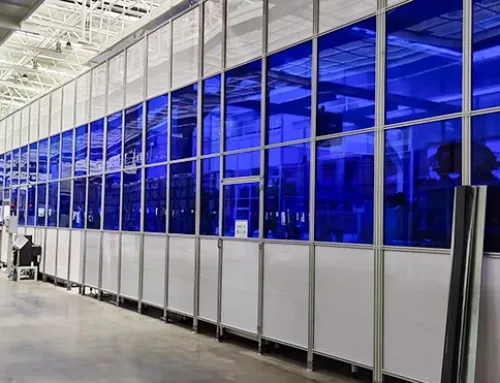
Maintaining a clear line of sight into the robotic workcell is crucial for supervision and troubleshooting. Incorporating high-impact, transparent polycarbonate panels into your fence design allows operators to monitor the robot’s processes without entering the hazardous area. This, combined with proper lighting inside the cell, enhances both safety and operational awareness.
Häufig gestellte Fragen
How tall should robot safety fencing be?
The required height is determined by the safety distance calculation outlined in standards like ISO 13857. It depends on the hazard’s height and the distance from the barrier. A thorough risk assessment is necessary to define the correct height, but it must be sufficient to prevent a person from reaching over the barrier into the hazardous area.
What are the best materials for robot safety fencing?
Powder-coated steel is the most common material due to its high strength, durability, and cost-effectiveness. Aluminum is a lighter-weight alternative, often used where corrosion resistance is a priority. For transparent sections, shatter-resistant polycarbonate is the industry standard, providing excellent visibility and impact protection.
Can I integrate safety sensors with the fencing?
Absolutely. Safety fencing is the first layer of protection. It is often combined with other safety devices like light curtains, laser area scanners, or safety mats. These active presence-sensing devices can be integrated with safety interlocks on gates to provide additional, redundant layers of protection for operators who need to access the cell frequently.
Maschinenschutz für Lebensmittel & Pharma: Modulares Aluminiumrahmen-System für reinigungsfähige Sicherheitszäune
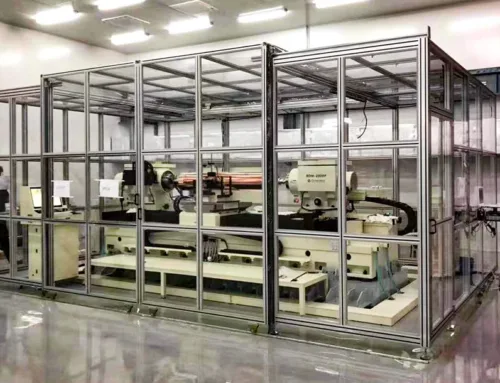
Einrichtungen für Lebensmittel, Getränke, Pharmazie und Reinräume benötigen Maschinenschutz, der korrosionsbeständig ist, Rostpartikel-Kontamination vermeidet und ohne Produktionsverlangsamung gereinigt werden kann. Alfence verwendet einen modularen Aluminiumrahmen mit korrosionsbeständiger Aluminiumlegierung und pulverbeschichtetem Schutz für die Innenraum-Umzäunung.
Aluminium-Strangpresszaun für hygienische Maschinenverkleidungen in der Lebensmittel- und Pharmaindustrie
Betriebe für Lebensmittel, Getränke, Pharmazie und Reinräume benötigen Maschinenschutz, der korrosionsbeständig und praktisch zu reinigen ist. Dieser Leitfaden erklärt, wie der Alfence-Aluminium-Strangpresszaun Aluminiumlegierungsprofile, eine Pulverbeschichtung mit 185 °C Aushärtung, modulare Paneele und konfigurierbaren Zugang für geeignete hygienische Innenproduktionsbereiche kombiniert.
Ausrüstungs-Isolationszaun für die schrittweise Erweiterung des automatisierten Lagers | Alfence
Für schrittweise automatisierte Lagerprojekte muss ein Geräteisolationszaun mit ASRS-Zonen, AGV-Wegen, Förderbändern und Durchsatz erweiterbar sein. Alfence verwendet schraubenfreie modulare Pfosten, Paneele, Türen und Verbinder, sodass der Umfang erweitert oder neu konfiguriert werden kann, ohne die erste Phase zu verschrotten.