ES
ES  EN
EN  DE
DE  RU
RU  PT
PT  JA
JA  IT
IT 

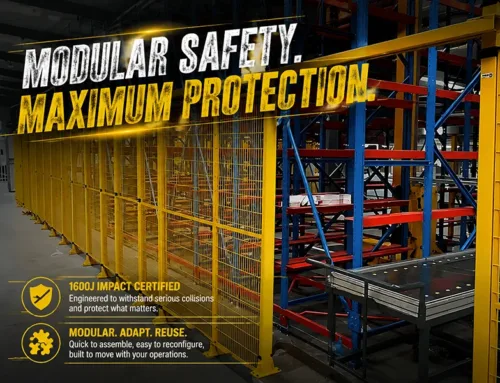
For OEM machine builders and System Integrators exporting to Europe, the USA, and Asia, navigating the patchwork of safety regulations can be a logistical nightmare. A guard that passes in Shanghai might fail in Stuttgart. We provide a globally compliant Valla de Seguridad Industrial system. Backed by TUV Certification and designed to meet ISO 14120, OSHA, and ANSI standards, our solution acts as your “safety passport,” ensuring your Custom Machinery is accepted wherever it lands.
The Compliance Trap: Why “Build-It-Yourself” Fails
Many OEMs still fabricate their own guarding in-house using basic steel mesh. While this may seem cost-effective initially, it creates a massive liability gap during export. Does your in-house weld shop produce documentation proving impact resistance? Can you verify that your paint process withstands the ISO 9227 salt spray test required by international clients?
Our Sistemas de Protección de Máquinas are engineered controls, not just barriers. We provide the certification data you need for your technical file. By utilizing our Framed Panels made from high-grade Q235 Carbon Steel, you effectively transfer the risk of physical containment from your design team to our certified product. This ensures that whether you are integrating Industrial Robots or simple conveyors, the perimeter protection is never the reason for a rejected Site Acceptance Test (SAT).
Standardization for “Build to Print” Efficiency
Custom engineering every fence panel is a waste of your design resources. Successful OEMs use a “Build to Print” strategy with standardized modular components. Our system offers a consistent, modular architecture that looks professional and integrates seamlessly with your machine’s aesthetics.
Instead of designing unique brackets for every project, utilize our standard Interlock Carriers. These pre-engineered interfaces support major global safety switch brands (like Omron, Pizzato, Euchner), allowing you to standardize your electrical design across all machine models. This plug-and-play capability reduces assembly time and ensures that your Robotics Integration looks like a cohesive, high-end product, not a patchwork of components.

Universal mounting options for global safety switch compliance.
Durability That Protects Your Brand Reputation
Your machine represents your brand. A rusty, dented fence after six months of use reflects poorly on the quality of your engineering. Our fencing undergoes a rigorous Powder Coating process compliant with GB/T9286-1998 standards for adhesion.
This attention to detail ensures that the guarding survives the rigors of ocean freight and the harsh reality of industrial environments—from oily CNC Machinery floors to humid packaging halls. Delivering a machine with a pristine, durable safety enclosure reinforces the premium nature of your equipment and builds long-term trust with your international clients.
Preguntas Frecuentes
1. What specific standards does your fencing meet?
Our system is TUV certified and complies with ISO 14120 (General requirements for design and construction of guards), ISO 13857 (Safety distances), as well as OSHA 1910.212 and ANSI/RIA R15.06 requirements for the US market.
2. Can I get a TUV certificate for my project documentation?
Yes. We provide copies of our TUV impact resistance certification and other compliance documents. You can include these in your machine’s technical dossier to streamline the CE marking or safety validation process.
3. Do you offer imperial sizes for the US market?
While our core system is metric (consistent with global automotive standards), we provide compatible fasteners and can design layouts that fit imperial footprint requirements (e.g., 8-foot post spacing) using our custom-width panels.
4. How does the system handle different safety switch brands?
We offer a universal “Interlock Carrier” and specific adapter plates. Whether your client specifies Allen-Bradley, Sick, or Keyence switches, we have a mounting solution that requires no on-site fabrication.
5. Is the packaging suitable for ocean freight?
Yes. Our modular panels and posts are palletized and wrapped specifically for export. The flat-pack nature of the system optimizes container space, reducing shipping costs compared to pre-welded fence frames.