ES
ES  EN
EN  DE
DE  RU
RU  PT
PT  JA
JA  IT
IT 
How to ensure visibility of the machine after installation?

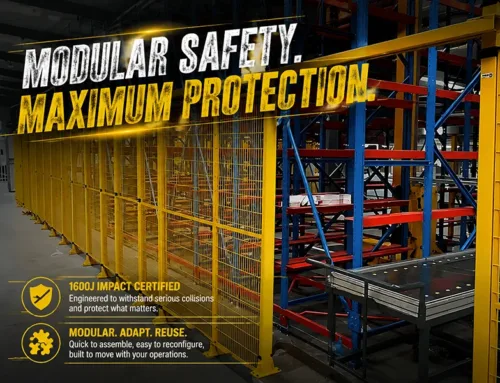
In high-speed automotive assembly and robotic welding cells, a blind spot isn’t just an inconvenience—it’s a direct threat to your OEE (Overall Equipment Effectiveness). When operators cannot clearly monitor CNC tool changes or robotic kinematics through thick perimeter guards, minor misalignments quickly escalate into jammed conveyors or catastrophic spindle crashes. You need a physical barrier that stops a 1180 ft-lbs (1600J) impact without turning your lights-out cell into an unobservable black box.
The Hidden Cost of Blind Spots in Automated Production Lines
Before upgrading their safety infrastructure, many system integrators rely on generic, brightly colored wire mesh or solid polycarbonate panels to enclose their robotic work cells. While these might pass a basic EHS audit, they create a severe operational bottleneck. Bright yellow mesh reflects plant lighting, causing severe glare. When a FANUC or KUKA arm experiences a slight gripper fault during a high-speed mechanical assembly process, the operator outside the cell cannot see the exact point of failure. They are forced to halt the machine, trigger the STO (Safe Torque Off), and open the cell just to diagnose a simple scrap jam. This blind-spot troubleshooting kills cycle times and drastically increases your MTTR (Mean Time To Recovery).
The Optical Engineering Behind Mdfence Visibility
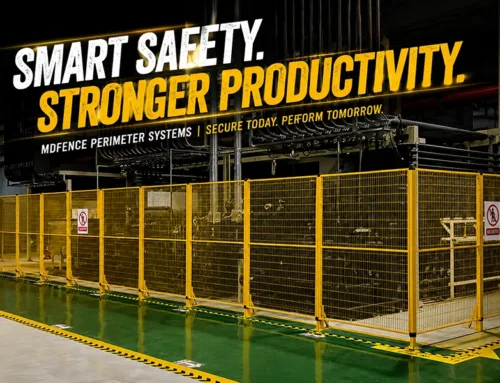
To solve this, the Mdfence system leverages optical absorption principles. Instead of painting the entire fence in high-visibility colors, we strictly separate the warning function from the observation function. The 60x60mm posts are coated in RAL 1023 (Safety Yellow) to establish an undeniable physical perimeter for forklift drivers and AGVs. However, the actual mesh panels are finished in RAL 9005 (Deep Black). The black powder coating absorbs the harsh 5000K LED lighting typical in modern automotive plants, eliminating glare. When viewed from a few feet away, the black mesh acts like a transparent veil, drawing the human eye directly to the brightly colored industrial robots and moving components inside the cell.

ISO 13857 Compliance Without Sacrificing Line-of-Sight
Achieving visibility is useless if the system fails safety compliance. Standard 2″ x 2″ (50x50mm) mesh allows fingers to pass through, forcing you to install the perimeter guard up to 33.5 inches (850mm) away from the hazard zone. This wastes valuable floor space and pushes the operator further away from the visual inspection point.
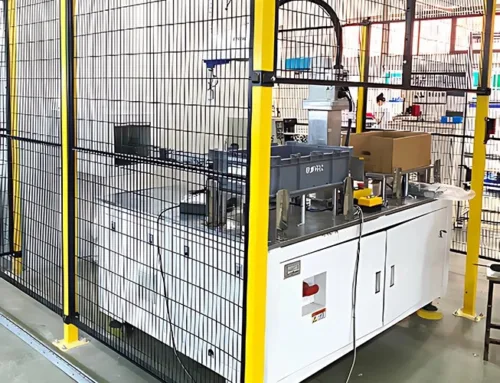
Our Sistemas de Protección de Máquinas utilize a highly specific 0.78″ x 3.93″ (20x100mm) framed mesh architecture. This “finger-safe” narrow slot design exceeds ISO 13857 standards, allowing the barrier to be installed just 4.7 inches (120mm) from the dangerous moving parts of a CNC machining center. You get up-close, unobstructed visibility of the machining process while reclaiming critical square footage for your AGV/AMR paths.
Real-World Aftermath: Maximizing OEE in Auto-Assembly
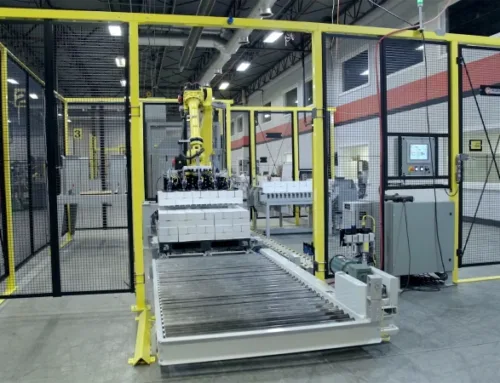
After implementing this optically optimized Valla de Seguridad para Robots, the operational shift is immediate. Quality control inspectors can visually verify the alignment of automotive welding stations without breaking the safety light curtains or opening access doors. When a tool change is required, the operator can see exactly when the robotic arm has returned to its home position. For large-scale setups requiring frequent material handling, wide access points like double sliding doors maintain this structural rigidity and visibility, ensuring that even the largest entryways do not become blind spots during production runs.

Integrating Visibility with Active Safety Logic
Perfect visibility must be paired with foolproof access control. In dedicated manufacturing lines, the physical fence is merely the carrier for your active safety logic. To prevent operators from bypassing safety protocols after visually identifying a jam, our Valla de Seguridad Industrial is designed for seamless PLC integration. We provide pre-engineered lock carriers and L-shaped brackets that perfectly fit industry-standard electronic safety interlocks (such as Omron D4NL or Pizzato switches). This ensures that the moment a door is breached, the STO signal is instantly transmitted to the automation control system, marrying clear line-of-sight with absolute mechanical safety.

Comparing Visibility and Structural Integrity
To fully understand the impact of upgrading your cell guarding, compare the technical attributes of standard market offerings against the Mdfence engineered solution:
| Feature | Traditional Yellow/Frameless Mesh | Mdfence System |
|---|---|---|
| Optical Visibility | High glare, obstructs view of internal CNC/Robotic movements. | RAL 9005 Black mesh absorbs light, creating a high-transparency effect. |
| Mesh Aperture & Layout | 2″ x 2″ (50x50mm) or larger. Requires up to 33.5″ safe distance. | 0.78″ x 3.93″ (20x100mm). Finger-safe, allows 4.7″ (120mm) close-proximity installation. |
| Resistencia al impacto | Prone to elastic deformation upon forklift or heavy parts impact. | 20x30mm framed panel structure with flat welding. Withstands 1180 ft-lbs (1600J) impact. |
| Safety Switch Integration | Requires on-site drilling/welding, damaging anti-corrosion coating. | Pre-engineered mounting plates for Omron/Pizzato PLC interlocks. |
Frequently Asked Questions (FAQs)
1. Why is black mesh better than yellow mesh for robotic cell visibility?
Yellow reflects factory LED lighting, causing glare that strains the operator’s eyes and obscures the view of the machinery. Black mesh (RAL 9005) absorbs light, creating an optical illusion of transparency that allows operators to clearly monitor high-speed mechanical assembly processes.
2. Does the 20x100mm narrow mesh affect the ability to inspect CNC tool changes?
No, it actually improves it. Because the 0.78″ (20mm) slot width is ISO 13857 compliant (finger-safe), the fence can be installed just 4.7 inches (120mm) away from the hazard. This close proximity, combined with the black coating, gives operators an up-close, unobstructed view of the spindle and tool changes.
3. How does the fencing system integrate with our existing automation PLC?
The system features pre-engineered lock carriers designed specifically for industry-standard electronic safety interlocks (like Omron D4NL and Pizzato). This allows system integrators to seamlessly wire the doors into the machine’s Safe Torque Off (STO) circuit without any on-site drilling or welding.
4. Can the panels withstand impacts from robotic welding spatter or ejected parts?
Yes. The panels use a full 20x30mm tubular steel frame and are flat-welded. They are TUV certified to withstand impacts of up to 1600 Joules (approx. 1180 ft-lbs), effectively containing ejected mechanical components while maintaining structural integrity.
5. If we modify our automotive assembly line layout, do we lose our investment in the fencing?
Not at all. The Mdfence system is 100% modular, utilizing a bolt-and-clip connection system rather than permanent welds. If your robotics layout changes, the panels and posts can be unbolted and reconfigured rapidly without generating scrap metal.