ES
ES  EN
EN  DE
DE  RU
RU  PT
PT  JA
JA  IT
IT 
Protective Barriers
Protective Barriers are innovative safety solutions designed to ensure the security and protection of your workspace. These barriers are engineered to provide a robust line of defense against various workplace hazards, making them an essential addition to any industrial or commercial setting. With a focus on durability and adaptability, Protective Barriers offer superior protection in a wide range of applications.
What are Protective Barriers?
Protective Barriers, also known as safety barriers or guardrails, are versatile safety installations designed to prevent accidents and protect both personnel and equipment in the workplace. They consist of sturdy, impact-resistant materials such as steel or aluminum and are strategically placed to create a protective boundary.
Key Features of Protective Barriers:
- Durability: Protective Barriers are built to withstand heavy-duty use and resist damage from impacts, ensuring long-term reliability.
- Adaptability: These barriers can be customized to fit various workspace dimensions and layouts, making them suitable for different industries and environments.
- Enhanced Safety: By creating a physical barrier between potential hazards and personnel or equipment, Protective Barriers significantly reduce the risk of accidents.
- Easy Installation: The installation process is straightforward, allowing for quick setup without disrupting your operations.
- Compliance: Our Protective Barriers meet industry safety standards and regulations, ensuring your workplace remains compliant.
How do Protective Barriers Work?
Protective Barriers are strategically placed in your workspace to create a protective perimeter. They act as a shield against potential hazards, such as heavy machinery, forklifts, or falling objects. In the event of an impact, the barriers absorb the force, preventing further damage or injury.
Installation Process:
The installation of Protective Barriers is a straightforward process. Here are the basic steps:
- Identify the areas in your workspace that require protection.
- Measure and customize the Protective Barriers to fit the designated spaces.
- Secure the barriers in place using anchor bolts or other appropriate fasteners.
- Regularly inspect and maintain the barriers to ensure their continued effectiveness.
Applications of Protective Barriers:
Protective Barriers find applications in a variety of industrial and commercial settings, including:
- Manufacturing Facilities
- Warehouses
- Construction Sites
- Logistics Centers
- Automotive Workshops
- Chemical Plants
These barriers are essential wherever safety and protection are paramount concerns.

Why Choose Protective Barriers?
When it comes to safeguarding your workspace, Protective Barriers offer several advantages:
- Enhanced Safety: Protects personnel and equipment from potential accidents.
- Durability: Built to withstand heavy usage and harsh environments.
- Compliance: Meets industry safety standards and regulations.
- Customizability: This can be tailored to your specific workspace requirements.
- Easy Installation: Quick setup without disruptions to your operations.
Choose Protective Barriers to ensure the safety and security of your workplace.
Invest in Protective Barriers today and experience the peace of mind that comes with a safer and more secure workspace.
Interlock Switch Mounting Without Drilling: Why Alfence T-Slot Posts End Phantom Stops
Bolting an interlock switch bracket through a powder-coated steel post drills the coating, drops swarf into the cell and leaves a rust line — and when the hinged leaf sags, the tongue misaligns and the PLC reports a phantom guard fault. Alfence mounts sensors, e-stops and conduit in the T-slot groove of a 40×40 mm or 45×45 mm aluminum post, with door hardware sized to keep the safety switch aligned.
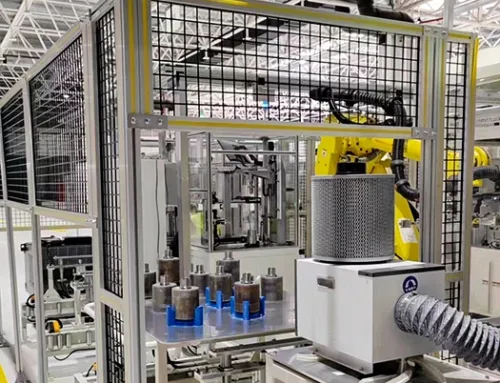
Phantom Safe Torque Off Stops: T-Slot Guarding Fence Posts Mount Interlocks Without Drilling
Painted steel guarding posts force maintenance to drill for interlock switches, dropping swarf in the cell and breaking the coating where rust starts. Sagging hinge doors then misalign the interlock tongue and the PLC trips Safe Torque Off while the gate is closed. Alfence industrial safety fence mounts sensors, e-stops and cable routing into the T-slot aluminum profile post without drilling, and uses hinged, folding or sliding door frames that keep interlock geometry stable - protecting OEE through phantom stops and line changes.
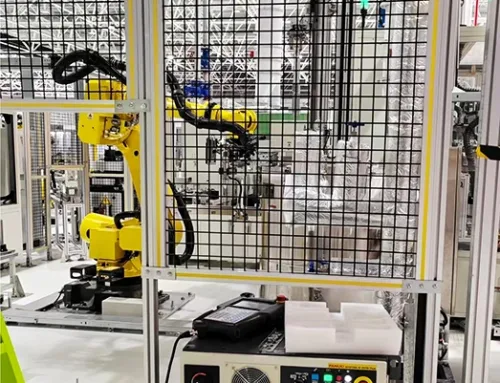
Automotive Plant Industrial Safety Fence: Keep the Robot Cell Close to the Hazard
Automotive plants cannot afford to lose production floor to an oversized machine guarding perimeter. Alfence combines 20×100 mm mesh with slim 40×40 mm or 45×45 mm aluminum posts for a compact, reconfigurable industrial safety fence layout, with final clearance confirmed by the project risk assessment.