EN
EN  DE
DE  RU
RU  PT
PT  JA
JA  ES
ES  IT
IT GLOBAL EHS STANDARDIZATION · FCBARRIER
Flexible Guardrail for Global FMCG Sites: Make Forklift Protection Auditable
A repeatable Flexible Guardrail standard helps multi-factory teams align warehouse safety barrier, pedestrian safety, and loading dock protection while giving EHS auditors a clear trail from application to impact data.
Why Distributed Plants Struggle to Standardize Workplace Barriers
When every country or plant sources its own steel barrier, steel bollard, or concrete barrier, the result is often a mixed inventory of rail heights, anchoring details, and undocumented impact assumptions. That makes forklift accident prevention difficult to compare and makes an EHS audit depend on local explanations rather than a common specification.
| Audit question | Standardized FCBarrier response |
|---|---|
| Which barrier fits the risk? | Use the SR, DR, TR, or CTR Series for single rail, double rail, traffic or pedestrian control, and column protection applications. |
| Can impact assumptions be checked? | Use the stated energy rating and the corresponding mass, speed, and joule calculation instead of an unqualified “heavy duty” label. |
| Can sites replicate the layout? | Specify modular barrier sections, corner barriers, removable rails, and floor-anchored bases by application. |
| Does PAS 13 prove certification? | PAS 13 can be used as a workplace barrier reference point; public third-party certification must be verified separately for the selected project. |
How Flexible Guardrail Turns One Standard into Site-Level Choices
1. Match the series to the exposure
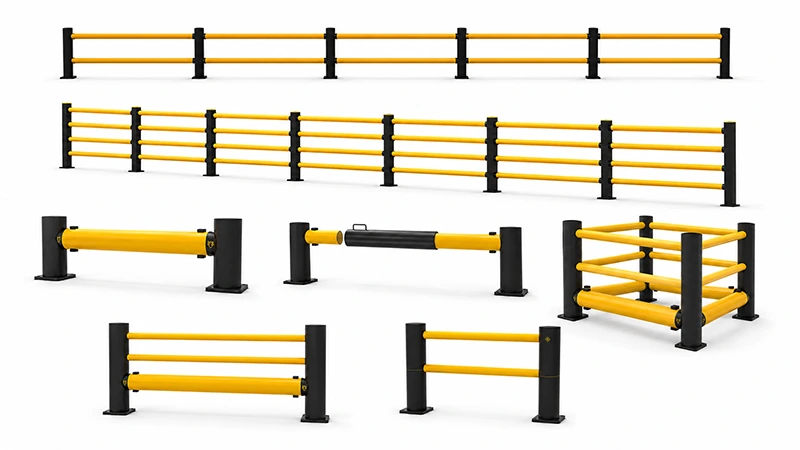
FCBarrier is organized around four application families: SR Series for Single Rail layouts, DR Series for Double Rail protection, TR Series for traffic and pedestrian separation, and CTR Series for Column Protector duties. The same selection logic can be carried into racking protection, machinery protection, pedestrian barriers, and loading bay layouts without treating every factory as a new product project.
2. Select the impact class with a checkable energy basis
For high-exposure forklift zones, the published reference is a 28,950J rated barrier based on an 8-ton forklift at 9.6 km/h. The energy basis is transparent: kinetic energy is calculated as ½ × mass × velocity², with velocity converted to metres per second. This gives regional engineering teams a common method to compare a High Impact Rating rather than relying on different local descriptions.
3. Verify the structure and installation evidence
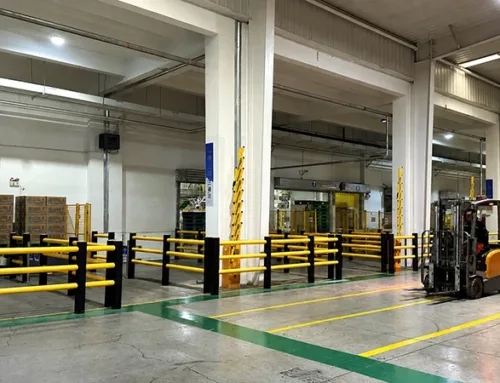
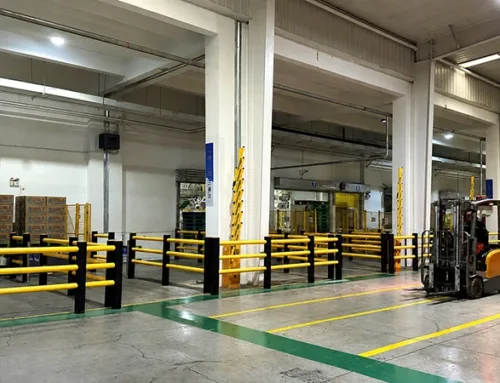
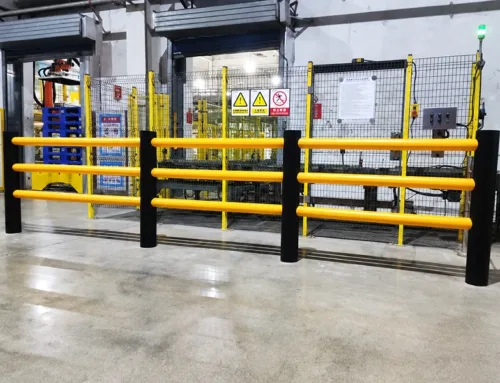
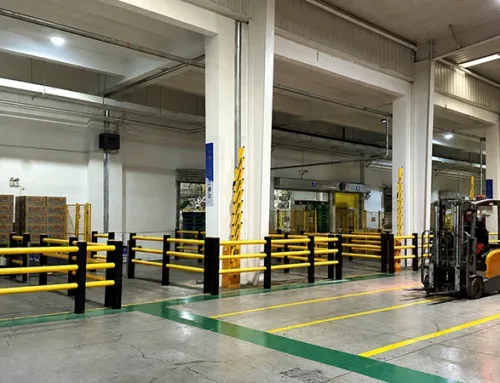
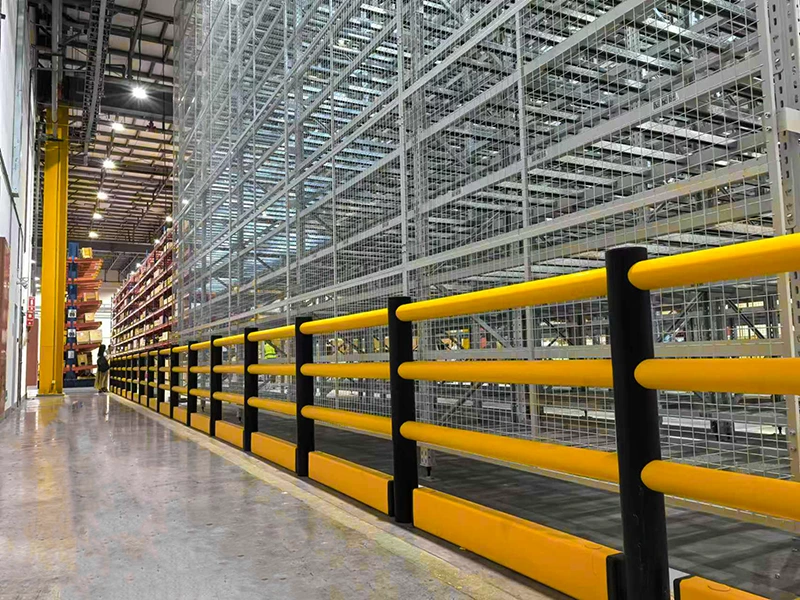
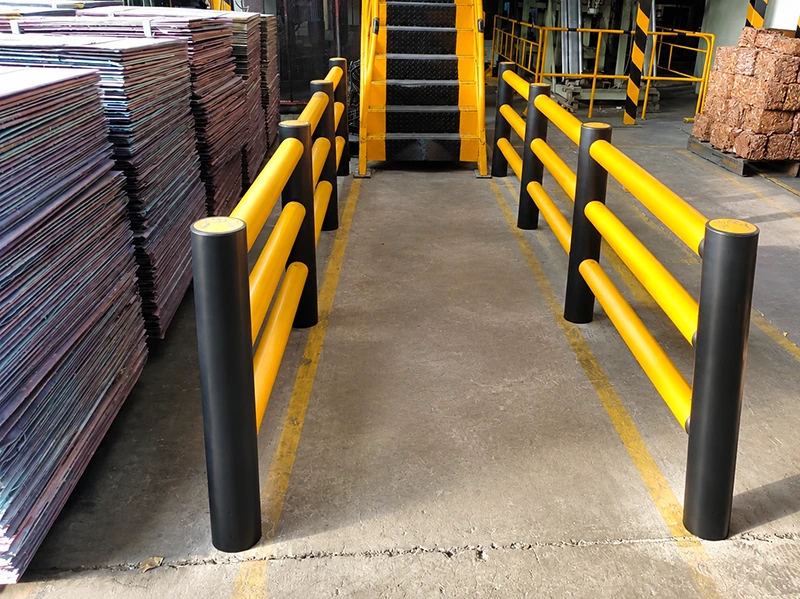
Site and product images show the practical evidence auditors need to review: continuous rail runs, black posts, yellow rails, bolted base plates, floor-mounted installation, and separation between people, forklifts, racks, and equipment. FCBarrier also supports modular installation and mortise-and-tenon quick-install details where specified, helping retrofit teams document how the standard is installed rather than only what it is called.
Build a Replicable Barrier Matrix by Scenario
- Warehouse safety barrier and flexible rack protection: define racking protection, aisle edges, and column guard requirements for forklift impact protection.
- Pedestrian barrier and workplace safety: separate walkways from vehicle routes with TR Series traffic rail layouts and visible, modular sections.
- Loading dock protection: protect loading bays and logistics centre interfaces where vehicle movement meets building structure.
- Manufacturing plant safety: use machinery protection around conveyors, access points, and production equipment.
- Cold storage and process areas: validate the required material and temperature specification before selecting a Cold Storage Barrier; do not assume a generic barrier is a certified cold-room solution.
Each site can record the scenario, selected series, impact class, anchoring method, image evidence, and inspection owner. That creates a common EHS review format while leaving room for local floor conditions and traffic paths.
What the Standardized Record Should Contain
For each installation, retain the layout drawing, product series and rail configuration, impact calculation or test reference, floor-anchor details, installation photographs, and inspection or replacement record. This supports global replication, faster retrofit decisions, and a clearer response to workplace safety audits. Flexible Guardrail selection should remain tied to the documented risk, not to a generic comparison with an A-SAFE Alternative, Boplan Alternative, or McCue Alternative.
Standardize the Decision Before You Standardize the Product
Share your warehouse, pedestrian, loading dock, cold storage, and machinery-protection layouts with the FCBarrier team. We can map the application to a modular Flexible Safety Barrier schedule, show the applicable impact basis, and prepare an auditable starting specification for multiple plants.