EN
EN  DE
DE  RU
RU  PT
PT  JA
JA  ES
ES  IT
IT Food & Beverage Plant Safety
Flexible Rack Protection for Food & Beverage Plants: Why Physical Barriers Beat Warnings
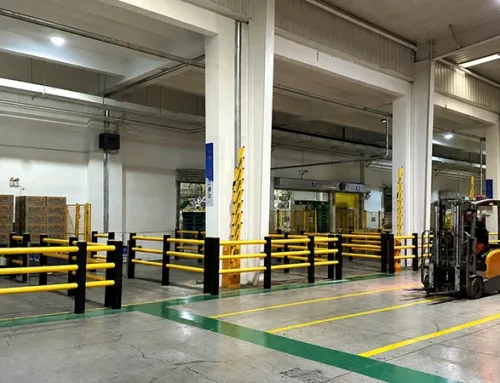
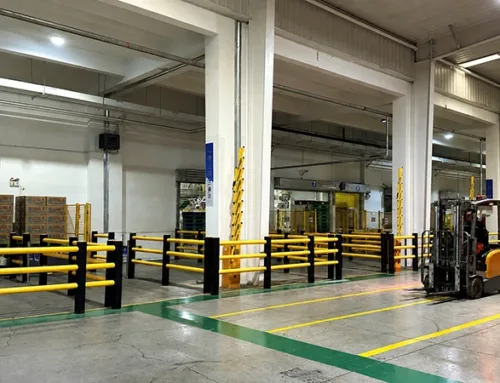
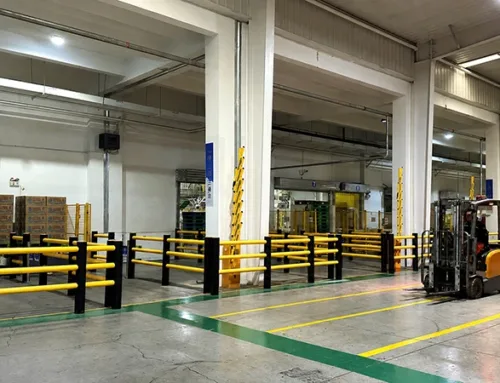
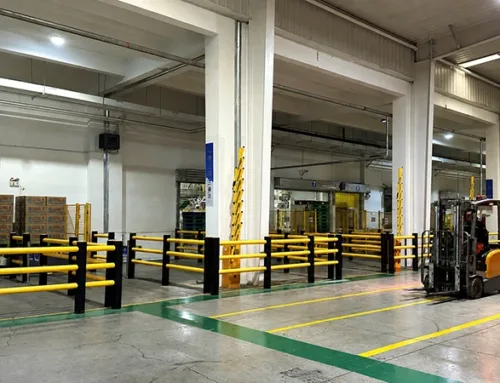
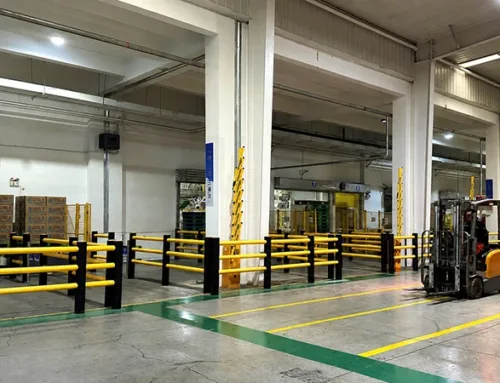
Flexible Rack Protection is built for the exact problem that keeps food factories exposed: forklifts, AGVs, trolleys, and people share the same narrow routes. FCBarrier turns that traffic pattern into a controlled layout with a physical, self-rebounding Flexible Safety Barrier instead of relying on training, paint, and signs alone.
1. The real risk in food plants is mixed traffic
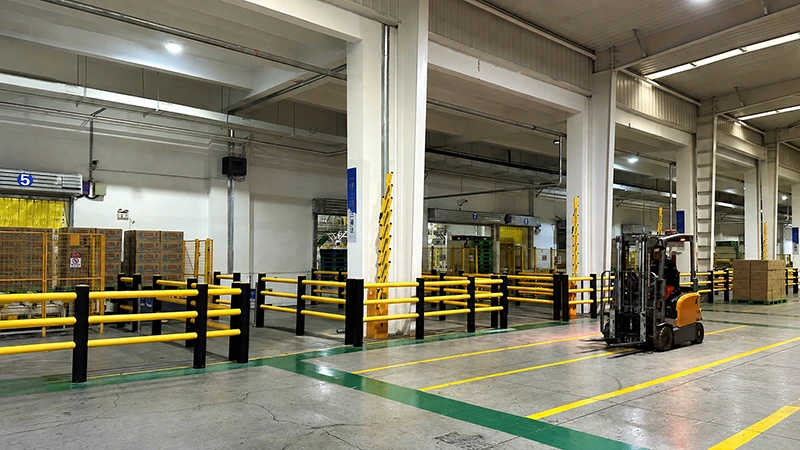
In fast-moving food and beverage facilities, the highest-frequency safety event is not a process failure. It is a collision. Forklifts move between production lines and storage, trailers enter and leave docks, and AGVs run through the same internal lanes that operators use to walk, pick, and inspect. Once people and vehicles share the same corridor, the risk shifts from theoretical to daily.
That is why this topic is not just about compliance language. It is about workplace safety, forklift accident prevention, and pedestrian & asset protection in a live manufacturing plant environment.
2. Why the old approach fails
Many plants try to control mixed traffic with training, warning signs, floor paint, cones, and temporary tape. Those methods help define a route, but they do not stop a moving vehicle.
- Paint and signs depend on perfect human attention.
- Tape and cones are easy to move, ignore, or damage.
- Administrative controls cannot absorb impact when a forklift drifts, turns too tight, or loses a load line.
- Steel-only edge protection can keep the boundary visible, but repeated hits often mean deformation, repair work, and downtime.
In short: if the hazard is physical, the control must be physical too.
3. Why FCBarrier fits this job
FCBarrier is a Flexible Safety Barrier built around ARMORFLEX™ polymer. The system is designed to absorb impact energy, then self-rebound instead of staying bent or cracked after a hit. That matters in food plants, where narrow aisles leave little tolerance for repeated maintenance closures.
As a polymer safety barrier, FCBarrier brings three practical advantages to mixed-traffic areas:
- Energy absorption: the material absorbs about 80% of impact energy before rebound.
- Lower disruption: the barrier is meant to return to service without the permanent deformation common to rigid barriers.
- Tighter layouts: the slender section helps preserve valuable aisle width in compact production and storage zones.
4. The structure behind the result
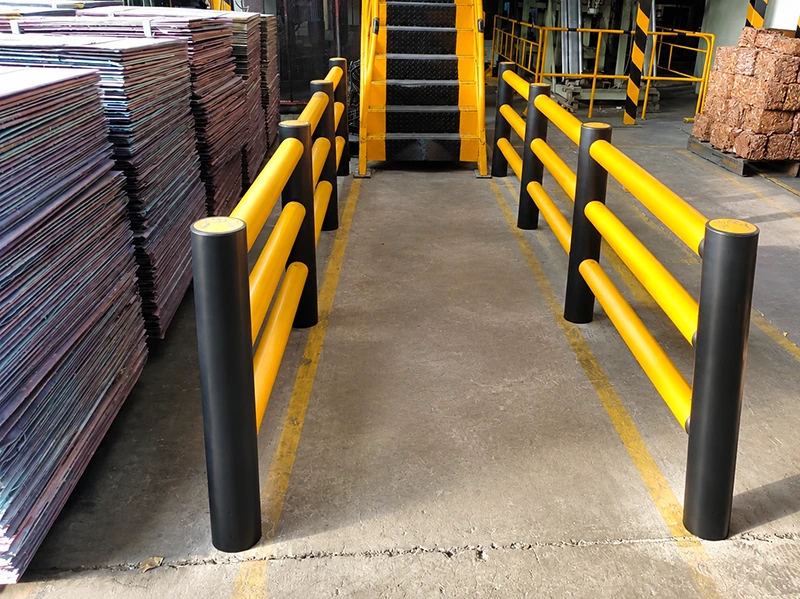
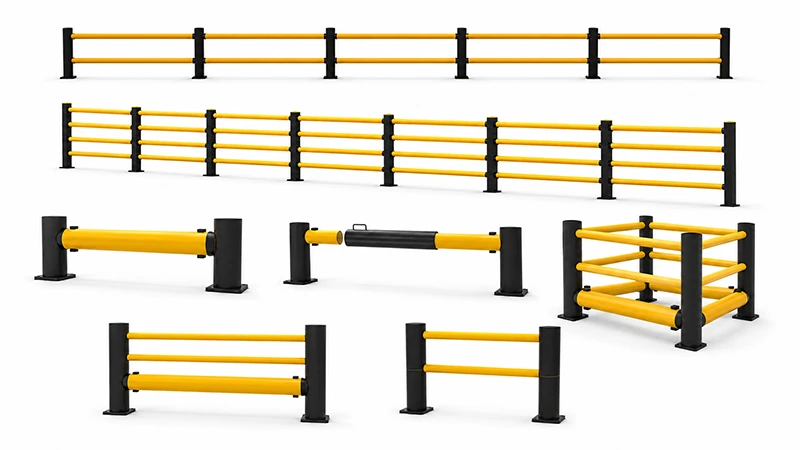
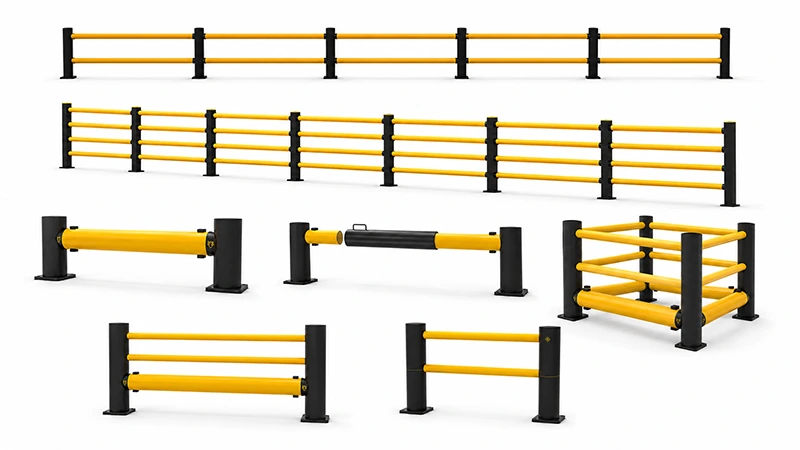
The best way to evaluate industrial safety barrier performance is to look at the structure, not just the slogan. FCBarrier uses a modular layout with floor-anchored bases, rail sections, and repeatable installation geometry. That makes it suitable for warehouse safety barrier runs, loading dock protection, rack-end protection, and machine-access boundaries.
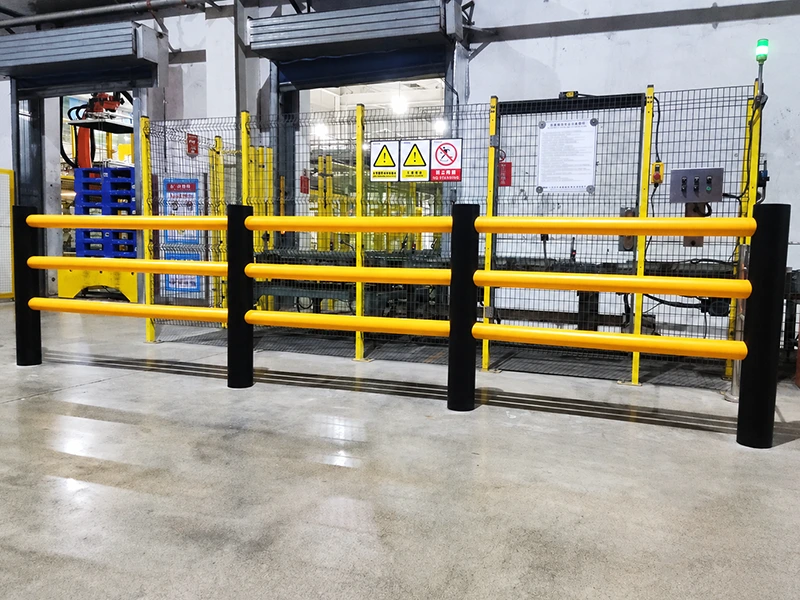
- Highest-spec impact rating: DR190 / TR190+ configurations are stated at 28,950J, about an 8-ton forklift at 9.6 km/h.
- Self-rebounding behavior: designed to recover after impact instead of requiring heavy repair after every hit.
- Modular barrier layout: supports phased retrofit work in live sites.
- Floor-anchored base: keeps the barrier fixed where traffic actually needs to be controlled.
- Quick-install logic: the mortise-and-tenon style installation approach helps shorten downtime during retrofits.
5. What changes after the barrier is in place
For food and beverage operations, the value is not just collision resistance. The value is operational stability. When the physical boundary is clear, the route becomes easier to follow, the rack end is less exposed, and maintenance teams spend less time repairing impact points.
That usually translates into four measurable outcomes:
- less vehicle and equipment damage,
- fewer repair events and lower repair cost,
- reduced accident downtime,
- long service life with lower maintenance pressure.
For dense food plants, that is the difference between a warning system and a control system.
6. Bottom line
If your plant has people, forklifts, AGVs, and material flow in the same building, the safest answer is not more reminders. It is a permanent physical boundary that can take impact, rebound, and keep the route open.
That is the case for Flexible Rack Protection. FCBarrier brings a Flexible Safety Barrier, a Polymer Safety Barrier structure, and a practical retrofit path for warehouse safety barrier runs, forklift safety barrier zones, and loading dock protection areas where downtime is expensive and aisle width is already limited.
In mixed-traffic food plants, the goal is simple: protect the rack, protect the people, and keep the line moving.