EN
EN  DE
DE  RU
RU  PT
PT  JA
JA  ES
ES  IT
IT FOOD & BEVERAGE SAFETY | FCBarrier
Flexible Crash Barrier for Cleaner, More Visible Plant Traffic
In food, beverage, and daily-chemical plants, a Flexible Crash Barrier makes pedestrian and forklift boundaries easier to see, supports orderly behavior, and helps maintain a consistent 5S presentation without the peeling paint and visual decline of old steel barriers.
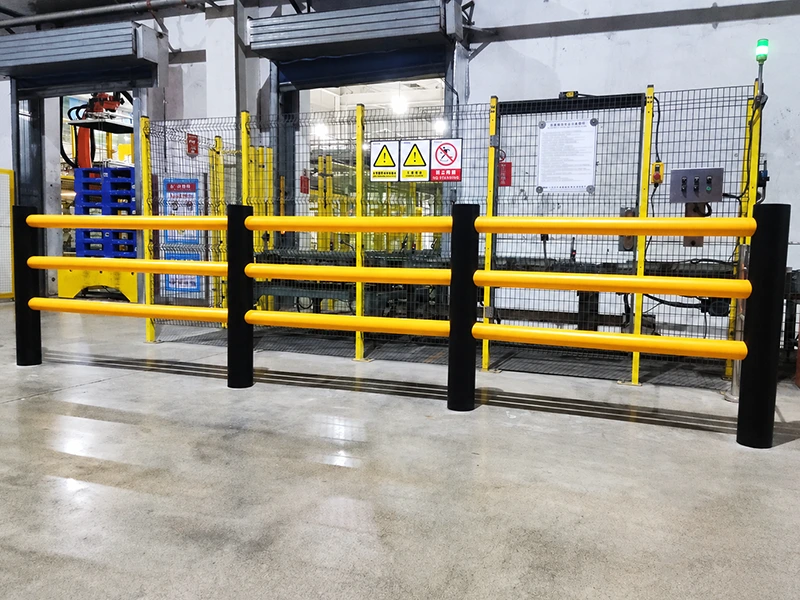
Why the Old Steel Barrier Becomes a Site-Management Problem
A food or daily-chemical facility is judged not only by whether a guardrail exists, but also by how clearly it separates people, vehicles, and equipment. Steel barriers that lose paint, corrode, or become misaligned weaken visual management and can make a well-controlled route look neglected during customer visits or BRC and IFS audits.
| Plant reality | Operational consequence |
|---|---|
| Peeling or faded steel coating | Lower visual consistency and more repainting work |
| Damaged or leaning traditional guardrail | Less obvious pedestrian safety and vehicle separation |
| Unclear forklift routes | Higher risk of poor driving and walking behavior |
| Frequent impact repairs | Repair cost and accident downtime around production areas |
FCBarrier Fit: Visible Separation with Impact Protection
Self-Colored Polymer Surface Supports 5S Visibility
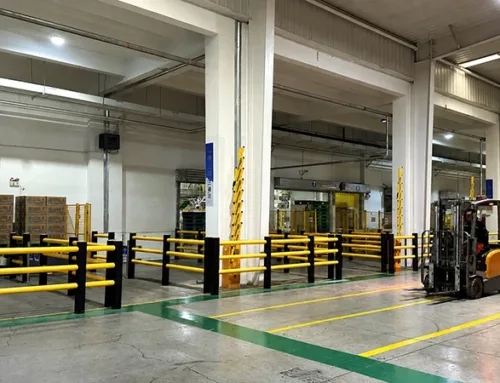
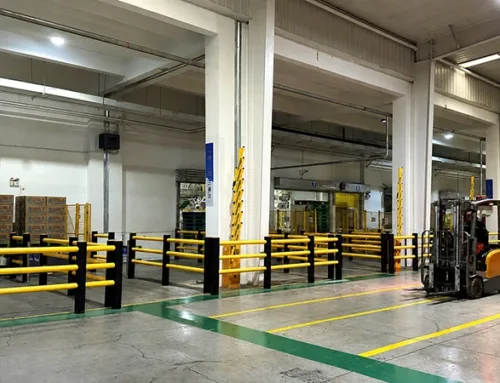
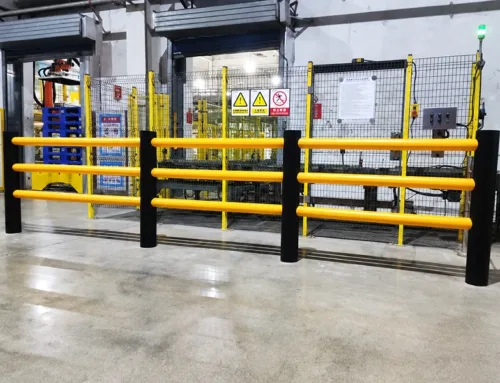
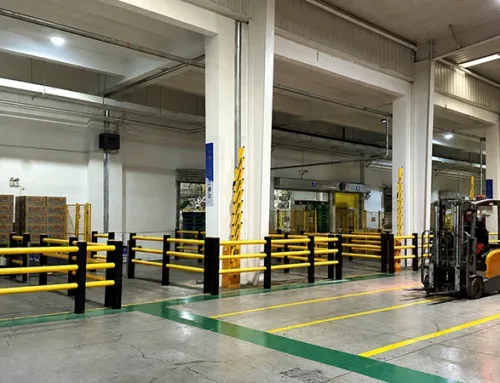
FCBarrier uses an attention-grabbing, self-colored polymer barrier appearance rather than a paint layer that can flake away. The consistent yellow-and-black visual language helps define a warehouse safety barrier line, a pedestrian barrier, or a machinery protection zone at a glance. It supports low-maintenance, corrosion-free site presentation and makes the expected route easier to read.
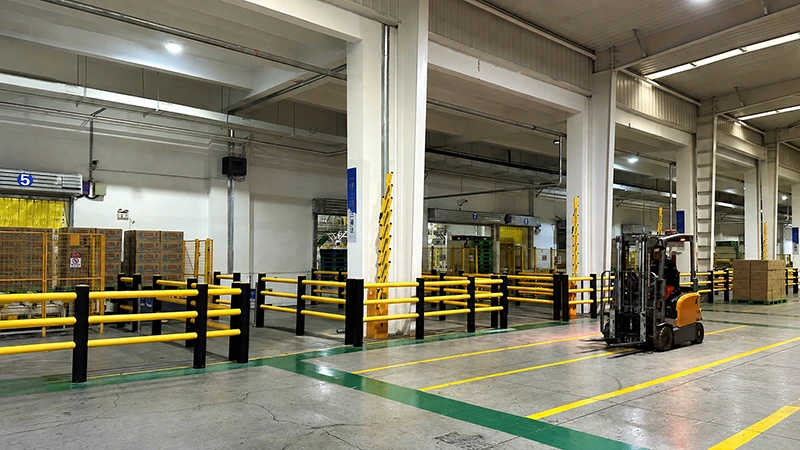
Modular Rails Define Forklift and Pedestrian Movement
Single Rail, Double Rail, and Traffic Rail configurations can be arranged as a modular barrier around loading dock protection, production access, or equipment edges. Floor-anchored bases and repeatable post-and-rail lines create a clear human-and-vehicle boundary. That visual cue can reinforce forklift accident prevention and pedestrian safety without relying on signs alone.
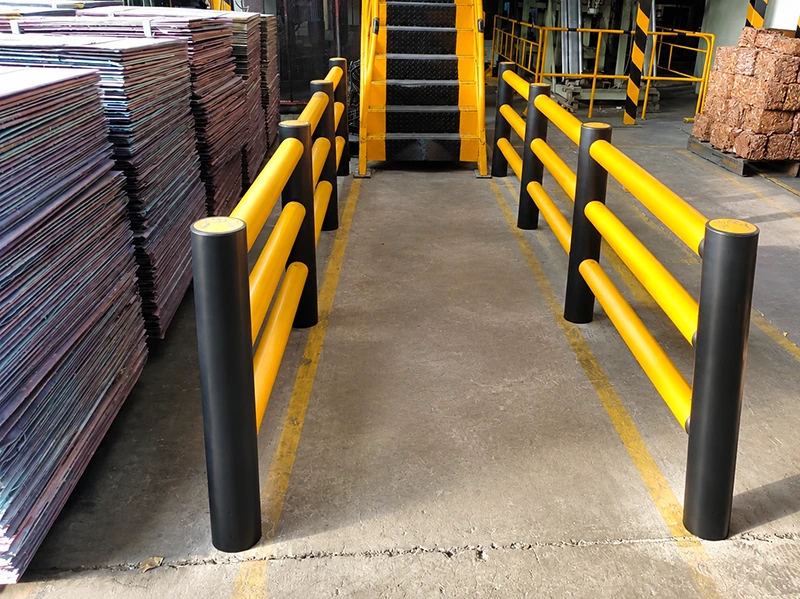
Energy Absorption Helps Limit Repeat Repair Work
For impact-prone forklift zones, the FCBarrier design is intended to absorb impact energy and self-rebound after an incident, reducing the need for immediate straightening or repainting compared with rigid steel protection. The documented reference point is a 28,950J rated barrier for an 8-ton forklift at 9.6 km/h; confirm the selected SR, DR, TR, or CTR configuration against the site risk assessment before specification.
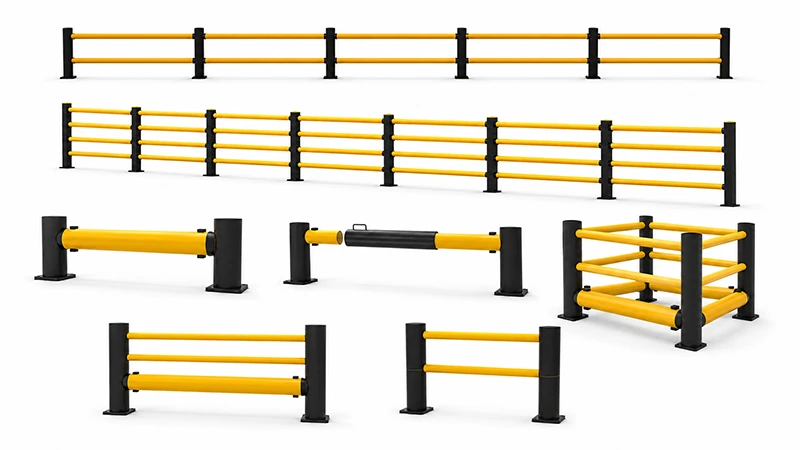
Where Food and Daily-Chemical Plants Can Apply It
- Food & Beverage Safety Barrier lines beside processing and production access
- Forklift Safety Barrier routes around warehouse racking and loading bays
- Pedestrian Barrier layouts at entrances, crossings, and shared factory walkways
- Machinery Protection and Column Protector zones where vehicle impact is possible
- Retrofit Barrier projects that need a cleaner visual standard without rebuilding the whole route
With clear colors, repeatable modules, and impact-resistant construction, the barrier becomes part of everyday visual management: drivers see the boundary, pedestrians recognize the safe side, and auditors see a maintained workplace safety system rather than an improvised repair.
Specify the Evidence Before You Specify the Barrier
Start with forklift mass and speed, impact direction, pedestrian routes, cleaning expectations, floor condition, and the locations of racks, columns, machinery, and loading docks. Then select the appropriate FCBarrier configuration and confirm anchoring, rail height, corner details, and replacement access. PAS 13 compliance should be treated as a verification item unless the required third-party certification is available for the selected system.
Make Safety Boundaries Visible and Audit-Ready
Share your plant plan, traffic routes, and current steel barrier issues with the FCBarrier team. We can help map a Flexible Crash Barrier layout for pedestrian and asset protection, visual management, and lower maintenance demand.