EN
EN  DE
DE  RU
RU  PT
PT  JA
JA  ES
ES  IT
IT 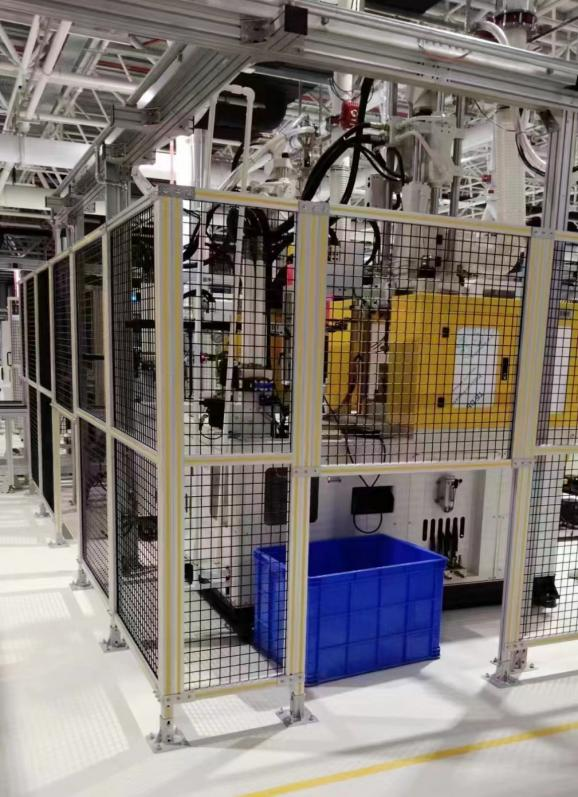
A Lean Consultant’s Guide to Seeing Waste in Your Factory’s Foundation
As a Lean practitioner, your mission is clear: relentless pursuit of perfection through waste elimination (Muda) and empowering people to drive continuous improvement (Kaizen). You invest in training, conduct value stream mapping workshops, and implement visual management boards. But what if the most significant waste source isn’t in your processes, but in the physical infrastructure containing them?
Many Lean initiatives stall because they fight against rigid factory “hardware” resistant to change. The primary culprit? Traditional welded-steel safety fencing. This guide helps you view infrastructure through “Muda glasses” and understand how static barriers undermine your Lean culture.
Seeing the Unseen: How Rigid Safety Fencing Creates the 8 Wastes
Walk the Gemba with us to identify how fixed fencing generates waste you strive to eliminate:
1. The Waste of Waiting (Time on Hand)
The most obvious waste. Line reconfigurations with welded fencing create cascading delays: production waits for maintenance, crews wait for permits, projects wait for cutting/grinding/welding. Every waiting hour disrupts Takt time and flow.
2. The Waste of Over-processing (Doing More Than Necessary)
Modifying welded fencing epitomizes over-processing: cutting, grinding, repainting – all adding zero customer value. A modular system requiring only unbolting/re-bolting reduces non-value work by over 90%.
3. The Waste of Transportation (Unnecessary Material Movement)
Reworks involve transporting heavy raw steel, moving welding carts/gas cylinders, and hauling scrap. This movement vanishes when existing fencing inventory can be reconfigured in place.
4. The Waste of Motion (Unnecessary People Movement)
Observe the “spaghetti diagram” of welding teams during rework – constant walking for tools and materials. Modular systems let small teams work efficiently in contained areas with basic hand tools.
5. The Waste of Defects (Rework and Scrap)
Grinding creates airborne particulates that contaminate products, causing defects. The scrapped fence represents 100% material waste – unacceptable in Lean operations.
6. The Waste of Inventory (Excess Parts)
Plants stockpile steel or pre-fabricated sections to mitigate long rework lead times. Modular systems become their own inventory – reusable components already serving different functions on your floor.
7. The Waste of Underutilized Talent
The most tragic waste. Brilliant engineers and operators stop suggesting improvements when facing multi-day, high-cost construction projects. Rigid safety fencing stifles the Kaizen spirit you cultivate.
Kaizen Culture Demands Flexible Infrastructure
True Lean thrives when rapid Plan-Do-Check-Act cycles enable small, low-cost improvements. A modular Aluminum Profile Fence empowers operators to rearrange workstations for better ergonomics without barriers. It transforms conversations from “We can’t” to “Let’s try this afternoon.” This shift respects team knowledge and embodies Lean principles.
This flexibility enables advanced Lean concepts:
- Cellular Manufacturing: Quickly form, resize, or disband cells as demand changes
- 5S Implementation: Maintain “Set in Order” and “Shine” without permanent welded structures
Your Infrastructure Should Serve Your Philosophy
Walk your facility tomorrow. Don’t see your safety fencing as just a barrier – view it as part of your operating system. Does it enable flow or create stagnation? Empower improvements or signal that change is difficult?
Building a fast, flexible production system requires physical infrastructure with matching qualities. Modern Aluminum Profile Fence solutions embody Lean principles – reusable, adaptable, and responsive to change. If you’re serious about your Lean journey, addressing foundational hardware unlocks new waves of efficiency and innovation throughout your value stream.