IT
IT  EN
EN  DE
DE  RU
RU  PT
PT  JA
JA  ES
ES 
 |
A safety fence is static, but the gate is dynamic. It is slammed, dragged, and cycled hundreds of times a day. If your gate sags, jams, or drags along the floor, it becomes more than a nuisance—it becomes a reason for operators to bypass safety protocols. Discover how engineered Recinzione di sicurezza industriale door systems are built to withstand abuse, ensuring smooth operation and zero downtime. |
The “Anti-Sag” Strategy: Defying Gravity
The most common failure in wide industrial gates is structural sagging. As gravity pulls on a 1.5-meter wide steel gate, the leverage can cause the post to lean or the hinge to warp. The result? The lock tongue no longer lines up with the switch, causing the machine to fault out.
We combat this physics problem with two key features. First, for wider gates (hinged or folding), we integrate heavy-duty Support Casters (Caster Wheels). These wheels transfer the weight of the gate directly to the floor, relieving the stress on the hinges and posts. Second, we utilize a rigid Trave del telaio della porta.
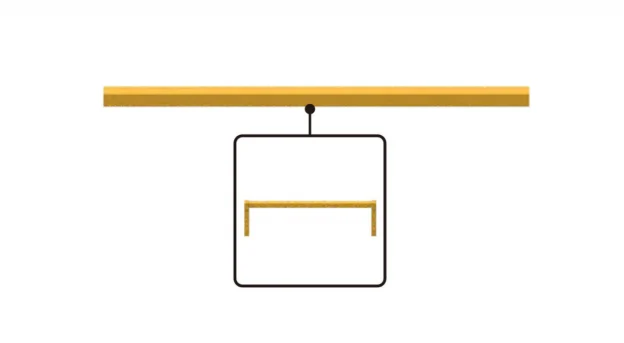
The yellow Door Frame Beam connects the gate posts, creating a rigid “portal” structure that prevents posts from leaning inward over time.
This overhead beam locks the gate posts together, creating a unified box structure that maintains perfect squareness. This ensures that your electronic safety interlocks align with sub-millimeter precision, every single time the door closes.
Frictionless Mechanics: Reducing Operator Fatigue
If a sliding door feels like it weighs a ton, operators will struggle to use it. High friction leads to “door fighting,” where personnel use excessive force to slam the gate shut, damaging the stops and sensors.
Our sliding door systems are designed for Low-Resistance Operation. We use precision bearing rails and nylon rollers that allow even heavy, framed mesh panels to glide with just a finger’s touch. By reducing the physical effort required to actuate the safety device, you remove a major psychological barrier to compliance. Safety becomes easy, not a chore.
Built for the “Oops” Moments
In a busy logistics corridor, a forklift clipping a gate post is a matter of “when,” not “if.” A lightweight gate will crumple, potentially trapping personnel inside or leaving the cell unguarded.
Our door systems are constructed from the same Acciaio al carbonio Q235 framed panels as our fencing. The 20x30mm tubular frame provides essential rigidity. If a minor impact occurs, the frame absorbs the energy, preventing the mesh from deforming and jamming the sliding mechanism. It’s a robust design philosophy that acknowledges the rough reality of the manufacturing floor.
Conclusion: Invest in Reliability, Not Just Steel
A cheap gate is expensive to own. The cost of one hour of downtime due to a misaligned door switch often exceeds the price difference between a budget fence and an engineered system. Choose door systems that are supported, reinforced, and built to last.
Domande frequenti
1. Why do I need a wheel on my swing gate?
For gates wider than 1000mm, the leverage exerted on the hinges is significant. A caster wheel supports the leading edge of the gate, preventing it from dragging on the floor and protecting the hinges from premature wear.
2. Does the overhead beam limit the height of items passing through?
Yes, the beam creates a height restriction equal to the fence height (e.g., 2000mm). However, for areas needing overhead crane access or tall forklift loads, we can design “open top” gates with reinforced posts to maintain stability without the crossbar.
3. Can I replace a damaged door without replacing the posts?
Yes. Our modular design means the door panel is a separate component. If a forklift damages the door leaf, you can unbolt it from the hinges or track and install a new one while keeping the existing posts and interlocks in place.
4. Are the rollers on sliding doors replaceable?
Absolutely. While our bearing rollers are designed for long life, they are standard maintenance items that can be easily accessed and replaced if they wear out after years of heavy use.
5. Do your gates work on uneven floors?
Our caster wheels are spring-loaded or adjustable to accommodate minor floor variations. For significant slopes, we recommend our trackless sliding doors or leveling the floor section where the gate swings to ensure proper interlock alignment.