IT
IT  EN
EN  DE
DE  RU
RU  PT
PT  JA
JA  ES
ES 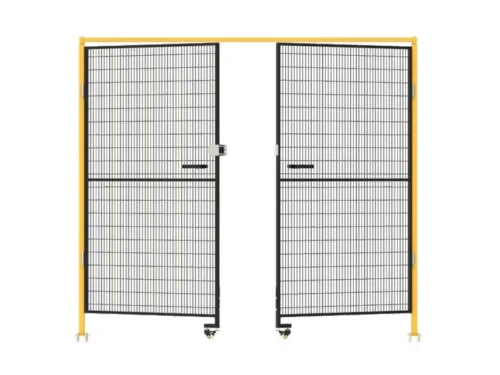

|
In high-speed automotive assembly and robotic welding cells, material flow is your lifeline. But every time an engine block, stamped chassis, or AGV passes through your perimeter, you create a potential safety breach. Traditional fencing forces system integrators to choose between OSHA-compliant guarding and cycle-time efficiency. You don’t have to compromise. Here is how to engineer seamless material pass-throughs without triggering nuisance machine trips or failing EHS audits. |
The Integrator’s Dilemma: Cycle Times vs. ISO 13857 Compliance
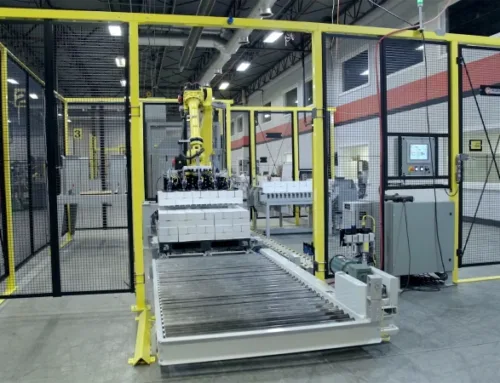
The Pain Point: You are integrating a 6-axis robotic welding cell. The conveyor needs to feed parts continuously. If you simply cut a hole in a standard wire mesh panel to let the conveyor through, the opening becomes a severe liability. An operator could easily reach their arm through the gap to clear a jammed part, violating ISO 13857 reach-distance standards. If an OSHA inspector flags it, the line shuts down. Conversely, if you rely on manual doors for material infeed, the constant opening and closing destroys your UPH (Units Per Hour) and degrades your cycle time.
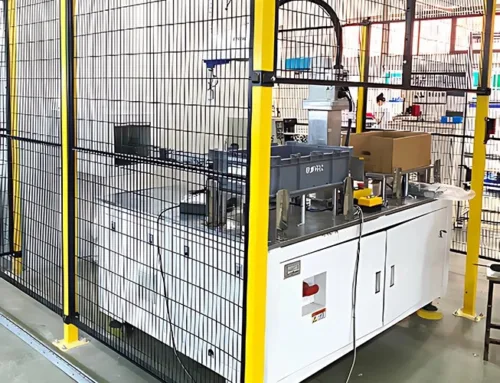
Why It Works: Un recinzione di sicurezza industriale must function as a dynamic engineering control, not just a static wall. By utilizing a specific 20x100mm (approx. 0.78″ x 3.9″) mesh profile, the system physically prevents finger and hand reach-through. This allows the physical barrier to be installed just 120mm (4.7 inches) away from the hazard zone. For conveyor pass-throughs, we utilize our fully welded framed panels to construct rigid “Tunnel Guards” over the conveyor line.

The Actual Benefit: Materials flow continuously on the conveyor. Because the tunnel depth and mesh size are mathematically validated against ISO standards, the safety distance is legally compliant. You achieve zero PLC STO (Safety Torque Off) interruptions, maintain maximum throughput, and guarantee a 100% pass rate during rigorous automotive plant EHS audits.
Engineering the Pass-Through: AGVs, Forklifts, and Heavy Tooling
The Pain Point: Automated Guided Vehicles (AGVs) and forklifts need wide access to drop off heavy stamping dies or pallets of raw materials. Standard swing doors sag under their own weight when spanning gaps wider than 6 feet, causing the safety interlock actuators to misalign. When the switch doesn’t align, the PLC won’t reset, and the entire automation line is paralyzed.
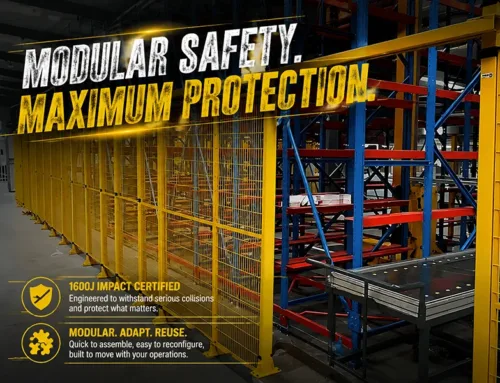
Why It Works: For wide material handling areas, robot safety fencing systems must incorporate heavy-duty linear motion. We deploy double sliding doors (up to 4300mm / 14 ft wide) suspended on bearing rails, or folding doors for tight clearance zones. The core structure—60x60mm Q235 carbon steel posts anchored with M10 expansion bolts—is engineered to absorb up to 1600 Joules of impact energy (equivalent to a 220 lb object hitting at 12.4 mph). If a forklift bumps the post during a material drop-off, the steel plastically deforms rather than shattering, protecting the expensive robotics inside.

The Actual Benefit: Your AGVs navigate in and out of the cell without bottlenecking. The structural rigidity ensures that even the widest doors glide smoothly, keeping your safety switches perfectly aligned for years. You eliminate the “door won’t close” maintenance tickets and protect your high-value capital equipment from catastrophic forklift collisions.
Stop Welding Custom Brackets: Standardized Interlock Integration
The Pain Point: When integrating manual loading stations where operators feed parts into a CNC machining center, you need active safety. Your mechanical assembly team wastes hours performing “hot work”—drilling, cutting, and welding custom brackets onto standard fencing to mount Omron or Pizzato interlock switches. This ruins the powder coating, introduces rust within months, and requires special fire permits that delay the project.
Why It Works: Vero machine guarding systems are designed for the control engineer. Our system features pre-engineered lock carriers (e.g., KKCK-LCK-B-D4NL-SET) and L-type switch brackets that bolt directly onto the 20x30mm framed panels. No drilling required. Furthermore, for high-frequency material infeed zones, we provide dedicated 80x80mm posts designed to house safety light curtains, allowing for seamless “muting” functions when pallets pass through.

The Actual Benefit: Plug-and-play integration. What used to take 3 hours of hot work and custom fabrication now takes 10 minutes of cold assembly with an Allen wrench. The factory-applied ISO 9227 salt-spray-tested powder coating remains perfectly intact, ensuring the installation looks pristine for the final client buy-off.
The ROI of Modular Material Flow Management
| Operational Phase | Traditional Fabricated Fencing | Modular Mdfence System |
|---|---|---|
| Conveyor Integration | Cut holes on-site; sharp edges damage parts; fails ISO 13857 reach-distance audits. | Pre-engineered Tunnel Guards; 20x100mm mesh allows installation just 120mm from hazards. |
| AGV/Forklift Access | Wide swing doors sag over time, causing interlock misalignment and machine downtime. | Bearing-rail sliding doors support up to 4300mm widths; zero sagging; perfect switch alignment. |
| Safety Switch Mounting | Requires hot work (welding/drilling); destroys anti-corrosion coating; high labor cost. | Standardized lock carriers bolt on in minutes (cold assembly); compatible with Omron/Pizzato. |
Frequently Asked Questions (FAQs)
1. How do you calculate the safe reach distance for a conveyor pass-through opening?
We utilize the ISO 13857 standard. Because our standard mesh size is 20x100mm, it restricts reach-through to just the fingertips. This allows the physical barrier to be placed as close as 120mm to the hazard, saving valuable floor space compared to standard 50x50mm mesh which requires much larger safety distances.
2. Can your sliding doors accommodate wide AGV paths in automotive plants?
Yes. Our double sliding doors can span up to 4300mm (approx. 14.1 feet) wide. They utilize high-quality bearing rails or bottom rollers to ensure smooth operation without the sagging issues common in wide hinged doors, making them perfect for AGV and forklift access.
3. How do we integrate muting light curtains for material infeed?
We offer specialized 80x80mm posts designed specifically to house and protect safety light curtains. This allows pallets to pass through via muting logic while seamlessly integrating the optical safety device into the physical Q235 steel perimeter.
4. Do your framed panels withstand accidental forklift impacts near loading zones?
Absolutely. The system features 60x60mm Q235 carbon steel posts anchored with M10 expansion bolts. It is TUV certified to withstand up to 1600 Joules of impact energy—enough to stop a 100kg (220 lb) object moving at 20 km/h (12.4 mph) without catastrophic failure or shrapnel.
5. We need to integrate Omron D4NL safety switches. Do we need to fabricate custom brackets?
No. We provide pre-engineered installation carriers (e.g., KKCK-LCK-B-D4NL-SET) specifically designed for industry-standard interlocks like Omron and Pizzato. This allows your technicians to perform a fast, cold assembly using standard fasteners, entirely eliminating on-site welding.