IT
IT  EN
EN  DE
DE  RU
RU  PT
PT  JA
JA  ES
ES 
L'operazione necessaria per prevenire la caduta delle ringhiere di protezione

Per evitare la caduta di una ringhiera, è essenziale assicurarsi che sia installata correttamente e sottoposta a manutenzione regolare. Ecco alcuni passaggi che puoi seguire per prevenire una ringhiera cadente:
Garantire un'Installazione Corretta: Le ringhiere devono essere installate secondo le istruzioni del produttore e gli standard di settore. Il processo di installazione deve essere eseguito da professionisti formati che conoscano le tecniche e gli strumenti di installazione appropriati.
Manutenzione Regolare: La manutenzione regolare è fondamentale per garantire che la ringhiera rimanga sicura e in buone condizioni. La manutenzione dovrebbe includere ispezioni regolari, pulizia e lavori di riparazione secondo necessità. Qualsiasi danno o difetto deve essere riparato immediatamente.
Utilizzare Materiali di Alta Qualità: Le ringhiere dovrebbero essere realizzate con materiali di alta qualità, durevoli e resistenti alla corrosione. L'acciaio inossidabile e l'acciaio zincato sono comunemente usati per le ringhiere perché sono resistenti e resistenti alla corrosione.
Considerare l'Ambiente: Le ringhiere devono essere progettate per resistere alle condizioni ambientali in cui vengono installate. Se l'area è soggetta a venti forti, pioggia intensa o neve, o temperature estreme, la ringhiera deve essere progettata per resistere a queste condizioni.
Test Regolari: Le ringhiere devono essere testate regolarmente per garantire che funzionino correttamente. I test dovrebbero essere eseguiti da professionisti formati utilizzando attrezzature specializzate per rilevare eventuali difetti o danni.
Seguendo questi passaggi, puoi garantire che la ringhiera rimanga sicura e in buone condizioni, prevenendo così la sua caduta e potenziali danni.
Interlock Switch Mounting Without Drilling: Why Alfence T-Slot Posts End Phantom Stops
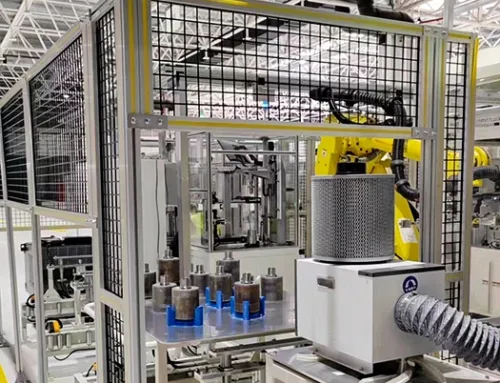
Bolting an interlock switch bracket through a powder-coated steel post drills the coating, drops swarf into the cell and leaves a rust line — and when the hinged leaf sags, the tongue misaligns and the PLC reports a phantom guard fault. Alfence mounts sensors, e-stops and conduit in the T-slot groove of a 40×40 mm or 45×45 mm aluminum post, with door hardware sized to keep the safety switch aligned.
Phantom Safe Torque Off Stops: T-Slot Guarding Fence Posts Mount Interlocks Without Drilling
Painted steel guarding posts force maintenance to drill for interlock switches, dropping swarf in the cell and breaking the coating where rust starts. Sagging hinge doors then misalign the interlock tongue and the PLC trips Safe Torque Off while the gate is closed. Alfence industrial safety fence mounts sensors, e-stops and cable routing into the T-slot aluminum profile post without drilling, and uses hinged, folding or sliding door frames that keep interlock geometry stable - protecting OEE through phantom stops and line changes.
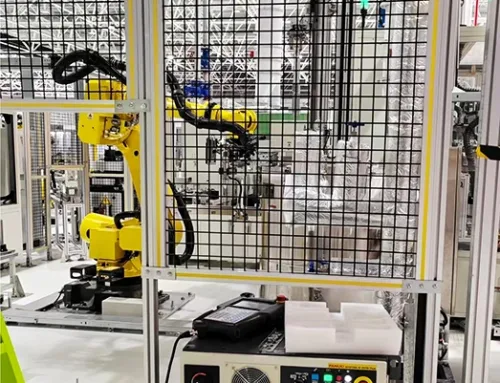
Automotive Plant Industrial Safety Fence: Keep the Robot Cell Close to the Hazard
Automotive plants cannot afford to lose production floor to an oversized machine guarding perimeter. Alfence combines 20×100 mm mesh with slim 40×40 mm or 45×45 mm aluminum posts for a compact, reconfigurable industrial safety fence layout, with final clearance confirmed by the project risk assessment.