EN
 DE
 RU
 PT
 JA
 ES
 IT

The necessary operation to prevent falling guardrails

To prevent a guardrail from falling, it is essential to ensure that it is installed correctly and maintained regularly. Here are some steps you can take to prevent a falling guardrail:
Ensure Proper Installation: Guardrails must be installed according to the manufacturer’s instructions and industry standards. The installation process must be carried out by trained professionals who are familiar with the appropriate installation techniques and tools.
Regular Maintenance: Regular maintenance is crucial to ensure the guardrail remains secure and in good condition. The maintenance should include regular inspections, cleaning, and repair work as required. Any damage or defects should be repaired immediately.
Use High-Quality Materials: Guardrails should be made from high-quality materials that are durable and resistant to corrosion. Stainless steel and galvanized steel are commonly used for guardrails because they are strong and resistant to corrosion.
Consider the Environment: Guardrails must be designed to withstand the environmental conditions in which they are installed. If the area experiences high winds, heavy rain or snow, or extreme temperatures, then the guardrail must be designed to withstand these conditions.
Regular Testing: Guardrails must be tested regularly to ensure that they are functioning correctly. The testing should be carried out by trained professionals using specialized equipment to detect any defects or damage.
By following these steps, you can ensure that the guardrail remains secure and in good condition, thereby preventing it from falling and causing harm.
Black-Ice Skid Between 23:00 and 05:00 No Operator Reports: Reading a 4 mm Q235 Warehouse Guard Rail with a 160×160×16 mm Base Plate the Next Morning
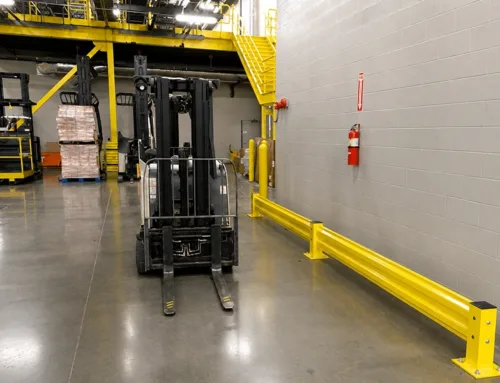
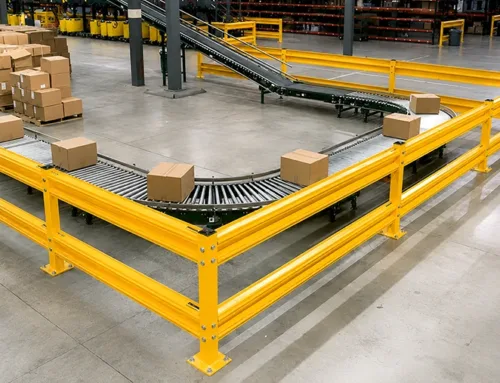
On a −6 °C ambient dock apron between 23:00 and 05:00, a counter-balanced forklift skids 1.2 m past the floor-mark, finds the rail instead of the rack, and walks away without filing a near-miss entry. A 4 mm Q235 corrugated steel warehouse guard rail with a custom 160×160×16 mm base plate is the only forensic read the 5 a.m. EHS walk-around has on what actually happened.
Frozen Loading Bay Floors and Skid-Out Forklifts: Heavy Duty Warehouse Guard Rails as the Last Physical Line of Defense for Racks, Columns, and Precision Equipment
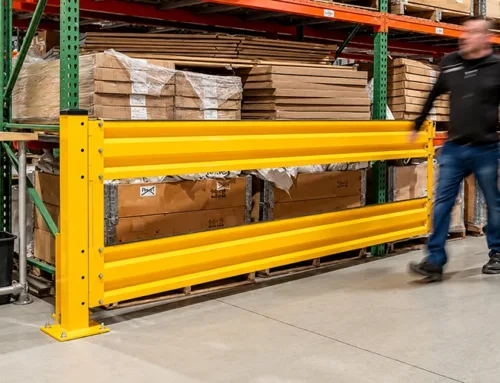
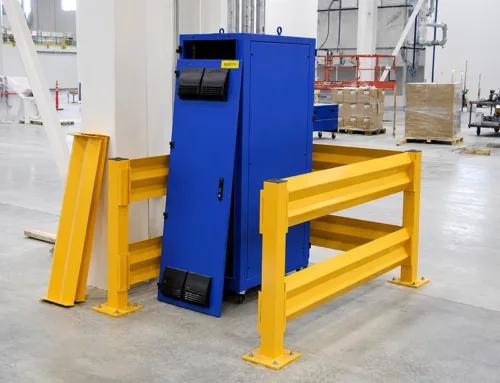
On a -8 °C dock apron a 2.5 t counterbalanced truck slides straight into rack upright A12. A 4 mm Q235 heavy duty warehouse guard rail with a custom 160×160×16 mm base plate from technical case 15176 is the last physical line of defense around racks, columns and precision equipment when the bay floor turns to ice.
Cold Storage Robots and Pickers Share an Aisle at –25 °C — and a Yellow Reflective Q235 Warehouse Guard Rail Is the Passive Boundary Neither Will Cross
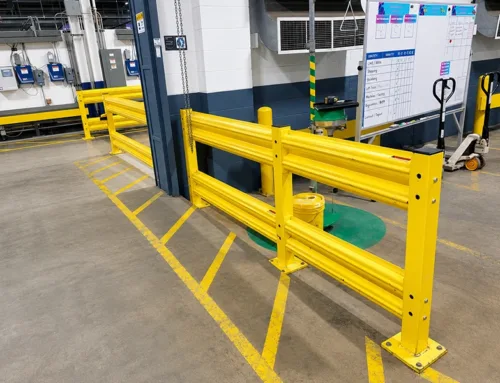
ROLT robotic pallet shuttles, reach trucks, and seasonal pedestrian pickers share the same –25 °C cold storage pick aisle. A bolted, yellow, reflective Q235 warehouse guard rail with end-cap bollards forms the physical boundary a robotic shuttle will not cross into the pedestrian lane — completing the UWB proximity and blue-light active warning stack on the layer that does not depend on training, sensor battery, or the operator's mood.