EN
EN  DE
DE  RU
RU  PT
PT  JA
JA  ES
ES  IT
IT Safety equipment rental or purchase

Start by assessing your security equipment requirements. Assess the frequency and duration of equipment use and the specific type of equipment required. Consider the nature of your project or operation and any regulatory compliance requirements. This assessment will help determine if it is more cost-effective to rent or purchase equipment.
Cost Considerations
Compare the costs associated with leasing and purchasing security equipment. Leasing options typically involve upfront costs, periodic lease costs, and potential delivery costs. Purchasing equipment may have higher upfront costs but may prove cost-effective in the long run for frequent or long-term use. Consider factors such as equipment maintenance, storage, and depreciation when evaluating overall costs.
Equipment availability and customization
Assess the availability of the required security equipment. Certain specialized equipment or rare items may be easier to purchase than to lease. In addition, purchasing may provide more flexibility if customization or modifications are necessary. On the other hand, leasing may provide a wider selection of equipment without the need for a long-term commitment.
Quality and Safety Standards
Consider the quality and safety compliance standards of the equipment. When renting, make sure the rental company regularly maintains and inspects its equipment to meet industry standards. When buying, research reputable suppliers and manufacturers who comply with safety regulations and provide reliable products.
Flexibility and Scalability
Assess the flexibility and scalability of your security equipment needs. Leasing provides the flexibility to adjust equipment quantities based on project requirements or seasonal fluctuations. If your equipment needs remain consistent, or if you anticipate long-term use without major changes, it may be advantageous to purchase.
Interlock Switch Mounting Without Drilling: Why Alfence T-Slot Posts End Phantom Stops
Bolting an interlock switch bracket through a powder-coated steel post drills the coating, drops swarf into the cell and leaves a rust line — and when the hinged leaf sags, the tongue misaligns and the PLC reports a phantom guard fault. Alfence mounts sensors, e-stops and conduit in the T-slot groove of a 40×40 mm or 45×45 mm aluminum post, with door hardware sized to keep the safety switch aligned.
Phantom Safe Torque Off Stops: T-Slot Guarding Fence Posts Mount Interlocks Without Drilling
Painted steel guarding posts force maintenance to drill for interlock switches, dropping swarf in the cell and breaking the coating where rust starts. Sagging hinge doors then misalign the interlock tongue and the PLC trips Safe Torque Off while the gate is closed. Alfence industrial safety fence mounts sensors, e-stops and cable routing into the T-slot aluminum profile post without drilling, and uses hinged, folding or sliding door frames that keep interlock geometry stable - protecting OEE through phantom stops and line changes.
Automotive Plant Industrial Safety Fence: Keep the Robot Cell Close to the Hazard
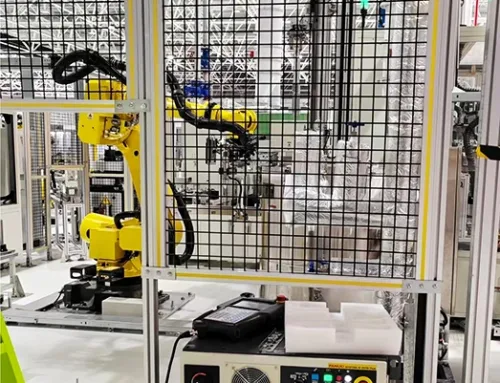
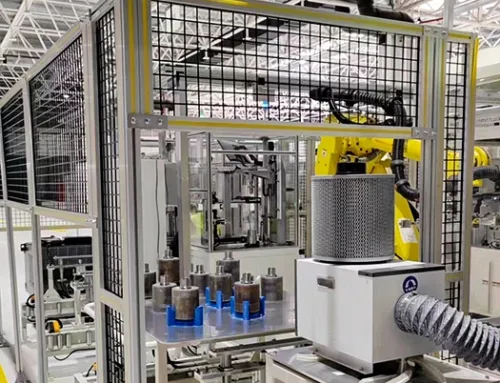
Automotive plants cannot afford to lose production floor to an oversized machine guarding perimeter. Alfence combines 20×100 mm mesh with slim 40×40 mm or 45×45 mm aluminum posts for a compact, reconfigurable industrial safety fence layout, with final clearance confirmed by the project risk assessment.