IT
IT  EN
EN  DE
DE  RU
RU  PT
PT  JA
JA  ES
ES 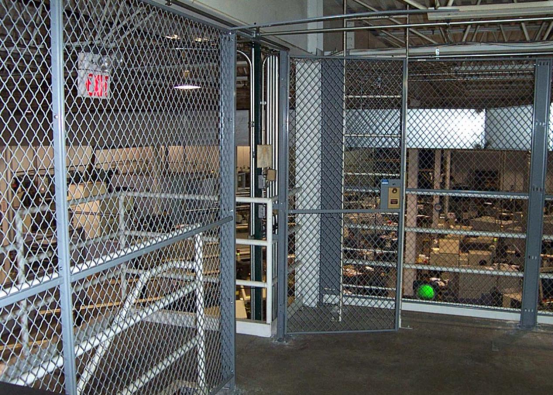
Proposals for operational safety often land on a CFO’s desk framed as a necessary, but unexciting, cost center. This is a fundamental misreading of the financial landscape. A modern approach to warehouse access control using modular divisori in filo metallico isn’t an expense; it’s one of the highest-ROI investments a logistics-based business can make. In finance, every dollar must be justified. It must either drive revenue, reduce cost, or mitigate significant risk. While warehouse safety measures have traditionally been seen as a grudge purchase, it’s time to analyze them as a capital investment that actively improves the balance sheet.
Il vero salasso finanziario dello status quo
The “inefficiencies” your warehouse manager complains about are not just operational headaches; they are tangible, recurring costs bleeding directly from your bottom line. Let’s quantify this. A typical warehouse can lose over two hours of productivity per day from inefficient driver management. In financial terms:
- La tassa sull'inefficienza: 2 hours/day x 250 workdays/year = 500 hours/year. At a conservative burdened labor rate of $30/hour, that is $15,000 per year, per facility, lost to process friction.
- Il buco nero di OPEX (La guardia umana): A common response is hiring a security guard. A fully-loaded cost can easily reach $52,000 annually in salary and benefits—a recurring, non-value-adding expense.
Combinato, lo status quo può facilmente rappresentare una $60,000+ annual drain sull'azienda, senza riuscire a eliminare completamente l'immensa responsabilità contingente di un potenziale incidente. Da un punto di vista puramente finanziario, si tratta di una perdita inaccettabile.
La trappola delle spese in conto capitale: costruire un muro
The next logical step for many is to propose a permanent solution: building a concrete-block reception office. This appears to solve the problem, but it introduces a new, more insidious financial trap.
La costruzione di una struttura permanente è un'importante spesa in conto capitale (CapEx) con numerosi aspetti negativi nascosti:
- Costi iniziali elevati e interruzioni: The project requires architects, permits, contractors, and weeks of construction, leading to significant operational downtime.
- Il dilemma dei costi irrecuperabili: A brick-and-mortar room is an immovable, fixed asset. If your business needs to move, reconfigure, or downsize in the future, that entire investment becomes a costo irrecuperabile. Its value plummets to zero the moment your business strategy changes.
L'approccio moderno: Investire in un'attività flessibile e ad alto rendimento
A strategic financial leader must invest in solutions that support long-term business agility. This is where a modular system of divisori in filo metallico becomes a superior financial instrument.
Analizziamo questo aspetto come farebbe un CFO strategico:
- Conversione di OPEX in CapEx: The primary move is a one-time capital investment to permanently eliminate a recurring operational expense. A sample payback period on a modular system can be as short as 7 months. From the 8th month onward, the system generates thousands in pure cost savings for the life of the asset.
- Preservare l'agilità aziendale: Unlike a permanent wall, a modular system is an asset designed for change. It can be easily disassembled, moved, and reconfigured. If you move to a new facility, this asset moves with you. Its value is not tied to the real estate; it is an investment in future flexibility.
- Trasformare la passività in un bene tangibile: A robust physical system actively mitigates the risk of an uncontrolled entry point. This not only protects against catastrophic loss but can also be leveraged for lower insurance premiums, turning a nebulous risk into a hard, depreciable asset.
La scelta strategica
Come leader finanziario, la decisione è chiara. Avete tre strade:
- Accettare lo status quo: Tolerate an annual six-figure drain from inefficiency and OPEX, while carrying immense liability risk.
- Investire in una struttura fissa: Commit significant capital to a solution that becomes a sunk cost and hinders future agility.
- Investite in un bene flessibile: Make a calculated, one-time investment that delivers a rapid ROI, protects the business, and functions as a strategic asset that adapts to the future needs of your company.
The modern warehouse is a dynamic environment. Its safety and efficiency should not be managed with outdated thinking. The right investment isn’t just about preventing accidents; it’s about building a more resilient, agile, and profitable business.