IT
IT  EN
EN  DE
DE  RU
RU  PT
PT  JA
JA  ES
ES 

|
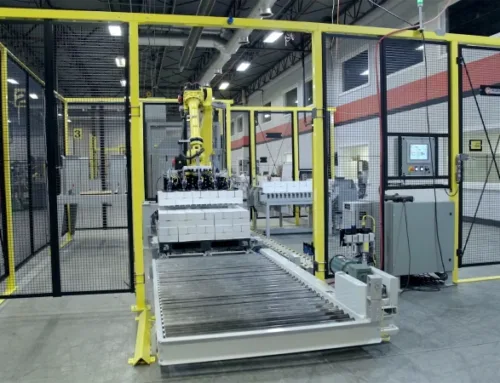
You just integrated a $250,000 6-axis robotic welding cell. The servo motors are tuned, the PLC is programmed, but the plant’s EHS manager just halted the launch. Why? Because the perimeter guarding doesn’t meet ISO compliance for safety distances, and a forklift just bent the flimsy aluminum profile door. You are now losing thousands of dollars per hour in delayed production. Stop relying on uncertified chain-link or weak extrusions. It’s time to engineer your physical barriers with the same precision as your automation systems. |
Navigating the Core ISO Standards for Automotive Automation Cells
When engineering high-speed mechanical assembly machines or dedicated manufacturing lines, the physical barrier is your last line of defense. Understanding which ISO standards apply to recinzione di sicurezza industriale is critical for system integrators. Failing an audit means ripping out the installation, triggering hot work permits, and destroying your project timeline. Here is exactly how compliant guarding solves real-world shop floor nightmares.
ISO 14120: The Foundation of Physical Impact Resistance
The Assembly Line Pain Point: Picture a busy material handling area. A forklift maneuvering a heavy engine block pallet miscalculates a turn and clips the CNC machining center’s perimeter guard. If you are using frameless mesh or brittle T-slot aluminum, the structure snaps. Shrapnel flies into your servo drives, and the machine goes down for days.
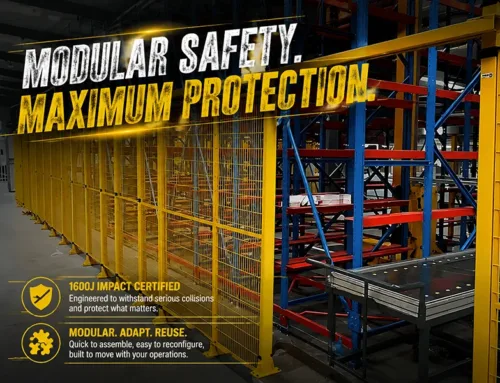
The Engineering Logic: ISO 14120 mandates that fixed guards must withstand calculated impact forces derived from your Risk Assessment. Our system utilizes Q235 cold-rolled carbon steel. The posts are robust 2.36 x 2.36 inches (60x60mm) square tubes anchored by heavy-duty M10 expansion bolts. Because Q235 steel has excellent plasticity, it acts like a vehicle’s crumple zone.
The Operational Payoff: TUV-certified to absorb 1600 Joules of impact energy—equivalent to stopping a 220 lbs (100 kg) object moving at 12.4 mph (20 km/h)—the fence bends but does not break. Your expensive robotics are protected, secondary shrapnel injuries are eliminated, and you only need to swap out a single damaged panel in 10 minutes.

ISO 13857: Safety Distances and Floor Space Optimization
The Assembly Line Pain Point: Real estate in an automotive plant is incredibly expensive. If you use standard 2×2 inch (50x50mm) wire mesh, ISO 13857 calculations dictate that the guarding must be placed up to 33.5 inches (850mm) away from the hazard to prevent a worker’s arm from reaching through. This massive footprint chokes your AGV/AMR pathways and makes tight robot cell layouts impossible.
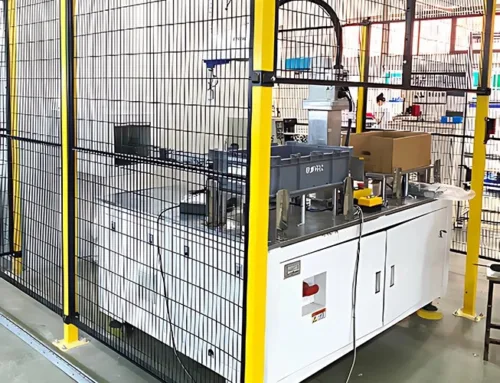
The Engineering Logic: We engineered our machine guarding systems with a specialized 0.78 x 3.93 inch (20x100mm) anti-climb, finger-safe mesh. The wire is flat-welded to a 20x30mm tubular frame, ensuring absolute rigidity so the mesh cannot be pushed or deformed inward by a leaning operator.
The Operational Payoff: This strict aperture compliance allows you to legally install the barrier just 4.7 inches (120mm) from the hazard zone. On a standard 150-foot automated production line, this reclaims hundreds of square feet of premium floor space, allowing you to add an extra CNC lathe or widen your logistics corridors.

ISO 14119: Interlocking Devices and Control System Integration
The Assembly Line Pain Point: Your turnkey solution requires integrating Omron D4NL or Pizzato safety interlocks. With traditional fencing, your installers are forced to drill holes into painted posts on site. This creates metal shavings near sensitive electro-optical elements and causes the steel to rust. Worse, standard door hinges sag over time, causing the actuator key to misalign. The machine trips randomly, tanking your OEE (Overall Equipment Effectiveness).
The Engineering Logic: Il nostro recinzione di sicurezza per robot is not just a passive wall; it is an active safety node. We provide pre-engineered mounting plates (lock carriers) specifically designed for industry-standard safety switches. Furthermore, our hinged doors utilize heavy-duty 40×60 hinges and optional caster wheels to guarantee zero sag over thousands of cycles.
The Operational Payoff: Integration is plug-and-play. No drilling, no hot work, no rust. When an operator opens the door, the mechanical separation flawlessly forces the Safe Torque Off (STO) circuit to break. Your PLC registers the stop accurately every single time, drastically reducing nuisance trips and MTTR (Mean Time To Repair).

Before vs. After: Upgrading to Modular Compliance in System Integration
| Integration Phase | Traditional Welded/Custom Guarding | Mdfence Modular System |
|---|---|---|
| Design & Layout | Guesswork on safety distances. No standard CAD models, leading to clashes with conveyors and pneumatic panels during installation. | Downloadable 3D STP files allow verification of ISO 13857 compliance directly in your robotics layout software before cutting any metal. |
| On-Site Assembly | Requires hot work permits. Sparks and grinding dust contaminate nearby CNC lathes and linear guideways. Assembly takes days. | 100% cold assembly. Workers only need a hex wrench to secure the standard clips. Installs 40% faster with zero contamination risk. |
| Maintenance & Re-tooling | When the plant introduces a new car model, the old welded fence must be cut apart with an angle grinder and scrapped. Zero asset reuse. | Unbolt, move, and reassemble. 95% asset reuse rate. Adapts instantly to new high-speed mechanical assembly machine footprints. |
Frequently Asked Questions (System Integration & Automation)
1. Do your safety fences comply with ISO 13857 for high-speed assembly lines?
Yes. Our standard 20x100mm (0.78 x 3.93 inches) finger-safe mesh exceeds ISO 13857 requirements, allowing you to position the guarding as close as 120mm (4.7 inches) from the hazard zone, saving critical floor space.
2. Can we mount safety light curtains directly to the fence posts?
Absolutely. We offer specialized 80x80mm posts designed specifically to house and protect electro-optical elements like safety light curtains, integrating them seamlessly into the physical barrier without exposing wiring.
3. How does the 1600J impact rating translate to forklift traffic in material handling areas?
A 1600 Joules rating means the system is engineered and tested (per ISO 14120) to withstand a 100 kg (220 lbs) mass impacting at 20 km/h (12.4 mph) without the mesh detaching or the post failing, safeguarding your robotic cells from typical warehouse vehicle bumps.
4. What happens if we need to change the robotics layout for a new car model?
Because the system uses a patented bolt-and-clip connection rather than welding, it is fully modular. You can easily unbolt the panels, relocate the posts, and reconfigure the perimeter to fit the new manufacturing line layout with nearly 100% material reuse.
5. Are the interlock mounting brackets compatible with our existing Siemens or Rockwell PLC setups?
Our pre-engineered lock carriers are mechanically compatible with industry-standard safety switches (like Omron, Pizzato, Schmersal). As long as your switch integrates with your PLC’s safety I/O, our physical mounting plates will ensure precise, sag-free alignment for reliable STO signals.