IT
IT  EN
EN  DE
DE  RU
RU  PT
PT  JA
JA  ES
ES Machine Guarding Fence Panels for automated lines with standard safety interlock interfaces
Machine Guarding Fence Panels for Automated Packaging Lines That Need Instant Safety Interlock Integration
When a pallet nailing line or packaging line opens a guard door, the machine must stop immediately. Mdfence is built for that job: it gives integrators pre-aligned mounting points for Omron D4NL, Pizzato, and similar safety interlock switches, so field drilling, rework, and hidden labor stay under control.
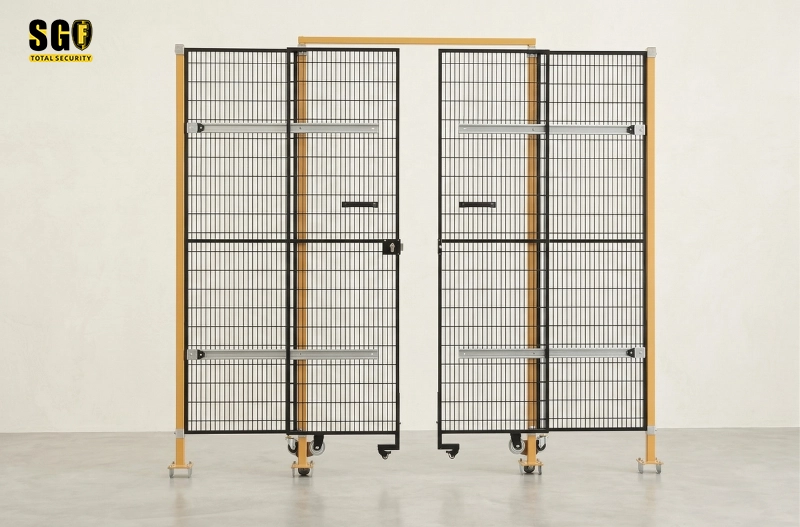
Why the interface matters before the line goes live
On modern pallet nailing lines and packaging lines, safety is no longer only a fencing problem. The guard has to fit the controller logic, the gate has to close cleanly, and the interlock has to land in the right place the first time. If the fence arrives without a standard interface, the project team pays for measurement, drilling, fixing, retesting, and often a second visit just to make the safety circuit acceptable.
| Integration pain point | Risposta di Mdfence |
|---|---|
| No standard safety interface on ordinary fence panels | Pre-positioned mounting points are reserved for mainstream safety interlock switches, including Omron D4NL and Pizzato families. |
| Hidden field cost from drilling, slotting, and gate rework | The panel and gate layout is planned for direct installation, so engineers spend less time modifying parts on site. |
| Safety circuit must remain stable after repeated opening and closing | Rigid frame, solid gate hardware, and clean corner continuity help the interlock stay aligned and dependable. |
| Packaging and pallet lines need fast retrofit without disrupting production | The modular fence structure supports line-side enclosure around conveyors, transfer zones, and machine cells. |
What makes the Mdfence design useful to automation integrators
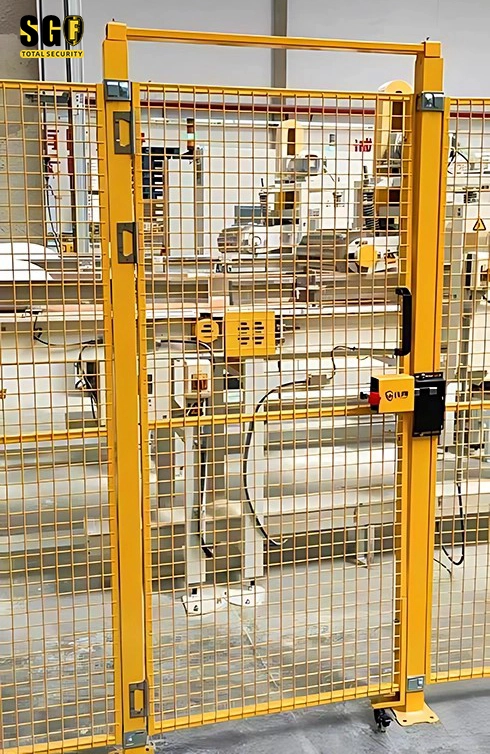
Pre-aligned interlock mounting points
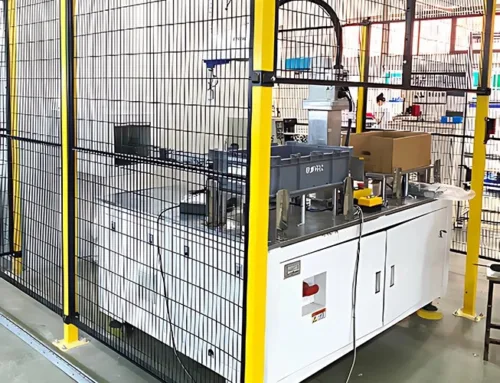
The close-up gate hardware matters because that is where most retrofit time is lost. Mdfence reserves the interface position from the start, so the integrator is not forced to improvise a safety switch location after the fence is already standing. That saves the measuring, marking, and re-drilling that usually turns a simple guarding order into a labor-heavy site task.
Corner closure that protects the full machine cell
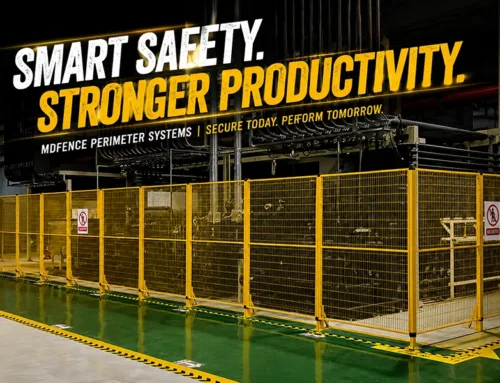
Automated packaging lines rarely fail at the middle of a straight run; problems usually appear at the corner, the doorway, or the last gap near the equipment frame. The corner section shows why the fence works better as a system than as loose panels. Clean corner closure helps the enclosure stay complete, which is what a safety circuit needs before a door interlock can be trusted.
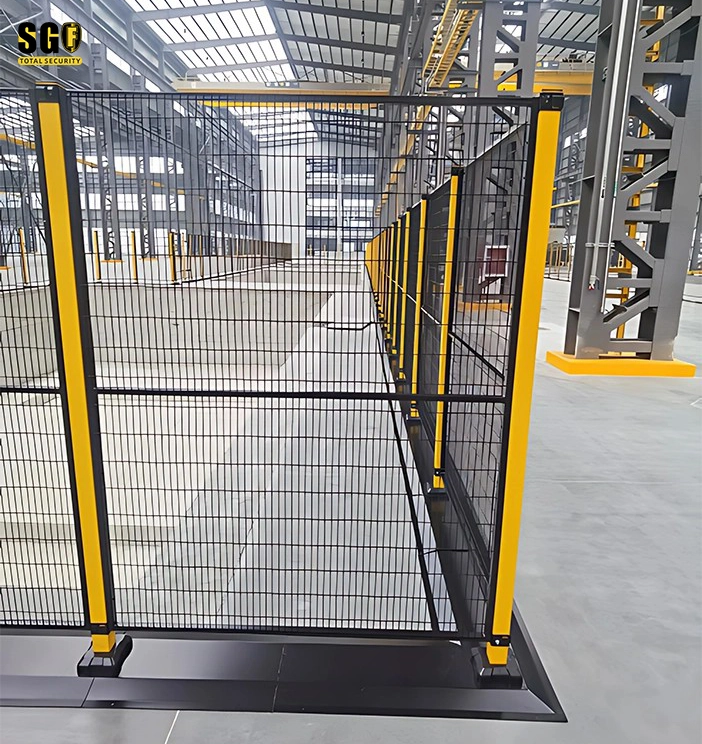
Line-side layout for conveyors and transfer stations
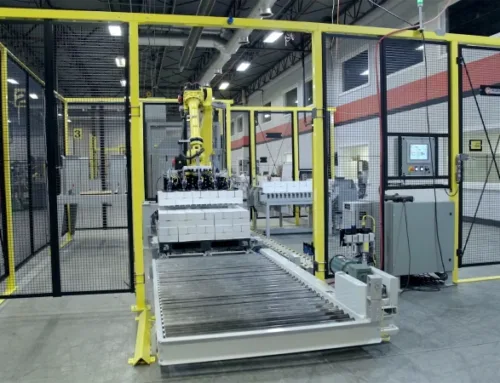
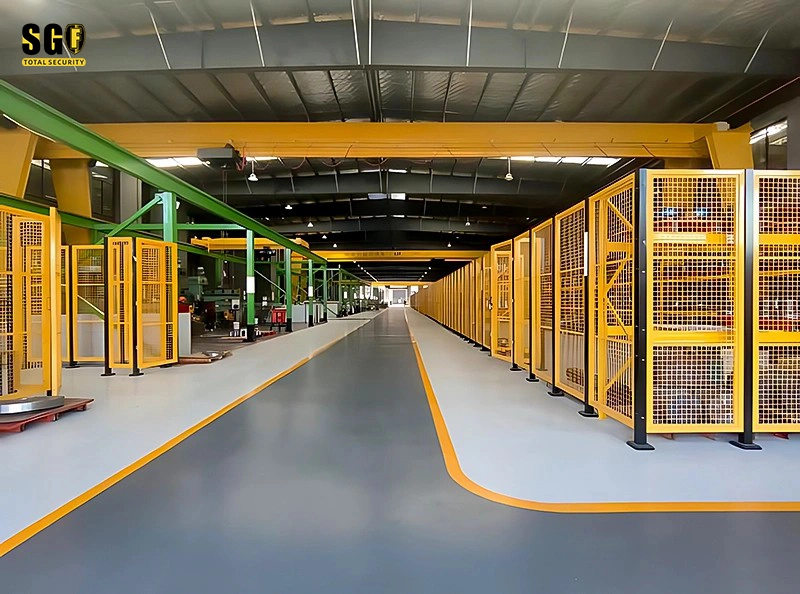
The conveyor-zone image shows how Mdfence fits the way modern lines are actually built. Packaging and transfer systems need a guarding perimeter that follows the machine flow, not one that forces the line designer to reshape the process. When the fence can be laid out beside conveyors, transfer equipment, and access paths, the safety plan stays practical and the install team avoids expensive structural changes.
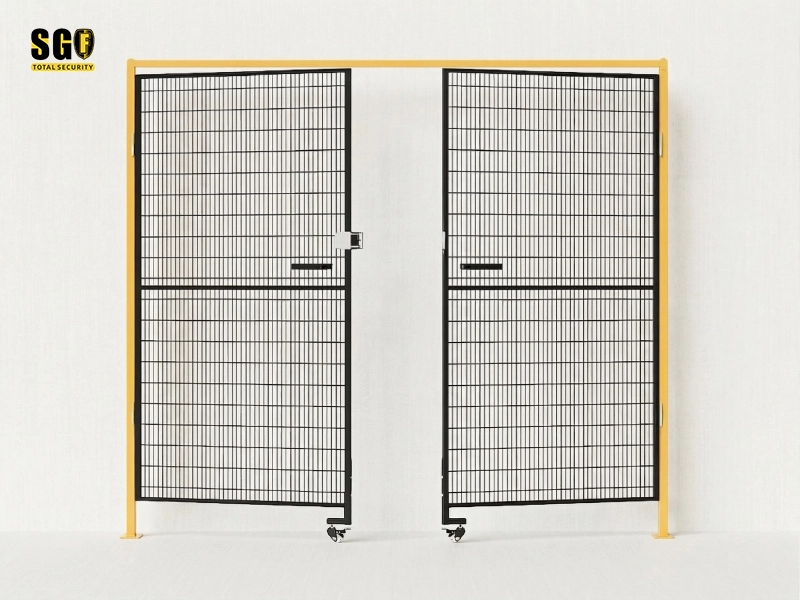
Where this guarding approach fits best
- Pallet nailing lines that need a door-triggered stop signal without custom field fabrication.
- Automated packaging lines that must keep Omron D4NL, Pizzato, or equivalent switches in a stable position.
- Transfer and conveyor cells where safety fencing has to follow the machine flow, not fight it.
- Retrofit projects where engineering teams want one repeatable guarding interface across multiple sites.
For integrators, the value is simple: fewer onsite surprises, fewer interface edits, and a safer safety loop from the first installation. For buyers, the result is a fence package that is easier to approve, easier to install, and easier to keep consistent across future lines.
What to request before procurement
Ask for the guarding layout, the gate/interlock interface position, and the line-side enclosure plan before you release the order. With Mdfence, those details are not afterthoughts; they are part of the design logic. That is how Machine Guarding Fence Panels turn a standard safety purchase into a retrofit that stays within budget and keeps the safety circuit defensible.
Need a safer, cleaner machine boundary?
Send the machine layout, gate locations, and interlock preference. We will map the fence around the production cell and show where the safety switch interface lands before installation starts.